Questions From Great Hills
Slopes, Water, and Trees
Do you build landscapes in Great Hills and Jollyville?
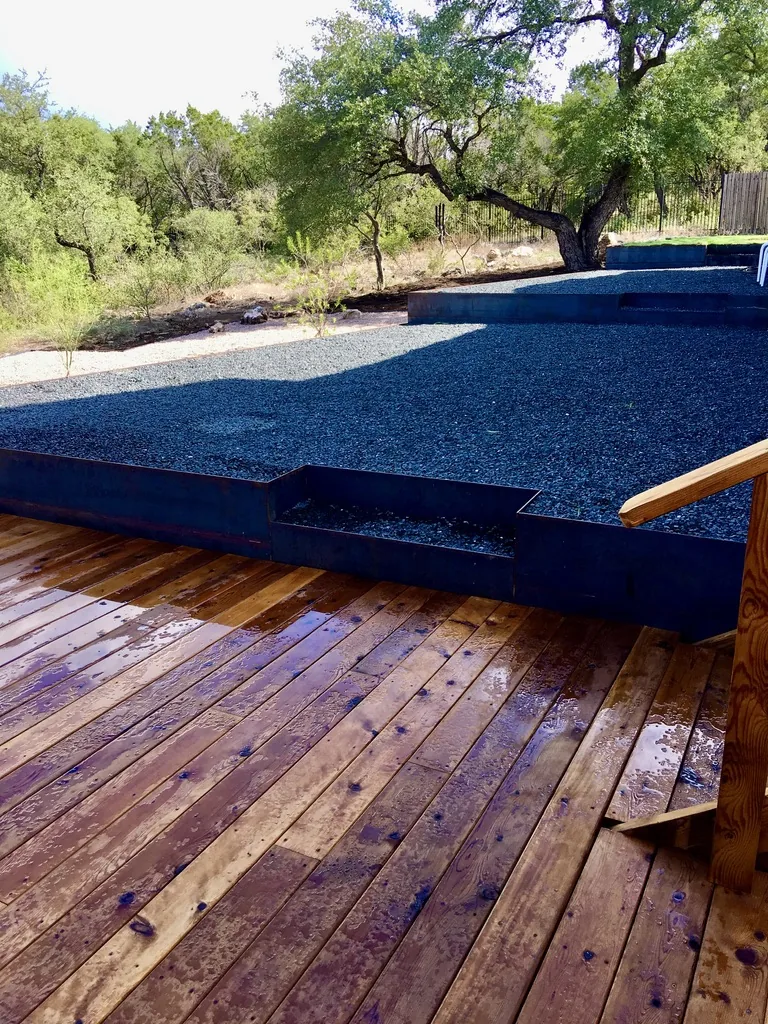
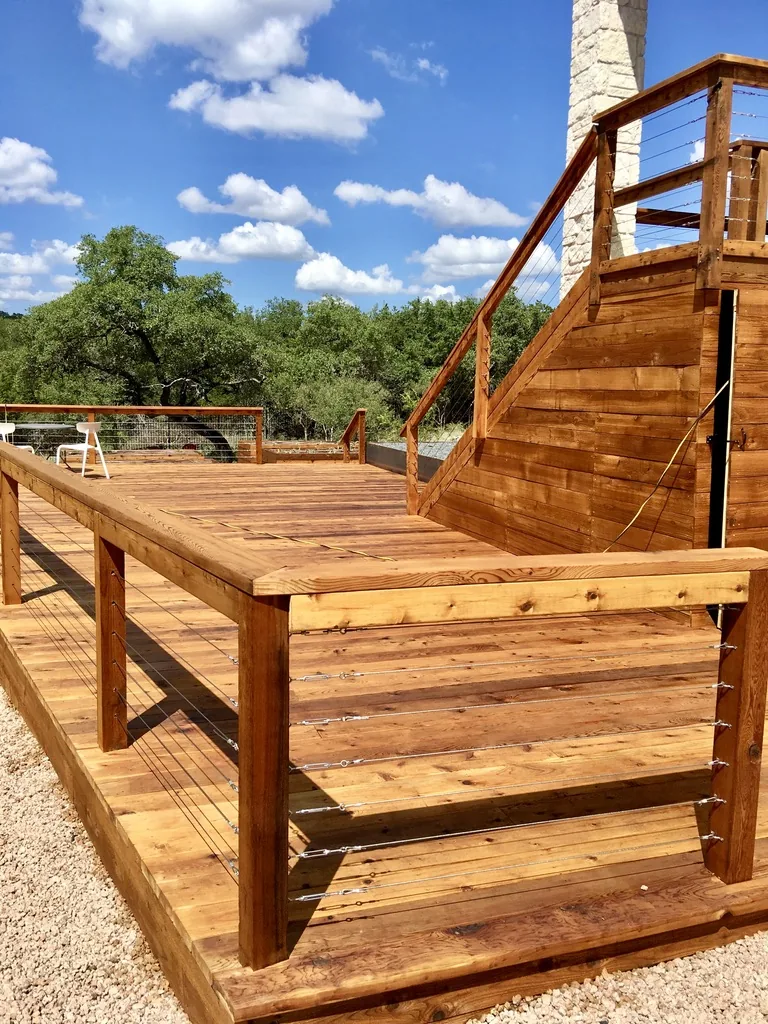
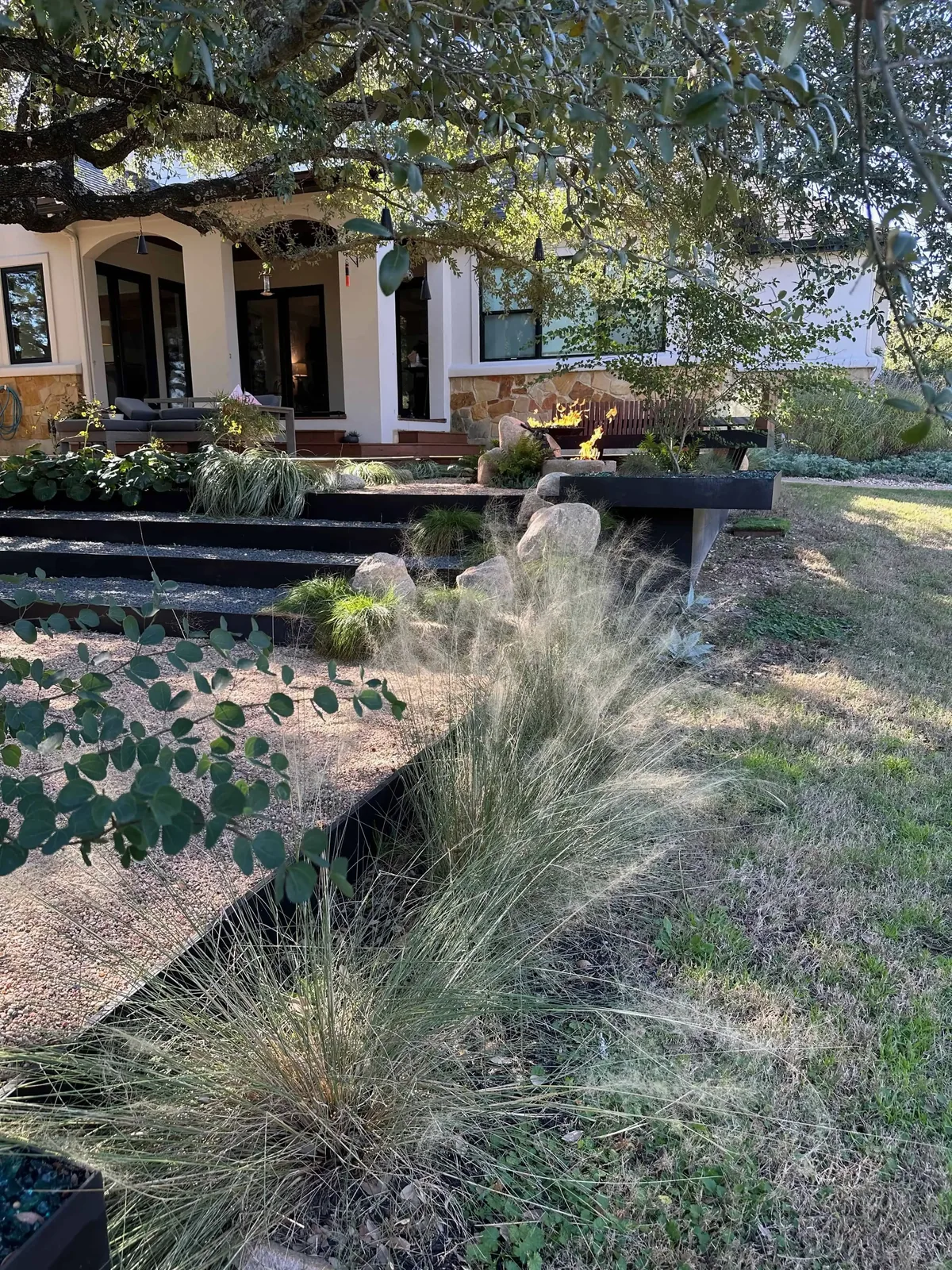
Yes. Red Agave designs and builds luxury landscapes across Great Hills, Jollyville, and the rest of northwest Austin: drainage, steel terraces and retaining walls, decks, patios, lighting, and planting. Every plan is owner-designed and built by our own crew, and the consultation and CAD plan are free.
How often can I water in Great Hills?
Great Hills follows Austin Water’s rules. Under the Conservation Stage, in effect since September 2, 2025, automatic sprinklers run one day a week: Thursday for even addresses, Wednesday for odd, midnight to 10 a.m. or 7 p.m. to midnight. Drip and hose-end sprinklers get two days, and hand watering is allowed any time.
How do you fix drainage on a sloped lot?
We start with where the water comes from and where it has to go. Swales and dry creek beds carry it across the surface; French drains, catch basins, and channel drains carry it in pipe past the house to a proper outlet. We use both rigid PVC and corrugated pipe, and behind every steel retaining wall a perforated drain pipe sits in clean gravel at the base.
Is my tree protected in Great Hills?
Great Hills is inside Austin city limits, so Austin’s tree ordinance applies. Trees 19 inches in diameter or larger, measured 4.5 feet above the ground, are protected, and listed species 24 inches and up are heritage trees. Removing a protected tree takes a city permit, so we lay out every plan around the trunks first.
Why does runoff matter in northwest Austin?
Great Hills Park lies in the Bull Creek watershed, and the Jollyville Plateau salamander, listed as threatened in 2013, lives primarily in the springs and streams of northwest Austin and southern Williamson County. Slowing water on the lot, letting it soak in, and planting natives that need little fertilizer sends cleaner water downhill.