The rock under Cedar Park has its own name: the Cedar Park Limestone, a Lower Cretaceous bed up to 125 feet thick that merges with the Edwards Limestone north of Austin. Topsoil over it is thin. Builder sod goes down on a few inches of fill, which is why it browns in August; beds here get built up with imported soil and drained hard.
Cedar Park's water is Lake Travis water, drawn through the Brushy Creek Regional Utility Authority's underwater intake. The city's standard schedule allows two watering days a week by address, before 10 a.m. or after 7 p.m., and Stage 3 drops it to one. When the intake pipe failed in fall 2024, even drip irrigation was banned until it was replaced.
Communities like Twin Creeks and Ranch at Brushy Creek review exterior changes, and most of their yards started as the same builder package: sod, a few shrubs, a sprinkler system. The upgrade is a redesign, not a refresh.
A builder yard in Cedar Park is a lawn on fill over rock. The first job is to pull the sod where it is not earning its water, re-grade so storm water leaves the lot, and build planting beds up with amended soil and real drainage. Our caliche and limestone soil guide explains what the rock does to roots, and the drainage guide covers the grading.
Then the yard gets its bones: a marbled concrete patio poured to the grade, decomposed granite paths held by 1/4-inch steel edging, a boulder fire pit on propane, 24V FCOB lighting along the edges. This is the full design-build service: one crew, one schedule.
What lawn stays is the lawn you use. Our turf installation service covers both real sod and synthetic for play areas, and the natural vs. artificial turf comparison helps you pick.
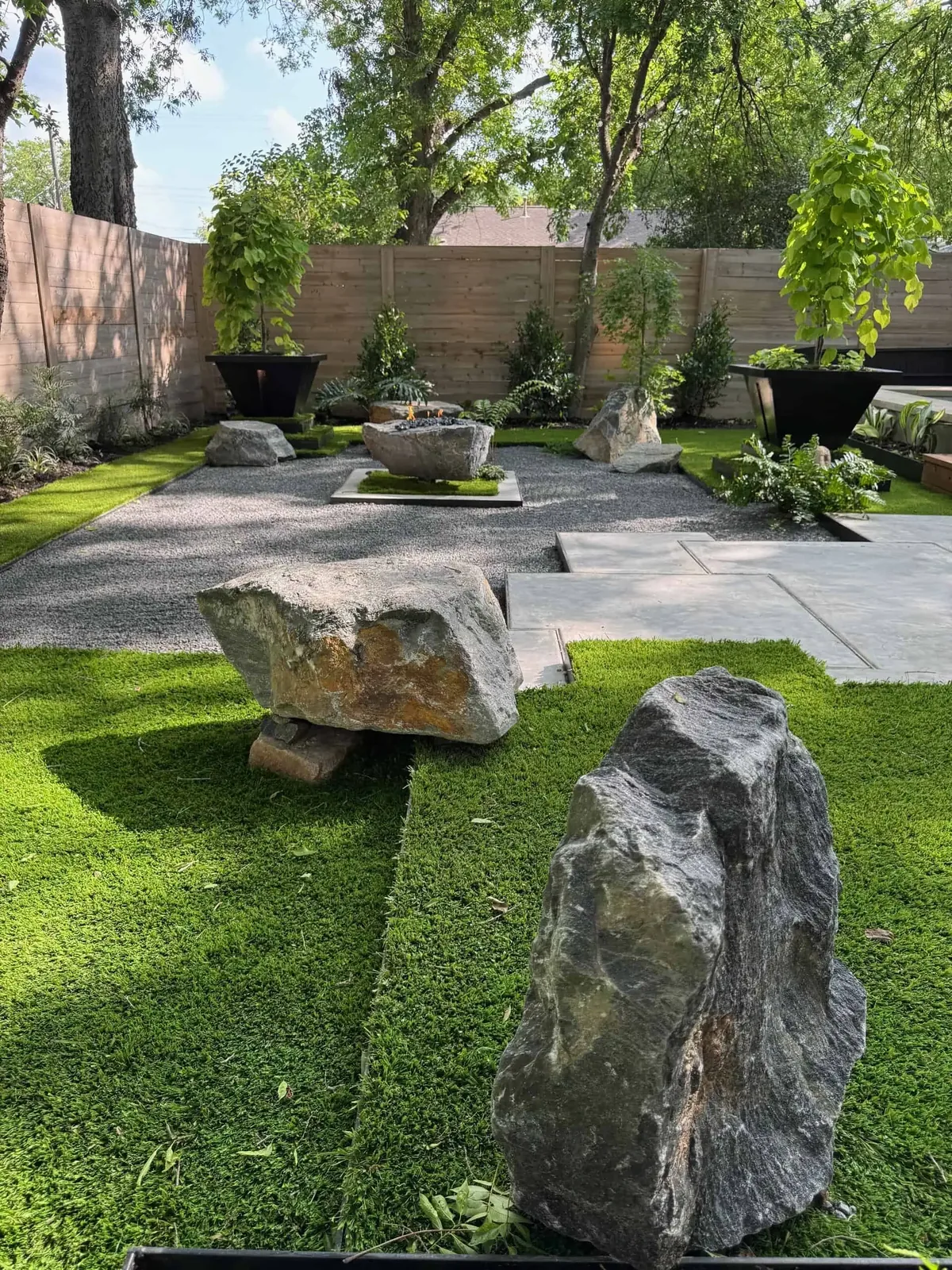
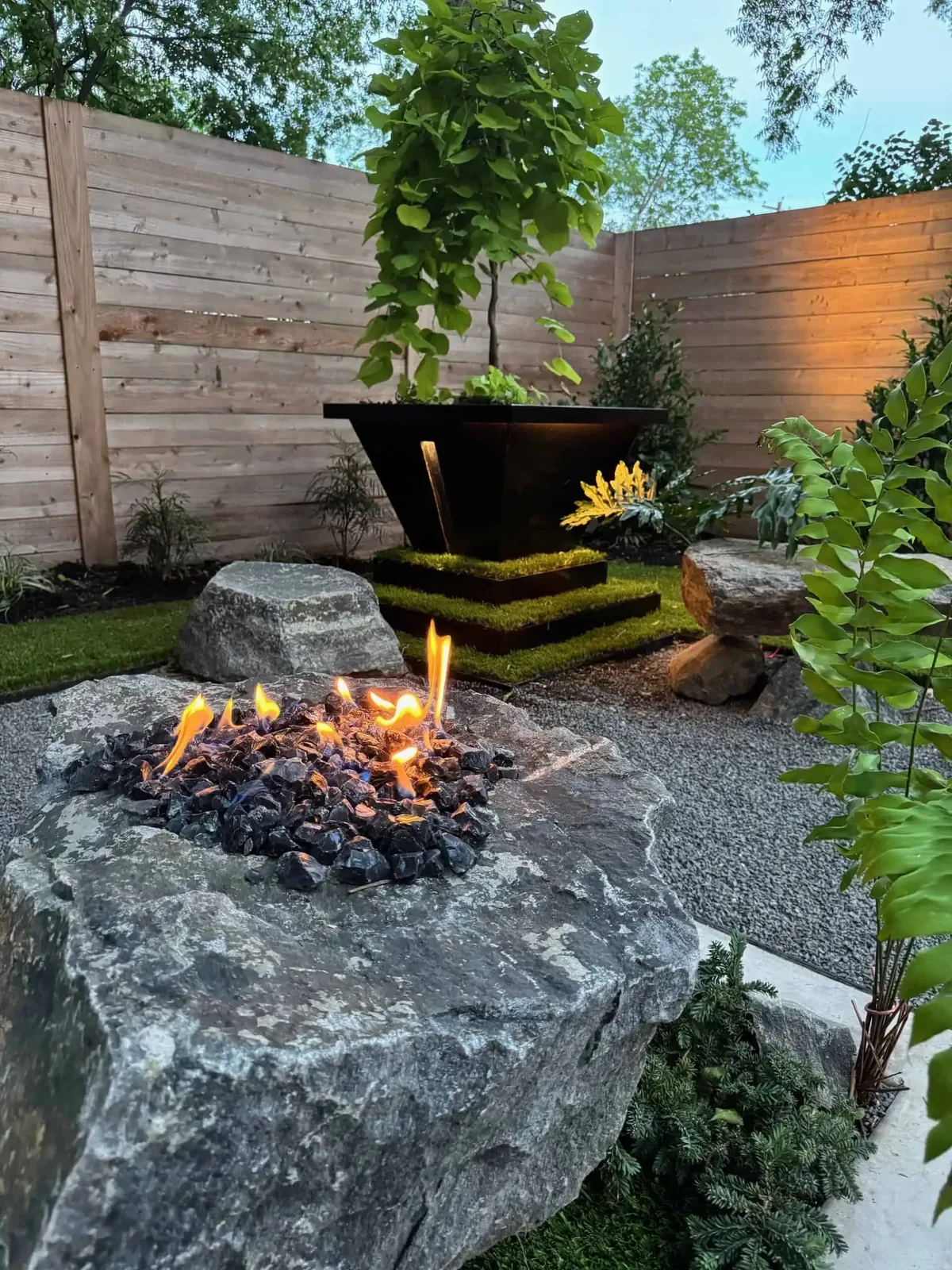
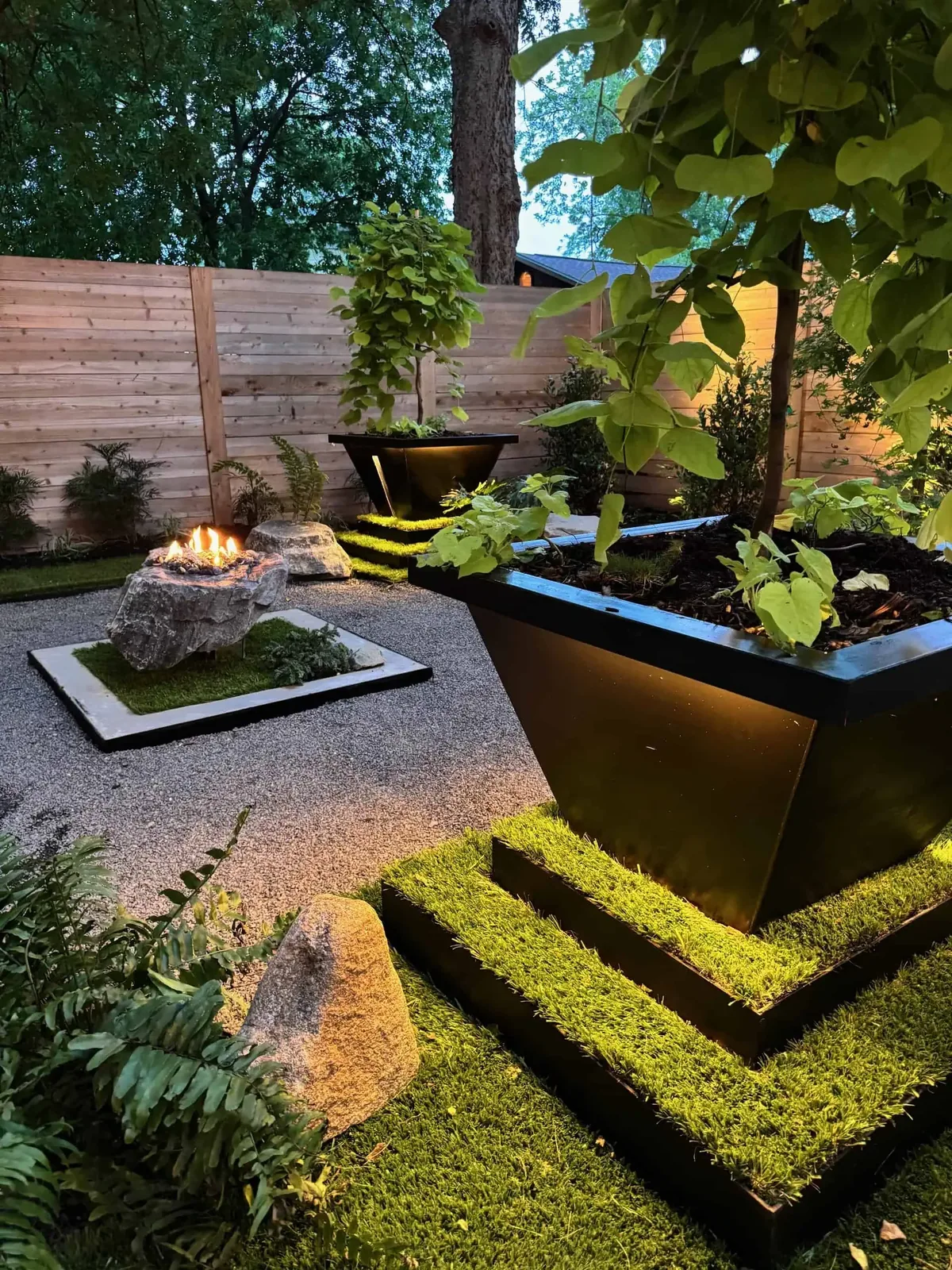
These photos are from our Madison project in Austin: a plain back yard rebuilt with synthetic turf, a stepped steel planter with a small tree, a boulder fire feature, concrete pads, gravel, and lit edges along a new horizontal cedar fence. It is the kind of full rebuild a builder-grade Cedar Park yard gets: the sod that was not earning its water replaced by surfaces and plantings that need none.
Read the Madison turf-and-steel case study (Austin) →
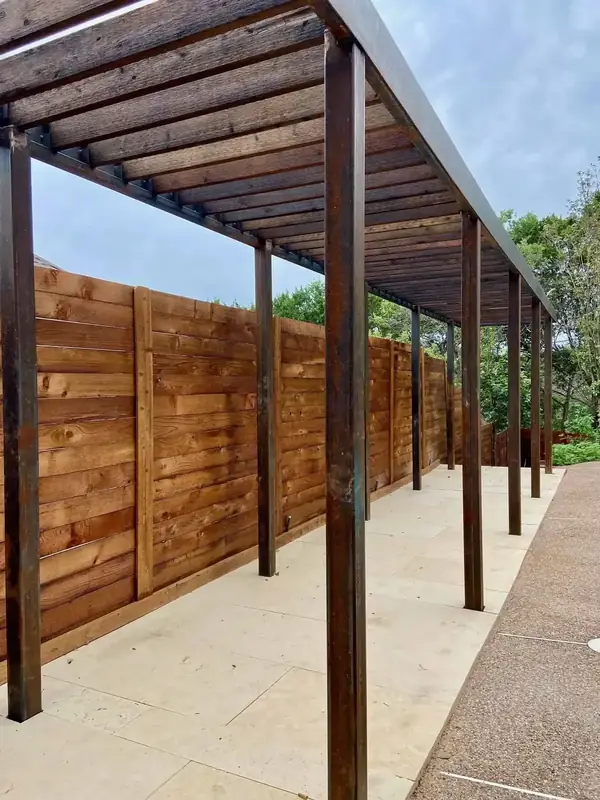
Shade is the other thing a builder yard is missing. On this Cedar Park home we built a pergola from scratch: square steel posts and a long steel beam along the privacy fence, carrying wood rafters over a stone patio. The homeowners wanted the steel to rust, so the frame was left to weather to a deep patina. Where the community reviews exterior changes, a pergola goes to the committee as a drawn plan before we build. See our custom pergolas, and how this steel pergola was built.
On raised, drained beds the agaves and yuccas lead: Whale's Tongue, Artichoke, softleaf yucca. Our cold-hardy agave guide covers the freeze-proof ones, and Agave salmiana 'Green Giant' anchors a big corner.
Around them, natives that take limestone and alkaline soil and never need the sprinkler: Texas sage, autumn sage, Gulf muhly, blackfoot daisy, pink fairy duster. The alkaline soil guide explains why acid-loving plants fail here, and native plants for Austin has the list.
Quercus laceyi
A native oak sized for a builder lot, not a live oak that will take over the yard. It handles thin topsoil over limestone and high pH, and the Wildflower Center lists it as an oak wilt–resistant alternative. Resistant is not immune, so it still gets the same oak wilt precautions as any oak.
More in our summer survivors list. Plant data: Lady Bird Johnson Wildflower Center, Texas A&M Forest Service.
Tell us about your Cedar Park yard and which part of the lawn you actually use. We'll redesign the rest.
Get a Free Quote →