In February 2014 Dripping Springs became the first International Dark Sky Community in Texas and the sixth in the world, on the strength of a city outdoor lighting ordinance that regulates shielding, color, and total light output. Landscape lighting here has to be aimed down, shielded, warm, and modest, and that is a better look anyway.
Western Hays County draws on a single aquifer, the Trinity, and rainfall is its only recharge. In May 2023 the Hays Trinity Groundwater Conservation District issued the first pumping moratorium in its history and ordered a 40 percent cut in use. Lots here run on wells and cisterns, so a landscape that needs irrigation competes with the house.
Dripping Springs sits on limestone with a shallow soil layer and a resident deer population. Beds get built up with imported soil and drained hard, and the plant list is the one deer walk past: agaves, yuccas, sotol, and the aromatic natives.
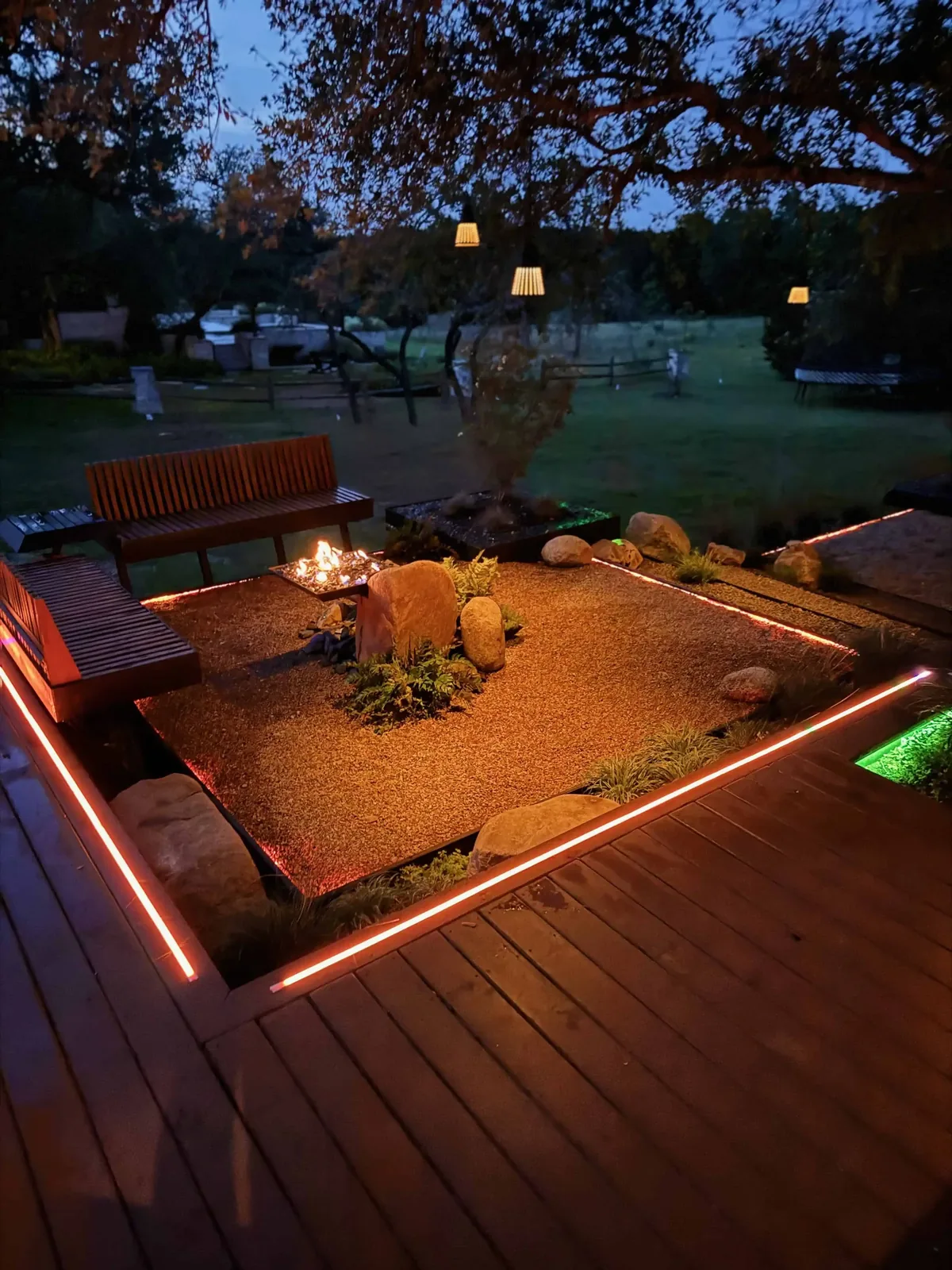
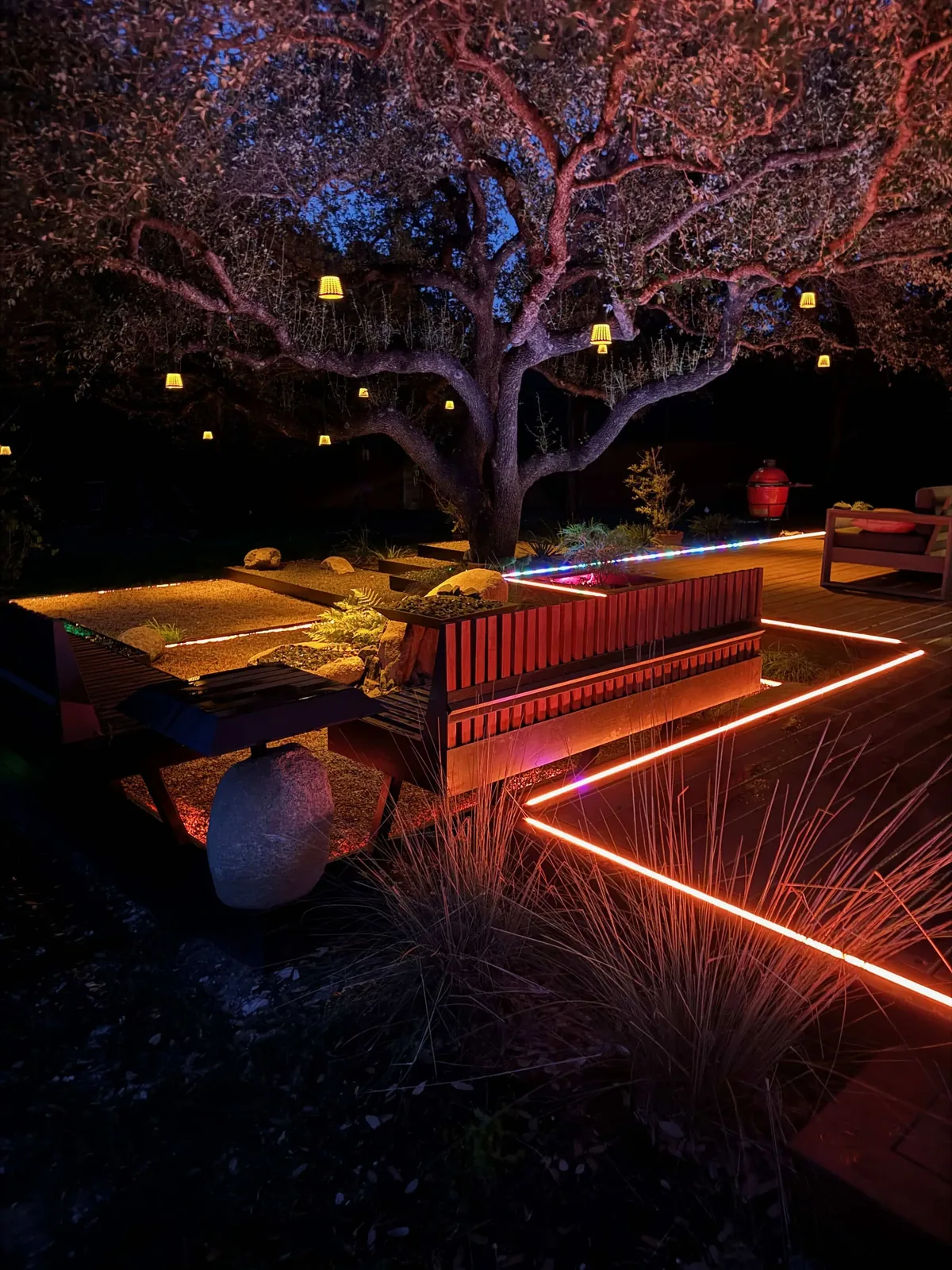
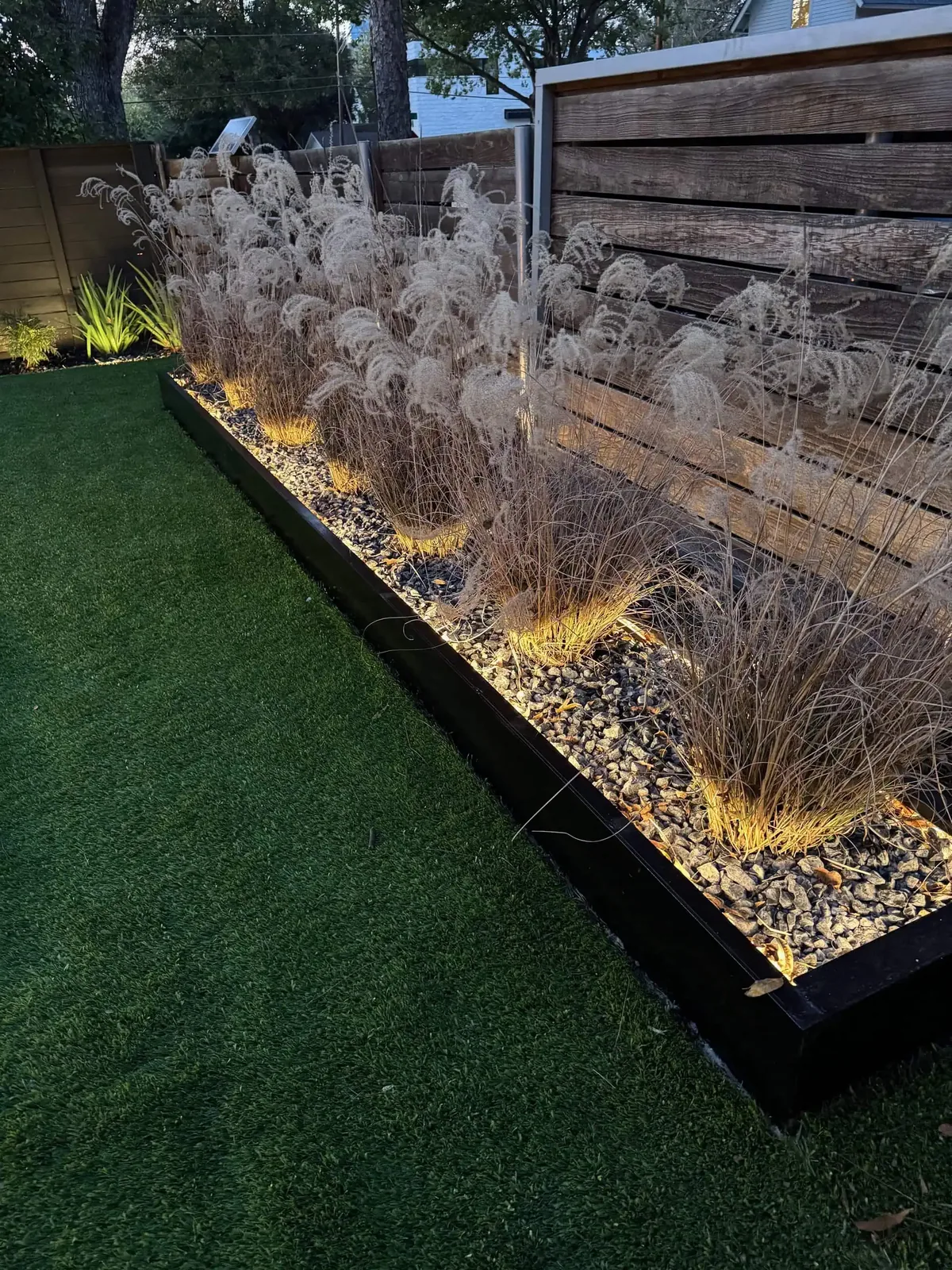
Most landscape lighting fails a dark-sky ordinance the moment it is switched on: bare bulbs, blue-white color, fixtures aimed up into the trees. Our systems start from the opposite end. 24V FCOB ribbon runs in channels along steps, walls, and planter edges, so the source is hidden and the light lands where feet go. COB fixtures are shielded and aimed down at trunks and walls rather than at the sky, in a warm color that reads like firelight. Total output stays low, because a dark site needs very little light to see by. See the landscape lighting service and the COB vs. standard LED guide. Our post on landscape lighting installation shows the same approach on three builds.
The planting side is simpler: design for no permanent irrigation. Sharp drainage, decomposed granite mulch, and natives or agaves that can live on rainfall once established leave the well for the house. Our how to xeriscape guide walks the sequence.
Where lots drop toward a creek, 1/4-inch steel retaining walls hold terraces with a footprint thin enough to route around oaks. Details under steel retaining walls.
These photos show the lighting approach that satisfies a dark-sky ordinance: the source hidden, nothing aimed up, warm color, low output. The first two are our steel-terrace build in Circle C, Austin, with FCOB ribbon running along the terrace and deck edges; the third is a steel bed in Austin lit from under its rim. You see lit edges and leaves, never a bulb.


Structure comes from the agaves and yuccas: Whale's Tongue, Artichoke, softleaf yucca, and sotol, all deer-proof and all content on rainfall once rooted. Our cold-hardy agave guide covers the ones that take a Hill Country freeze, and Agave salmiana 'Green Giant' is the specimen for a big lot.
Around them, the aromatic and tough natives: Texas sage, autumn sage, Mexican feathergrass, blackfoot daisy, and pink fairy duster. Deer skip scented leaves, and none of these need a drip line. Full lists in native plants for Austin and plants that survive an Austin summer.
Mahonia trifoliolata
Deer, shallow limestone, and water that comes from a well or a cistern: agarita handles all three. It blooms yellow in late winter and feeds birds with red berries in early summer. Travis County AgriLife’s Firewise guidance lists it among plants to keep 30 feet or more from the house where wildfire is a concern.
More in our summer survivors list. Plant data: Lady Bird Johnson Wildflower Center, Texas A&M AgriLife.
Tell us about your Dripping Springs property, the well, and the view of the sky. We'll design for all three.
Get a Free Quote →