The Balcones Fault Zone runs through Round Rock. West of it the ground is limestone; east of it is Blackland Prairie clay that swells when wet and cracks when dry. Two neighborhoods a few miles apart can need opposite base work. Even the city’s name comes from rock: an anvil-shaped limestone boulder in Brushy Creek, adopted as the name in 1854.
Round Rock’s water comes mainly from Lake Georgetown, with Lake Stillhouse Hollow water pumped into it and Edwards Aquifer and Lake Travis water as supplements. Under the city’s Year-Round Water Use Standards, sprinklers and drip run two days a week by address, before 10 a.m. or after 7 p.m.
If more than 25 percent of a yard is new sod or new landscaping, the owner can apply to the city for a New Landscape Variance to get it established. Timing and paperwork are part of any big lawn renovation here.
Most Round Rock yards started as builder sod, and the question is which parts earn their water. Keep real grass where kids and dogs use it and the sun is strong: Bermuda wants 6 or more hours, Zoysia 4 or more. Put synthetic turf in the shade, the dog run, and the side yard where grass never takes. Our turf installation service covers both, and the natural vs. artificial turf comparison helps you decide.
The base follows the fault line. Sod goes down on amended, graded soil; synthetic turf goes on drainage fabric and compacted decomposed granite, graded so water leaves the yard. On east-side clay that grading is what keeps the yard from holding water; on west-side limestone the work is getting enough soil depth over rock for roots. The alkaline soil guide explains what the limestone does to plants.
Whatever comes out of the lawn becomes native beds with steel edging, on drip. For a big conversion, plan around the New Landscape Variance so the new planting gets established. See our xeriscape service.
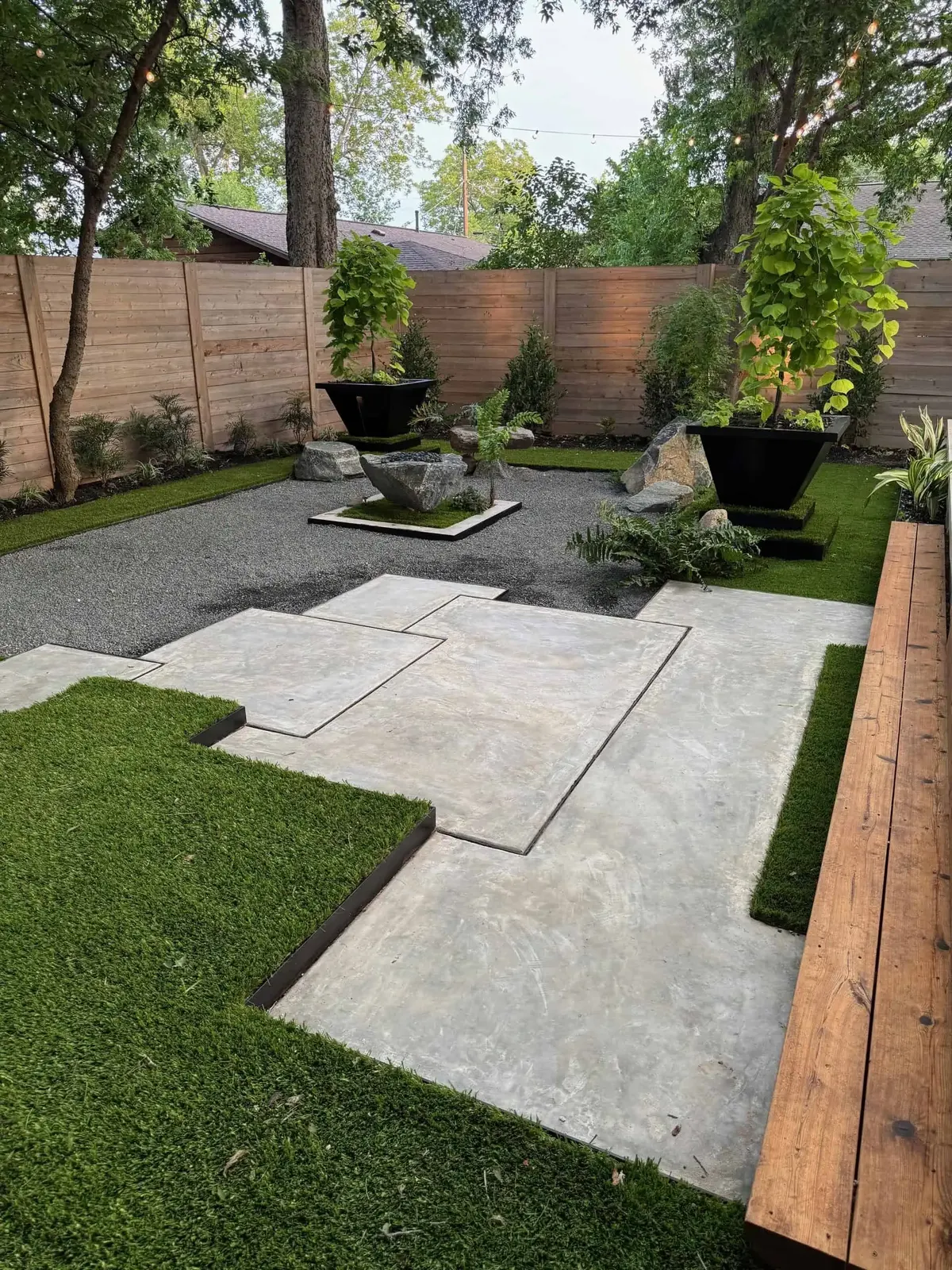
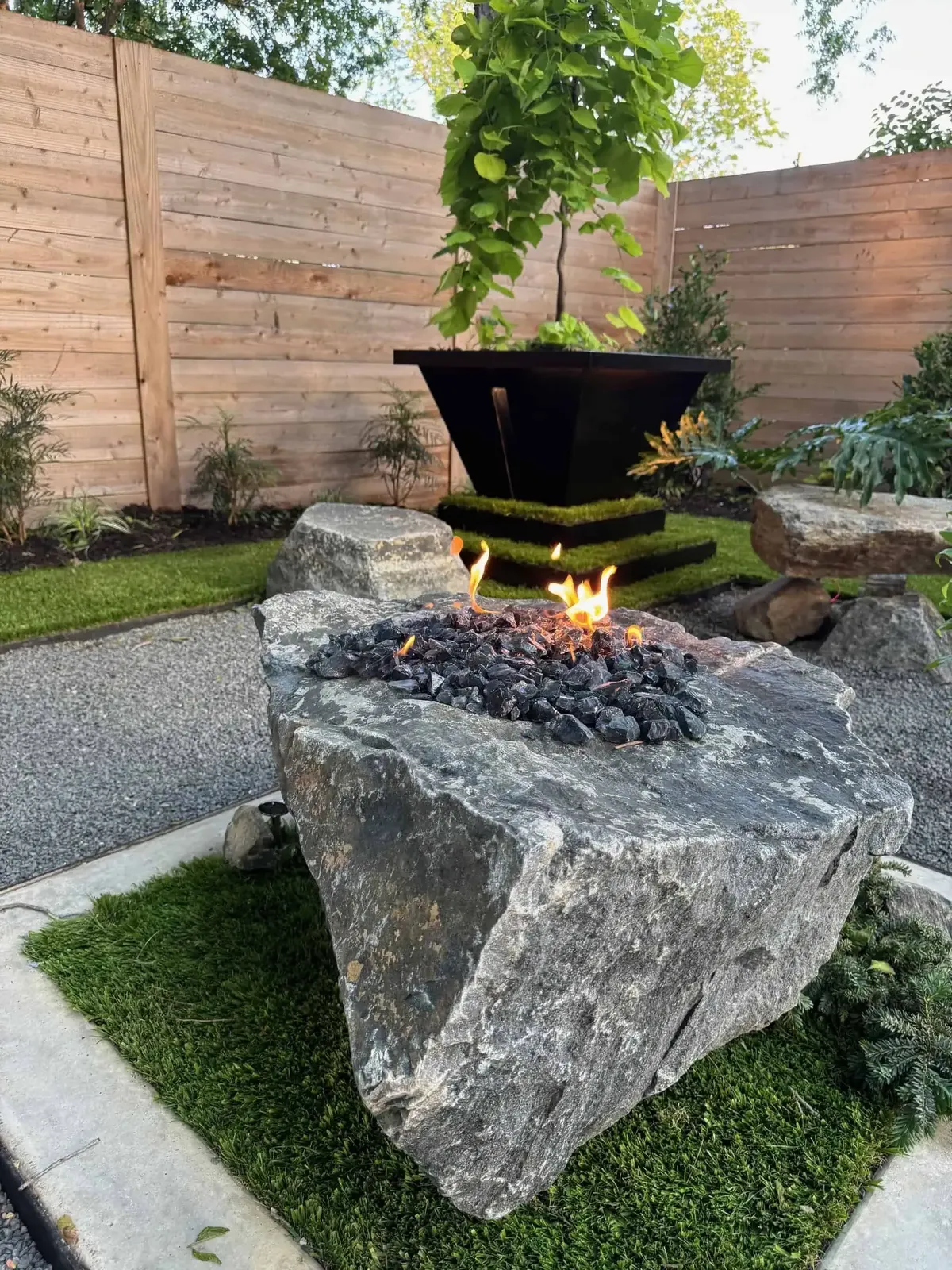
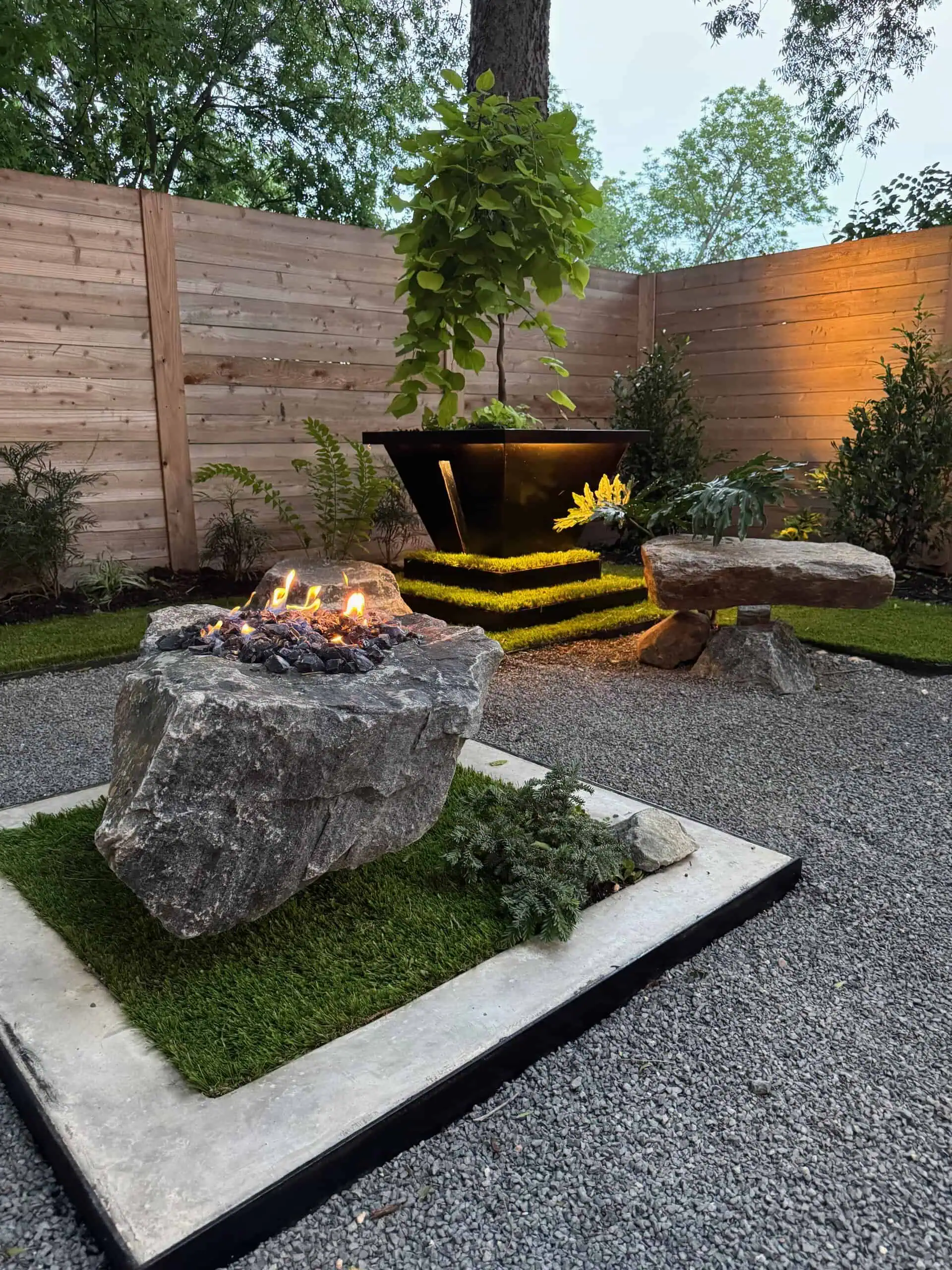
These photos are from our Madison project in Austin: American Synthetic Ultra Real turf, poured concrete pads, stepped steel planters, and a black diamond boulder fire pit. It is the no-mow half of the sod-or-turf answer.


On the clay side, natives that take heavy alkaline soil: Texas sage, autumn sage, flame acanthus, and Gulf muhly. On the limestone side, agaves and yuccas in fast-draining beds, with blackfoot daisy at the edges. Our cold-hardy agave guide lists agaves that take a freeze.
Everything goes on drip so it lives on two watering days. Our native plants guide and summer survivors list have more.
Muhlenbergia reverchonii ‘PUND01S’
The Balcones Fault Zone splits Round Rock: limestone to the west, Blackland clay to the east. Seep muhly grows wild on both, so the same grass works on either side of town. It stays compact enough for a front bed and turns ruby in fall.
Plant data: Lady Bird Johnson Wildflower Center, Plant Select.
Tell us which side of Round Rock you are on and how you use the yard. We’ll match the lawn to both.
Get a Free Quote →