The Ground You're Working With

Water, Aquifer, and Review:
What Shapes a Georgetown Yard

Red Agave designs and builds low-water Georgetown landscapes, drawn for HOA review: native and adapted planting on drip, steel edging, decomposed granite, and stone in place of thirsty lawn, planned for the city’s watering limits and its Edwards Aquifer rules. Owner-designed, built by our own crew.
70%

Most of the Water Goes on Yards

Georgetown’s utility serves more than 170,000 people across about 440 square miles, and city staff estimate 70 percent of water use goes to irrigation. Under Stage 1, each address waters on two set days a week, never on Mondays, and never between 9 a.m. and 7 p.m. Hand-held hoses are allowed any time.

2013

Over the Edwards Aquifer

Part of Georgetown sits on the Edwards Aquifer recharge zone. The city’s 2013 water quality ordinance for that zone requires buffers of 164 feet around springs and at least 200 feet along streams, protecting the federally threatened Georgetown salamander, whose known locations are all within the city’s jurisdiction.

26 in

Heritage Trees and HOA Review

Listed species 26 inches or larger in diameter are Heritage Trees, and removing or pruning one requires city review and approval. In HOA communities like Sun City, a 55+ community that opened in 1996, plans also go through architectural review. Under Texas Property Code §202.007, an HOA cannot ban drought-resistant landscaping, though it can review the plan.

What That Means for the Design

Design It Once,
Get It Approved, Let It Grow

A Georgetown yard that works starts on paper. We draw the plan to the community’s guidelines first, so the architectural committee reviews a finished CAD design instead of a sketch. Texas law protects your right to a drought-resistant yard and bars an HOA from unreasonably denying one; a clean plan is what the committee can approve. See our landscape design service.

Then the water budget: drip on native and adapted plants, steel edging and decomposed granite paths, stone and boulders where lawn used to be, and lawn only where it gets used. Over the recharge zone, permeable surfaces like decomposed granite and gravel let rain soak in instead of running off. Our xeriscape service covers the planting, and the how-to-xeriscape guide covers the process.

For Sun City owners who want color without weekly work, the plan leans evergreen: agaves, yuccas, red yucca, and Texas sage that look finished in January.

The Work

The Work:
A Front Yard With No Lawn

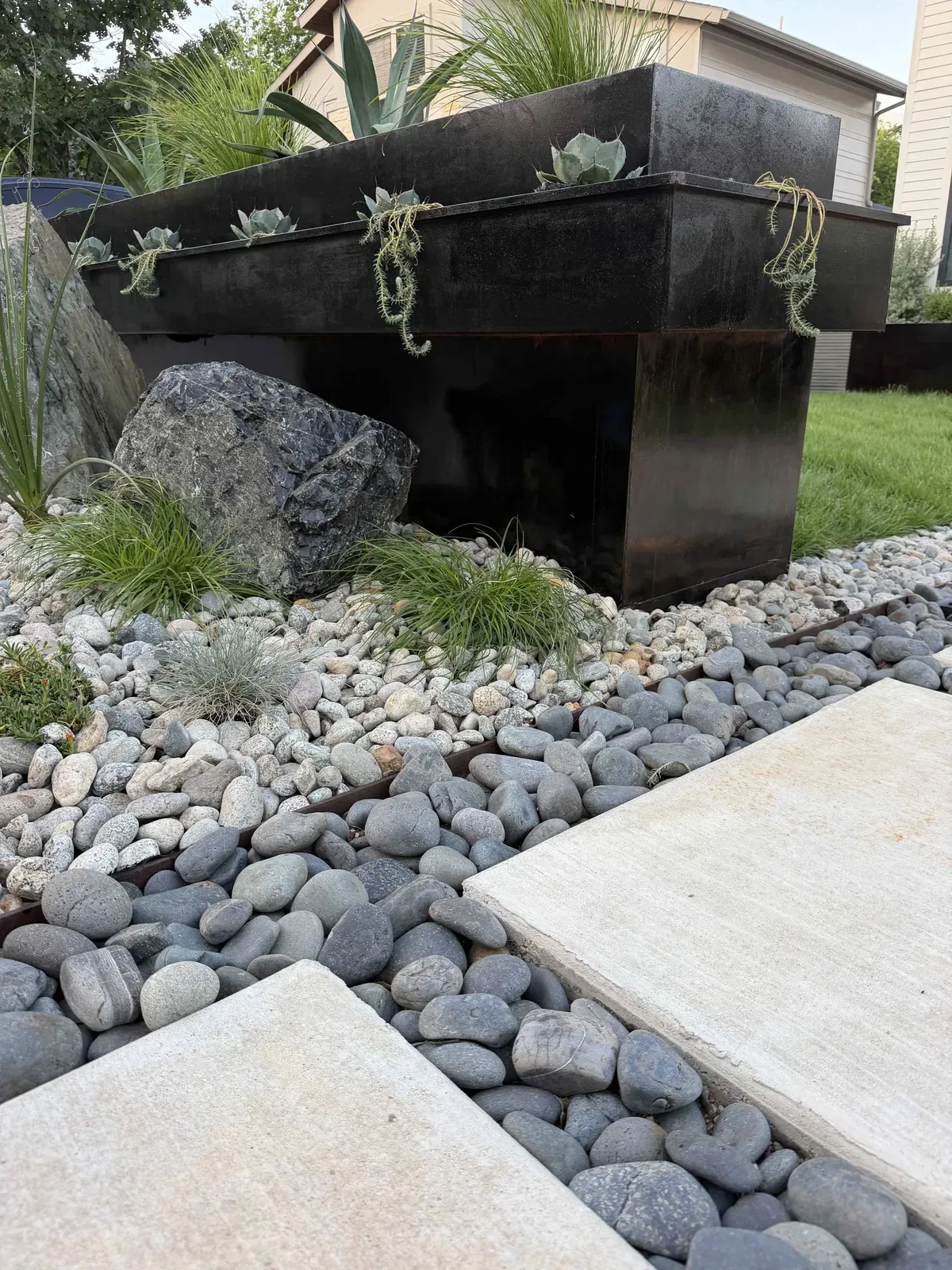
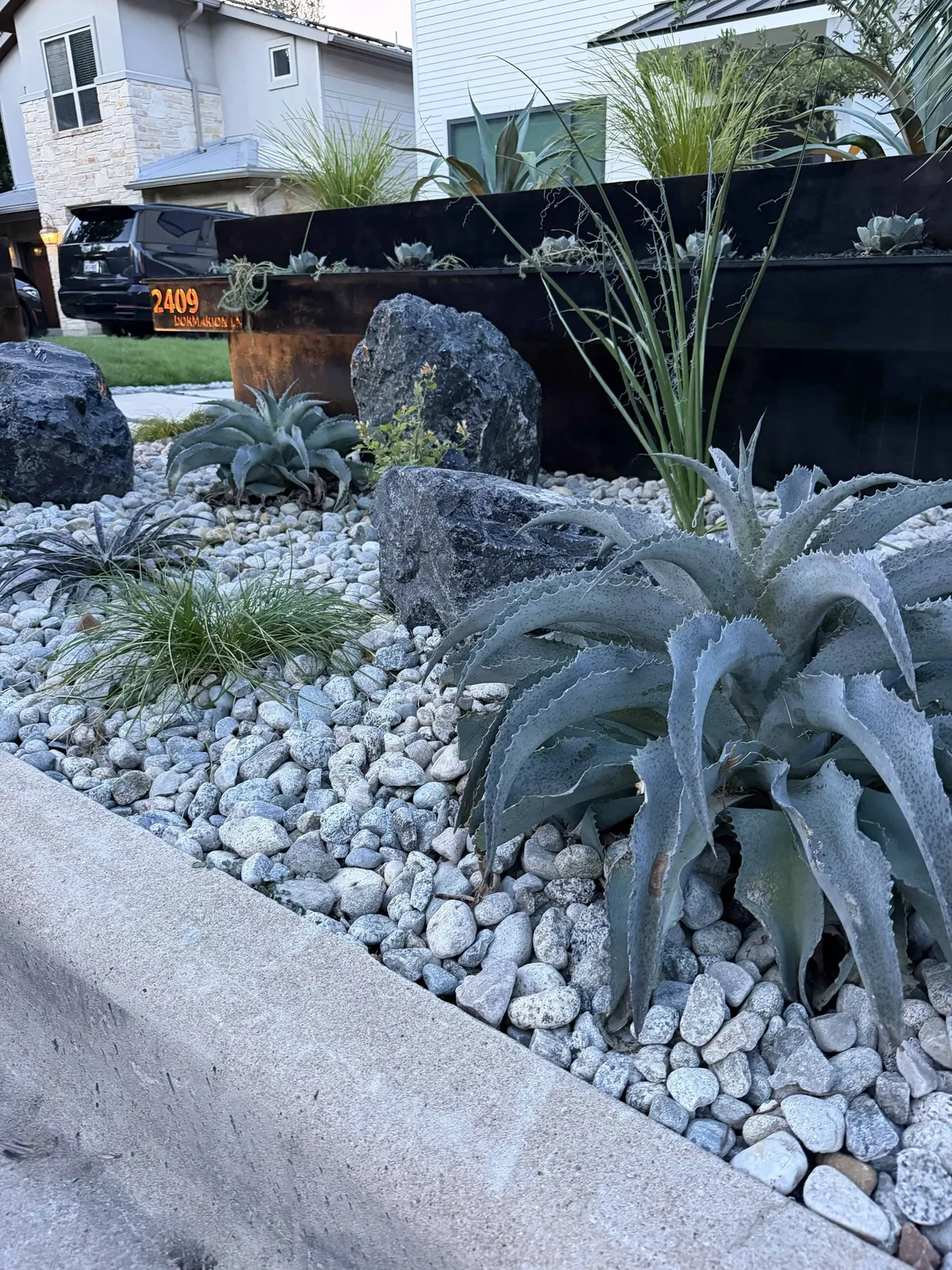
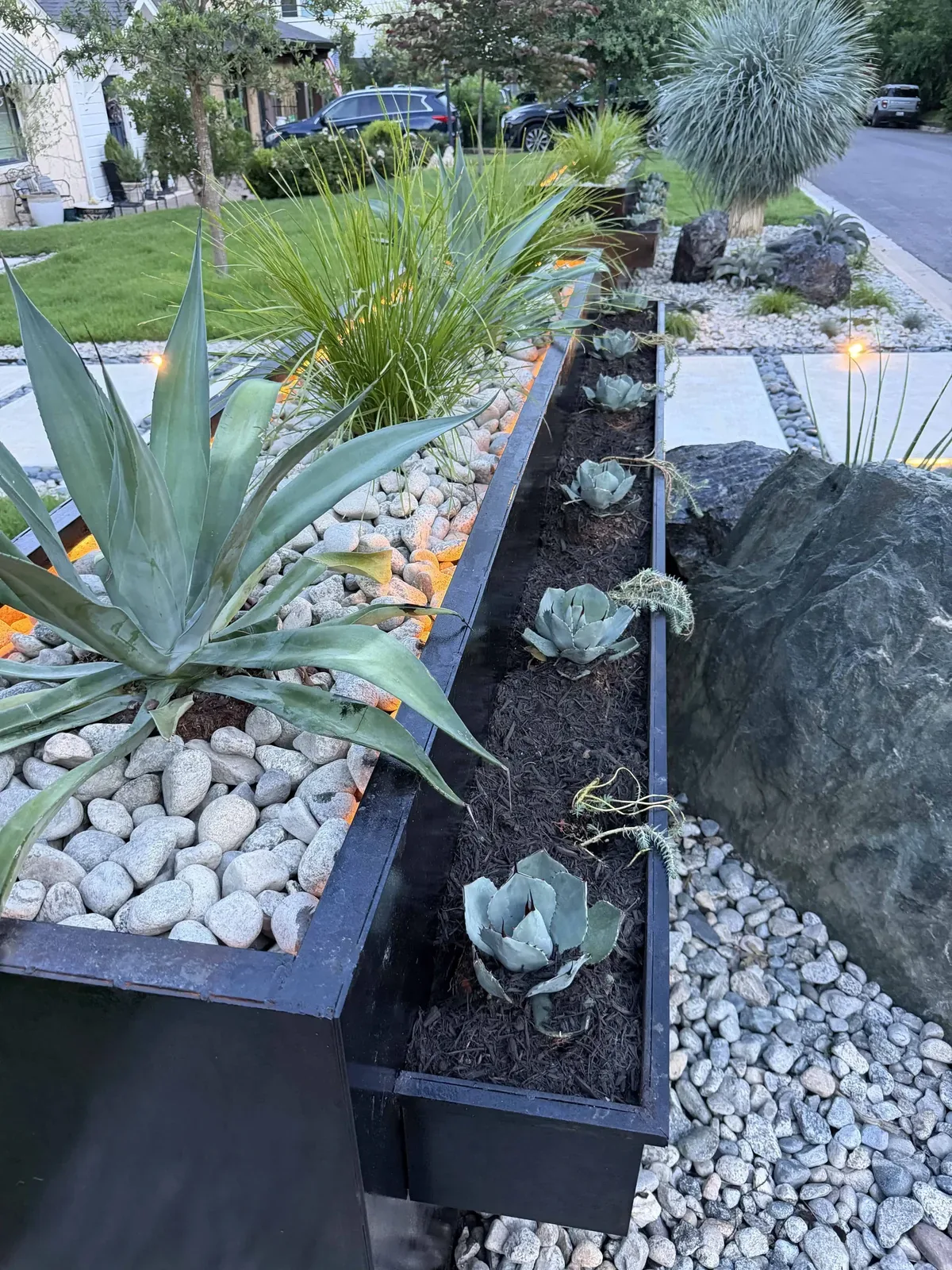
These photos are from our Dormarion project in Tarrytown, Austin: cantilevered steel planters, agaves and boulders set in white river rock, and concrete steps. It is the low-water, low-upkeep front yard many Georgetown owners ask for.

Black steel planter with agaves and succulents above white river rock
Cantilevered black steel planter with succulents above river rock, boulders, and concrete steps
Large silver agave and grasses among boulders and white river rock in front of steel planters

Read the Dormarion case study (Tarrytown) →

Planting

Evergreen Bones,
Seasonal Color

The structure is evergreen: Whale’s Tongue and Artichoke agaves, softleaf yucca, red yucca, and Texas sage, which hold their shape all year on limestone or clay. Color comes from autumn sage, blackfoot daisy, and pink fairy duster.

Our cold-hardy agave guide lists the agaves that take a hard freeze, and the low-maintenance landscaping guide covers the rest of the palette.

Featured Plant · Georgetown

Red Yucca

Hesperaloe parviflora

Evergreen, low-upkeep, and happy with Georgetown’s limited watering days and no midday watering. It grows on limestone or clay, so it works across the city, and it suits Sun City yards where owners want color without weekly work.

SizeLeaves 2–3 ft, up to about 5 ft in flower
SunFull sun
WaterLow
Deer resistanceHigh for the leaves; deer browse the flower stalks
SoilSand to clay, limestone, caliche
BloomRed and yellow, March to July
LeavesEvergreen

More in our native plants guide. Plant data: Lady Bird Johnson Wildflower Center.

Questions From Georgetown

Water, Aquifer, and HOA

What are Georgetown’s watering days?
Under Stage 1, two days a week by address: addresses ending in 1, 5, or 9 water Tuesday and Friday; 2, 4, 6, or 8 water Wednesday and Saturday; 0, 3, or 7 water Thursday and Sunday. Mondays are no-watering days, and there is no watering from 9 a.m. to 7 p.m. Hand-held hoses are allowed any time.
Can my HOA stop me from installing xeriscape?
No. Texas Property Code §202.007 bars an HOA from prohibiting drought-resistant landscaping. The HOA may require plan review for aesthetic compatibility, but it may not unreasonably deny or withhold approval.
Do you design for Sun City architectural review?
Yes. We draw the plan to the community’s guidelines first, and every project starts with a custom CAD design the committee can review.
What is a Heritage Tree in Georgetown?
A tree of a listed species that is 26 inches or larger in diameter. Removing or pruning a Heritage Tree requires city review and approval.
Why does Georgetown protect the Edwards Aquifer?
Part of the city sits on the aquifer’s recharge zone, and the federally threatened Georgetown salamander depends on its water. The city’s 2013 water quality ordinance sets buffers of 164 feet around springs and at least 200 feet along streams.
Explore

Nearby Areas & Related Services

Ready to Start?

Tell us about your Georgetown yard and your HOA’s guidelines. We’ll draw a plan the committee can approve.

Get a Free Quote →