512-695-7566 Get a Free Quote →
Austin, Texas  ·  Any Project Any Budget
The Ground You're Working With

Why Circle C Yards
Are Built Up, Not Out

Red Agave builds outdoor rooms for Circle C without adding to the lot's hardscape footprint: decks over existing stone, steel pergolas on existing pads, cantilevered planters, and fire pits set in boulders. Circle C sits over the Edwards Aquifer, where Austin's Save Our Springs ordinance caps impervious cover at 15 to 25 percent of the site and allows no variances. Owner-designed, built by our own crew. 5.0 stars across 86 Google reviews.
15%

Over the Aquifer

Circle C sits in southwest Austin over the Edwards Aquifer recharge and contributing zones. Austin's Save Our Springs ordinance caps impervious cover at 15% of net site area in the recharge zone and 20 to 25% in the contributing zone. The ordinance allows no variances; only a City Council supermajority can change a limit for a specific site.

Footprint

Every Slab Counts

New patio, new walk, new slab: each square foot counts toward the cap. So the design question in Circle C is how to add a room without adding ground cover. The answer is to build over surfaces that already exist and to plant where lawn used to be.

19"

Austin's Tree Code

Circle C is inside Austin city limits, so any tree 19 inches and up is protected and needs a permit to remove, and listed species at 24 inches and up are heritage trees. The live oaks that came with these lots stay, and the design works around them.

What That Means for the Design

Deck Over the Stone,
Steel Over the Deck

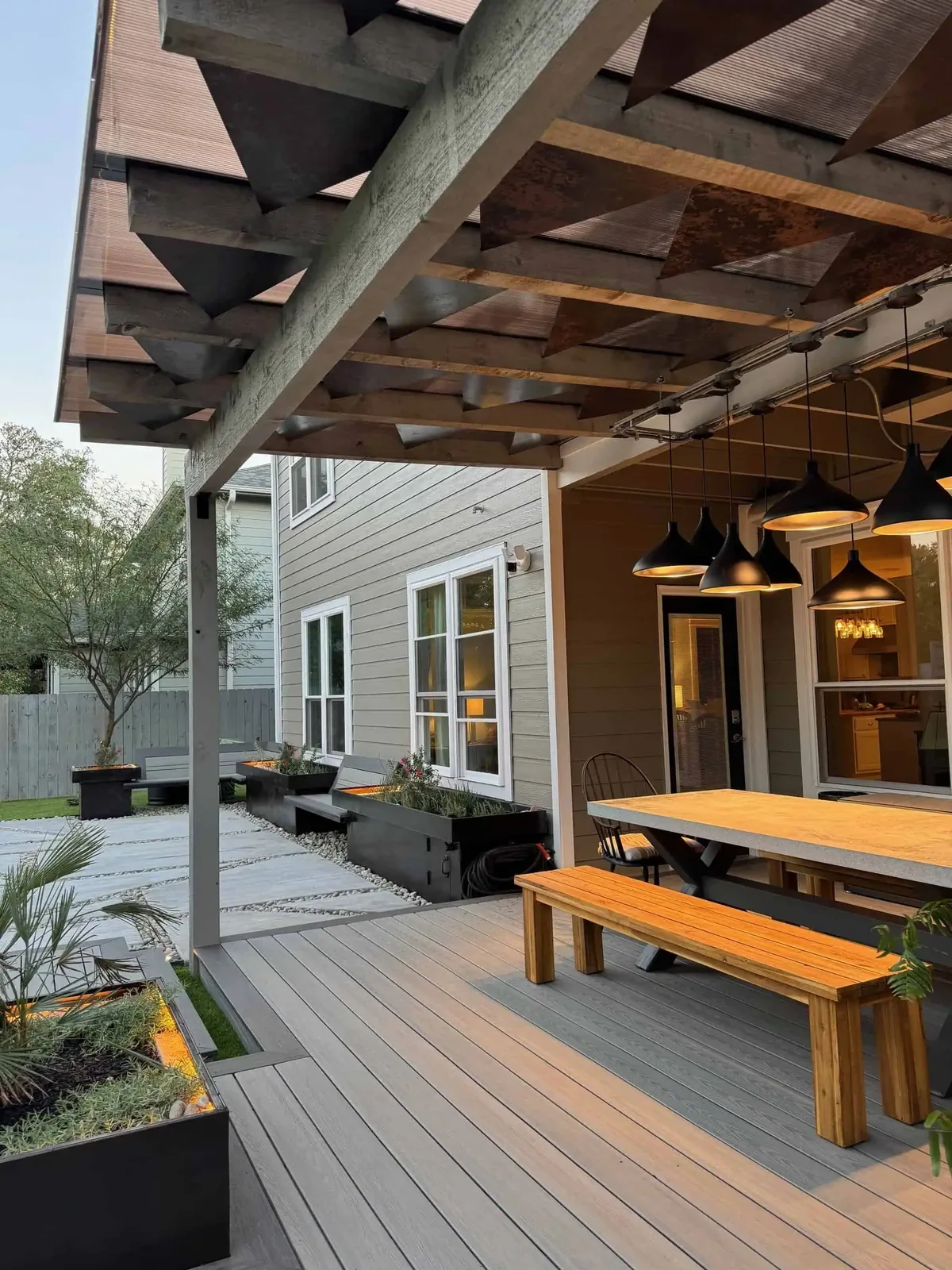
The Circle C project below is the pattern. The yard already had a flagstone patio. Instead of tearing it out and pouring something larger, we laid a 480-square-foot composite deck directly over it. The finished outdoor room is bigger, level, and cooler underfoot, and the ground it covers is ground that was already covered. Our deck materials guide explains why composite over stone works where a wood frame on soil would not. See the full custom deck service.

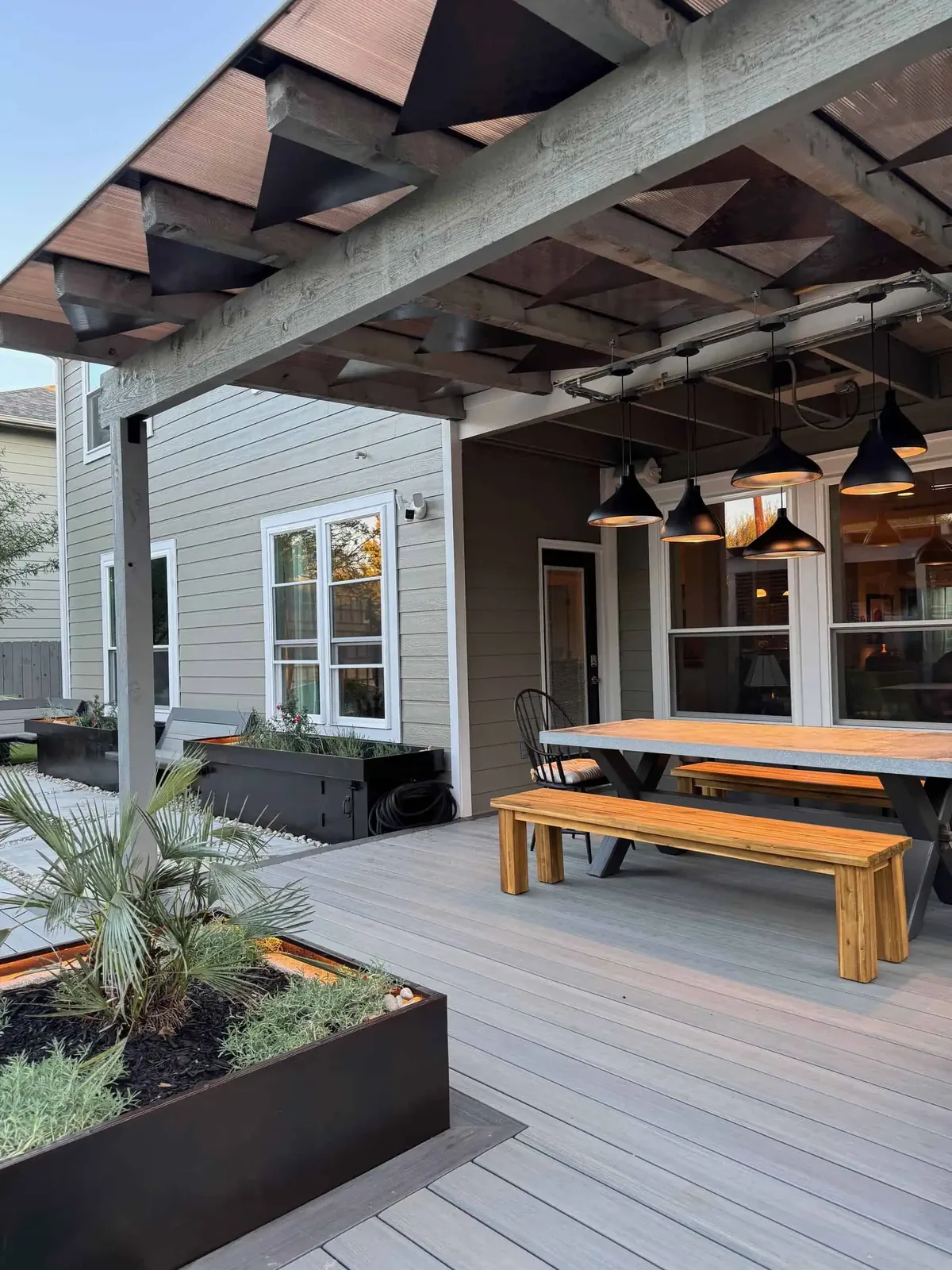
Over the deck, the existing pergola was reframed in CNC-cut mild steel with geometric shadow panels. Steel spans farther than cedar on fewer posts, so it needs fewer footings, and the cut panels throw a patterned shade that moves across the deck through the day. Details on steel pergolas.

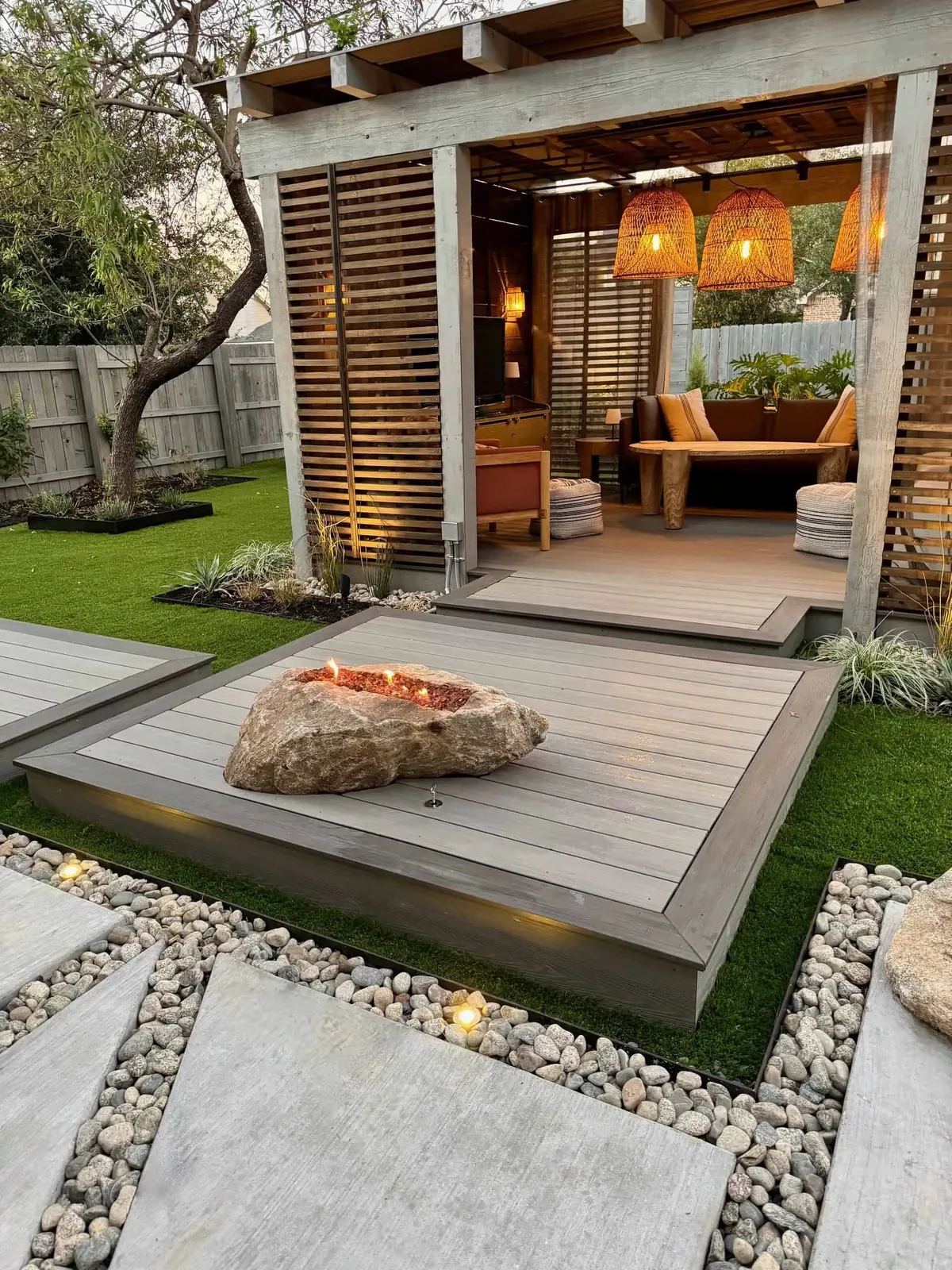
A hand-set limestone boulder fire pit, cantilevered steel planters with COB uplighting, and 24V FCOB perimeter lighting finish the room. Everything in the photos went in without a new slab. The whole package is what we call outdoor living.

Case Study · Circle C

Circle C Outdoor Living:
A Full Room, No New Slab

A Circle C home with a tired flagstone patio and a wood pergola at the end of its life. Red Agave laid 480 square feet of Dekorators Sea Salt composite decking over the existing flagstone, reframed the pergola in CNC-cut mild steel with geometric shadow panels, set a limestone boulder fire pit, and hung cantilevered steel planters with COB uplighting. 24V FCOB perimeter lighting on an ESP32 WLED controller outlines the deck at night, and native understory planting replaced lawn at the edges.

Deck480 sq ft composite over flagstone
DeckingDekorators Sea Salt
PergolaCNC-cut mild steel reframe
ShadeGeometric steel shadow panels
Fire pitHand-set limestone boulders
PlantersCantilevered steel, COB uplit
Lighting24V FCOB perimeter, ESP32 WLED
PlantingNative understory
Dekorators Sea Salt composite deck laid over existing flagstone in a Circle C back yard
CNC-cut mild steel pergola with geometric shadow panels casting patterned shade on a Circle C deck
Steel pergola and composite deck outdoor living room in Circle C with FCOB perimeter lighting at dusk

Read the full Circle C Outdoor Living case study →

Planting

Natives Where the
Lawn Used to Be

Replacing turf with native beds cuts irrigation over the recharge zone, and Circle C's live oak canopy sets the palette: understory natives that take dry shade and part sun. Turk's cap, inland sea oats, cedar sage, and American beautyberry fill the shaded edges; Texas sage, autumn sage, and Gulf muhly take the sun. All are on our native plants guide.

Structure comes from agaves in the cantilevered steel planters, where drainage is perfect and the roots never meet the clay. Our how to xeriscape in Austin post walks through the lawn-to-native conversion step by step.

Questions From Circle C

Cover, Code, and Canopy

What is the impervious cover limit in Circle C?
Under Austin's Save Our Springs ordinance, 15% of net site area in the Edwards Aquifer recharge zone, 20% in the Barton Creek part of the contributing zone, and 25% in the rest of the contributing zone. The ordinance allows no variances. Your lot's zone is shown on the City of Austin property profile.
How do you add outdoor space without adding impervious cover?
Build over surfaces that already exist. The Circle C project laid a composite deck over the existing flagstone and reframed the existing pergola in steel, so the finished room covers ground that was already covered.
Why composite decking over the flagstone?
Composite needs no sealing or staining, stays flat over an uneven stone base on a steel-and-sleeper frame, and the light Sea Salt color stays cooler underfoot in a Circle C summer. Our deck materials guide compares it with ipe and cedar.
Can you reframe an existing pergola instead of replacing it?
Yes. The Circle C pergola was reframed in CNC-cut mild steel with geometric shadow panels on the existing footprint, which kept the footings and avoided new concrete.
Does Austin's tree ordinance apply in Circle C?
Yes. Circle C is inside city limits, so trees 19 inches and up are protected and listed species at 24 inches and up are heritage trees. We design around them so no permit is needed.
Explore

Nearby Areas & Related Services

Ready to Start?

Tell us about your Circle C yard and what's already there. We'll design the room without adding to the footprint.

Get a Free Quote →