Hardscaping in Austin, TX is the built part of a landscape: the walls, patios, decks, steps, and edges that stay put while the plants grow around them. Red Agave Landscape designs and builds hardscape in five materials: steel, concrete, stone, wood, and gravel. This post shows each one on a real project, and explains what has to be decided before any of it goes in.
What Counts as Hardscaping?
Everything that is built and not grown. Plants, soil, and lawn are softscape. The rest is hardscape:
- Walls and terraces that hold a slope
- Patios and pads that give you a level floor
- Decks and steps that meet the house
- Edging that keeps gravel and beds in place
- Fire pits, water features, and planters
Hardscape goes in first, because it sets the levels. Planting and lighting are fitted to it.
What Does Steel Do in a Yard?
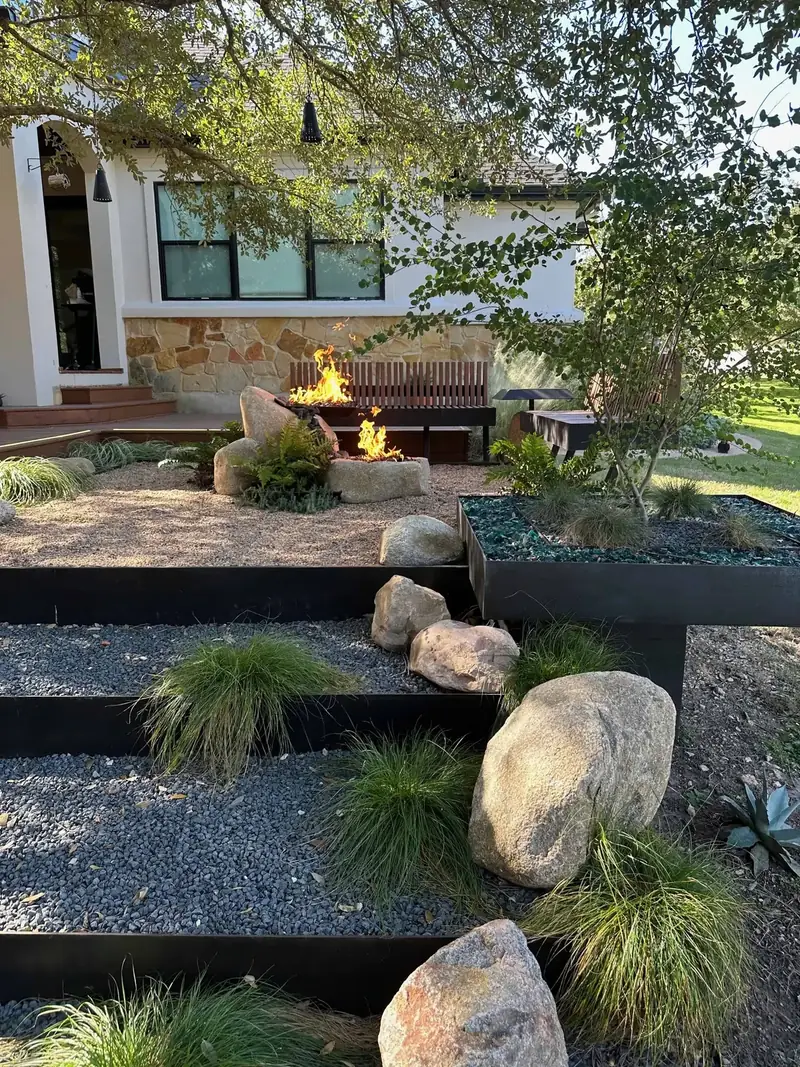
It holds an edge. At the Overlook at Lewis Mountain in Southwest Austin the yard dropped away from the house with nothing to hold it. We cut the slope into three steel terraces and two deck levels, and quarter-inch steel edges every transition.
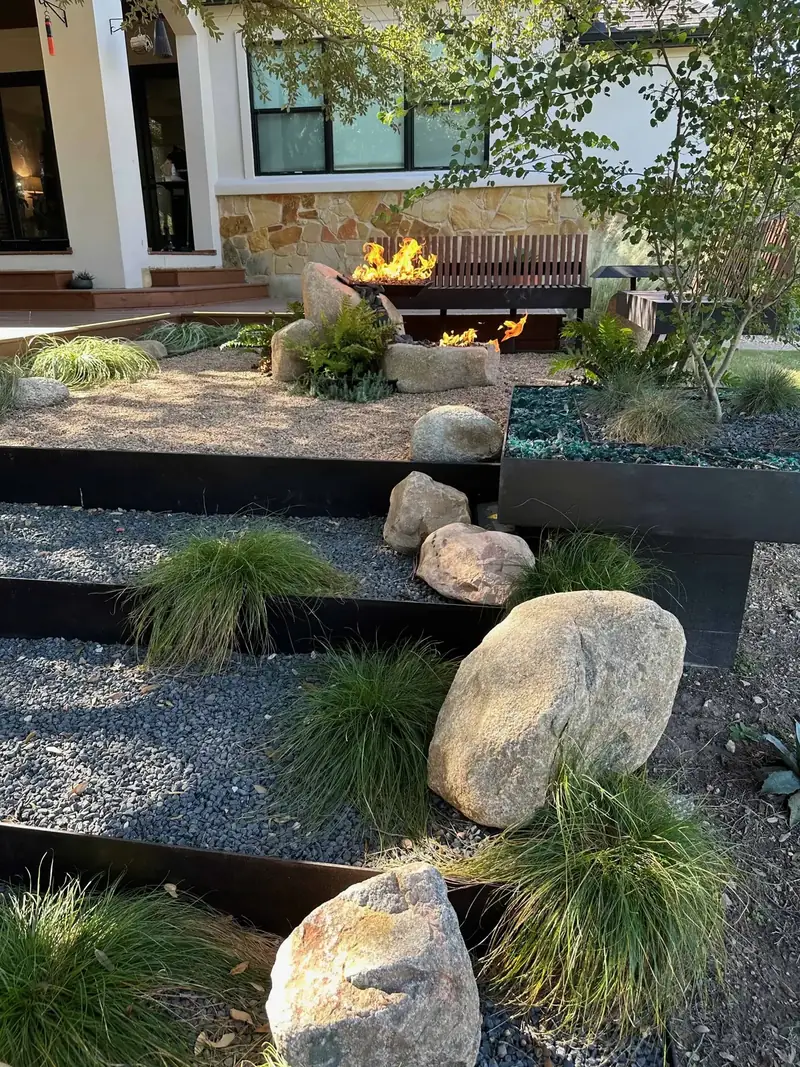
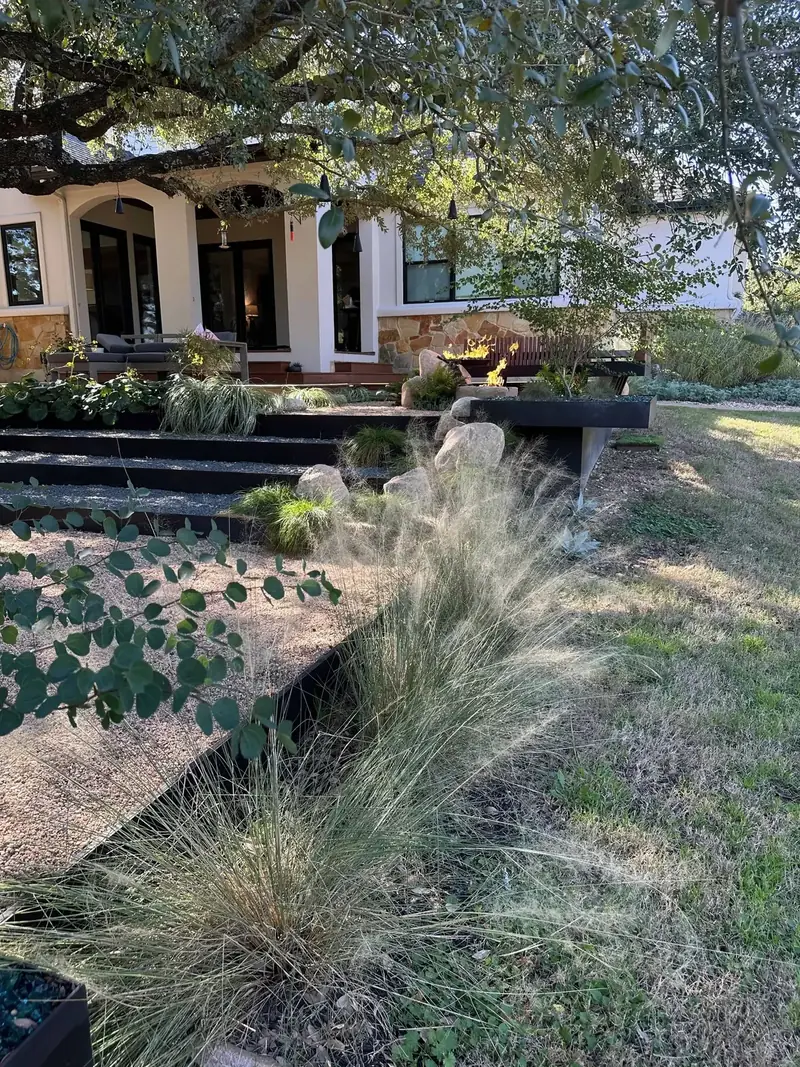
Steel is thin, so a steel wall takes almost no room, and it can be cut to any line. We cut and weld it on site. See our steel retaining walls and our post on choosing a retaining wall contractor.
How Is Concrete Used?
As separate pads. In Southeast Austin the patio is concrete, poured as individual pads with dark gravel in the joints between them. One pad was formed on a curve to follow the round wall of the water feature beside it.
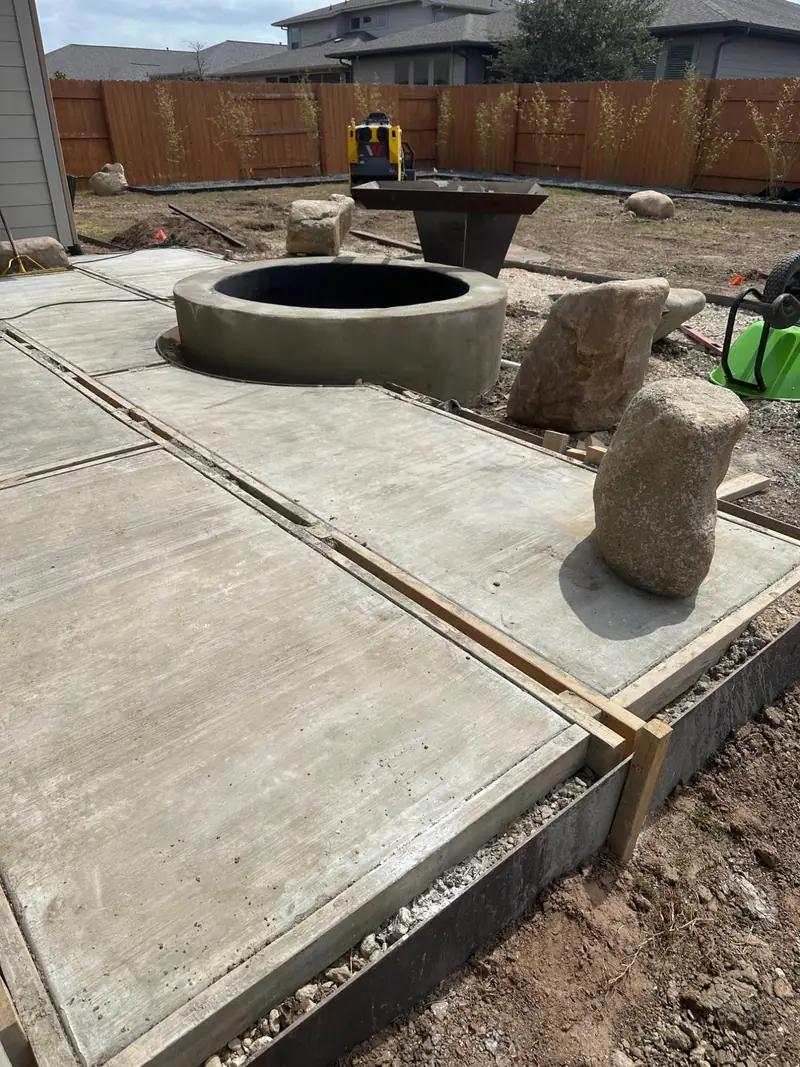
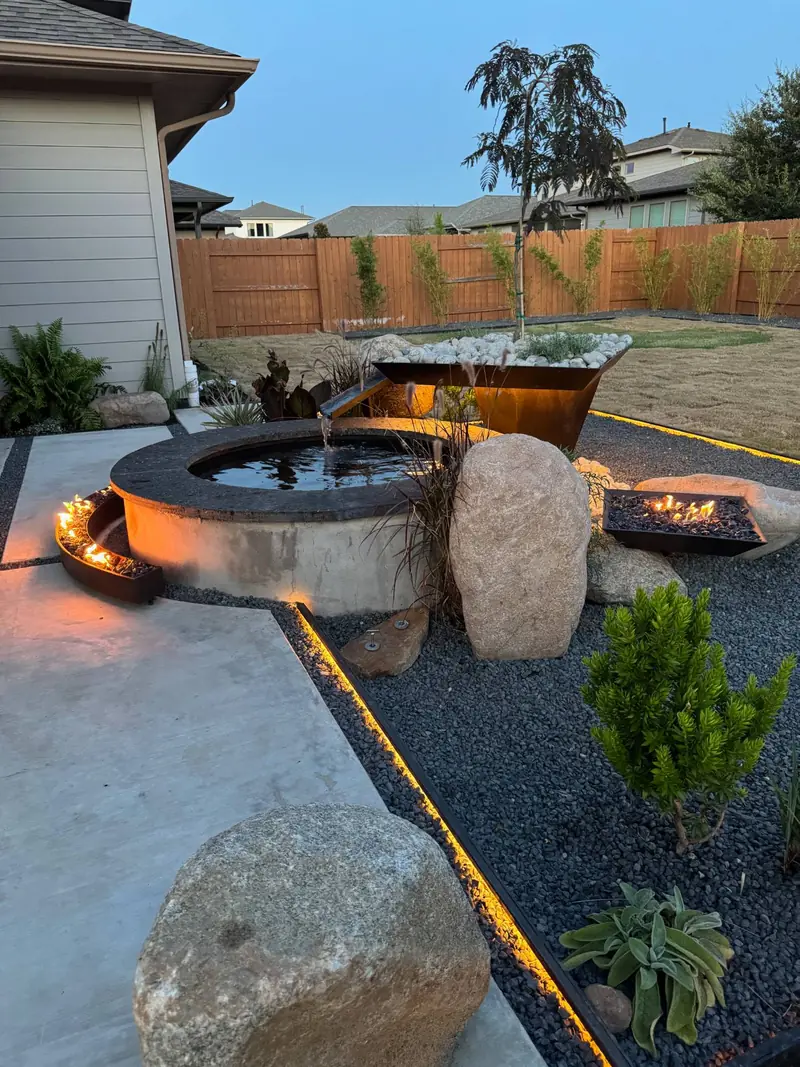
Pads with gravel joints let rain soak in between them, and they read as lighter than one large slab. See our masonry and concrete work and our patios page.
Where Does Stone Come In?
In two ways: as boulders and as coping. Boulders sit at the grade breaks at Lewis Mountain, where one level turns into the next. In Southeast Austin, boulders carry a fire pit and are the source of the water. In East Austin, natural stone coping edges the pool.
A boulder is hardscape that does not look built, which is why it works beside steel and concrete. Where a steel edge meets a boulder, we cut the steel into the stone.
When Is Wood the Right Hardscape?
When the surface has to meet the house. A deck can be set at the exact height of a door, with no step. In East Austin we built a teak deck that runs flush from a screened porch to an outdoor kitchen. In Bee Cave, a wood deck with steel cable railing sits low on a Hill Country slope.
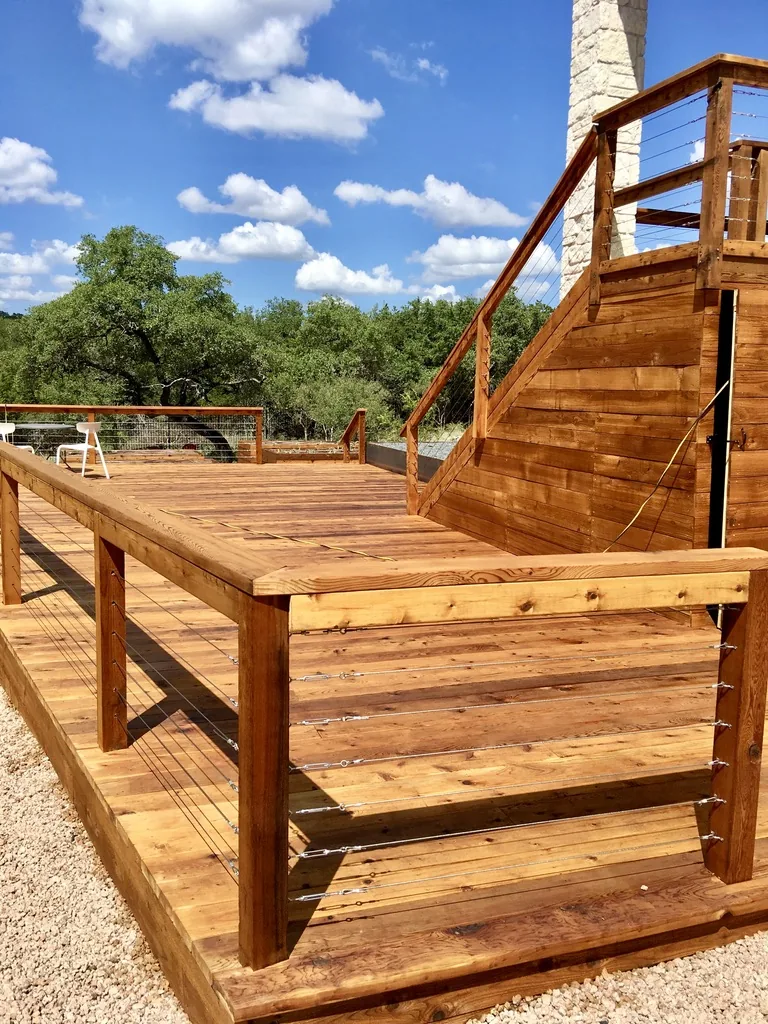
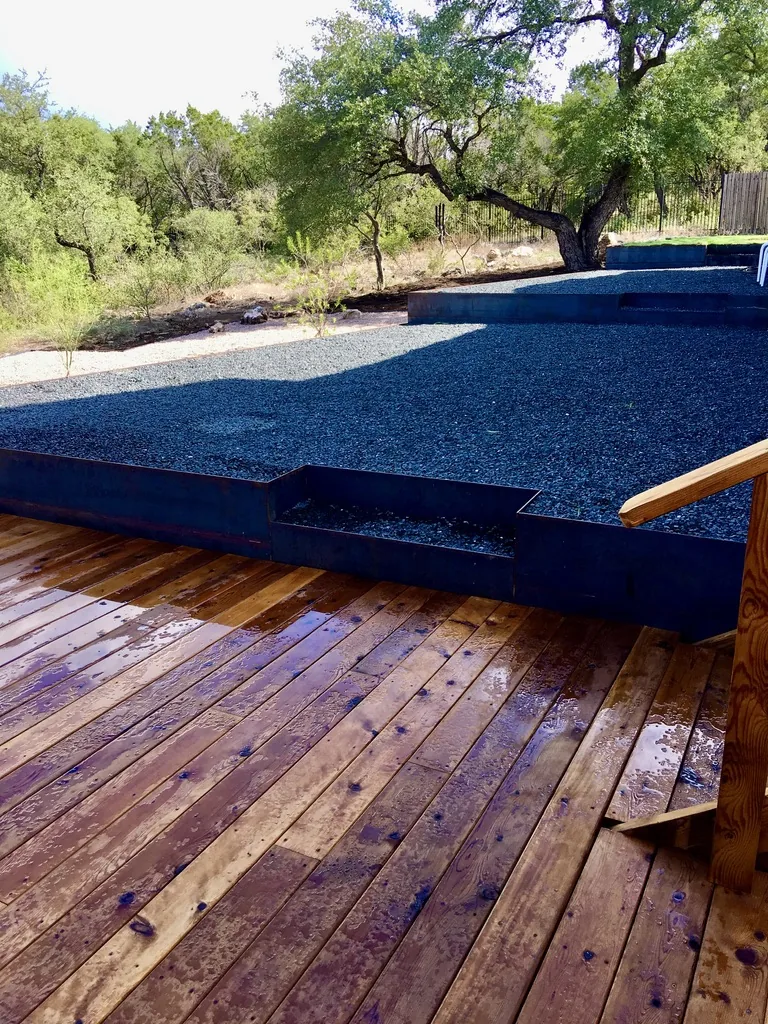
See our custom decks page and our post on choosing a deck builder.
Why Is Gravel Hardscape?
Because it is a surface. A gravel court is a floor that drains. At Lewis Mountain the fire court is gravel, edged in steel. In Southeast Austin a dark gravel court holds the second fire pit, with a light strip along its steel edge.
Gravel needs an edge to stay where it is put. That is why both of these courts are edged in steel.
What Gets Decided Before the Hardscape Goes In?
The water. Drainage is our first phase of construction. Water gets designed before the patio, the planting, or the lighting, because everything built on top relies on it. See our post on choosing a drainage company.
The levels come next, and they are set on the plan. Every Red Agave project starts with a free consultation, and the CAD plan is included. Our post on landscape design build shows a hardscape plan next to the finished yard. For everything we build, see our hardscaping page.
Questions We Hear
What is hardscaping?
The built part of a landscape: walls, patios, decks, steps, edging, fire pits, and water features. Plants, soil, and lawn are softscape.
What hardscape materials do you build with in Austin?
Steel, concrete, stone, wood, and gravel. We cut and weld the steel on site.
Does hardscaping go in before planting?
Yes. Hardscape sets the levels of the yard, so it goes in first. Drainage comes before the hardscape.
Can hardscape fix a sloped yard?
Yes. At the Overlook at Lewis Mountain in Southwest Austin we cut a bare slope into three steel terraces and two deck levels.
Do you design the hardscape too?
Yes. The owner draws every plan, and our own crew builds it. The consultation is free, and the CAD plan is included.