Outdoor Foundations

Where Everything Happens

Red Agave builds patios in Austin, TX in poured concrete, travertine, flagstone, and pavers. Every patio sits on 6 to 8 inches of compacted crushed limestone, graded so water moves away from the house, and our own crew builds it.

The patio is the center of every outdoor living space. It is where you eat, entertain, relax, and gather. It is the surface under your feet for thousands of hours over the life of your home. A well-designed patio does more than provide a flat place to put furniture — it defines zones, manages water, connects indoor and outdoor spaces, and sets the material tone for the entire landscape.

Red Agave builds patios in poured concrete, travertine, flagstone, and pavers — each with different aesthetics, performance characteristics, and price points. We help you choose the right material based on how you use the space, what surrounds it, and what looks best with your home’s architecture.

Every patio we build starts below the surface. We excavate to proper depth, compact the subgrade, install 6 to 8 inches of crushed limestone base, and grade for positive drainage away from the house. In Austin’s expansive clay soils, this preparation is the difference between a patio that stays flat for 20 years and one that cracks and heaves in the first 3. Pair your patio with an outdoor kitchen, a fire pit, a pergola, and integrated lighting for the full outdoor living experience. Schedule a free consultation to design your patio.
Our Work

Recent Projects

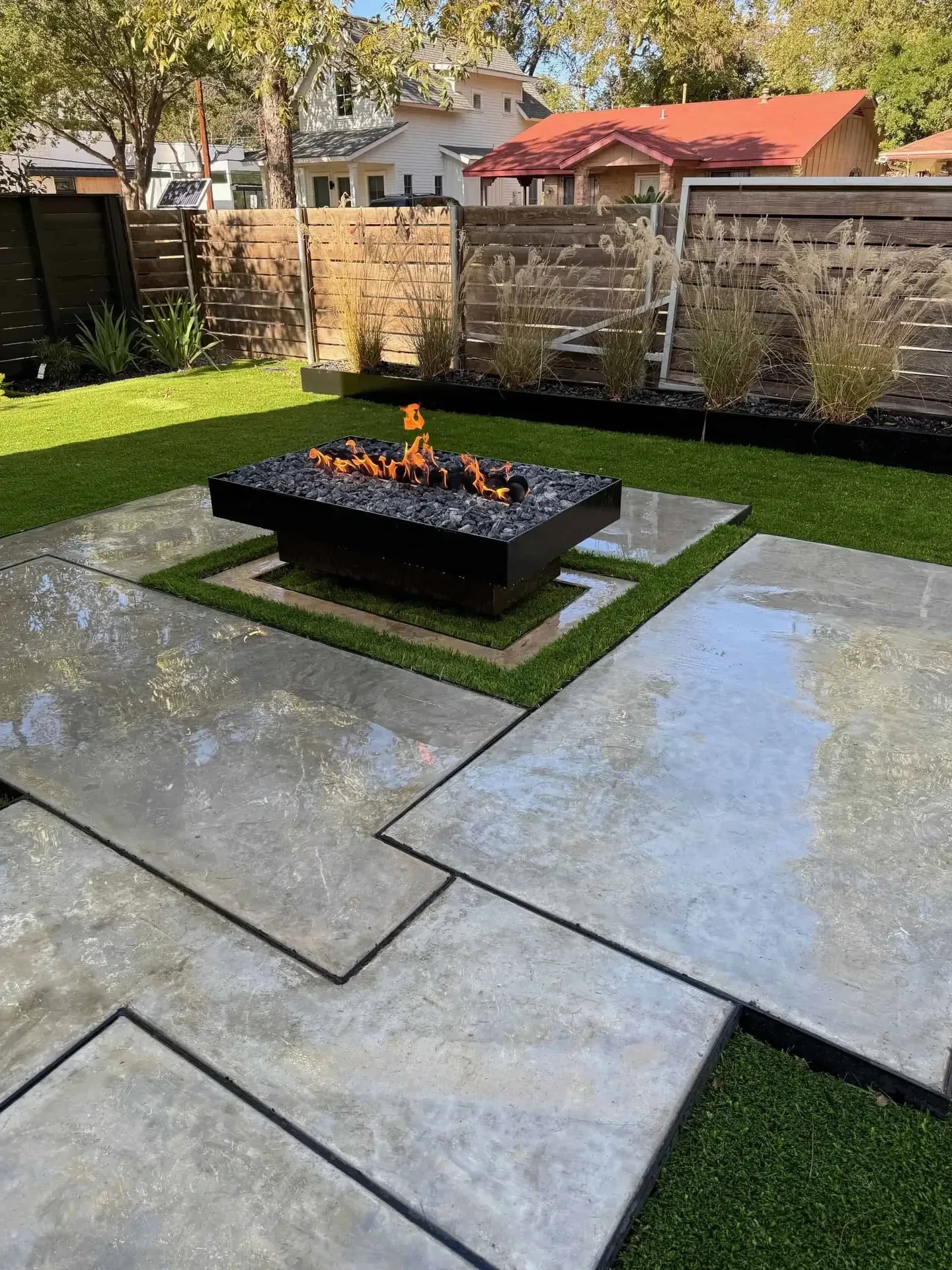
Custom concrete patio pads with fire pit Austin TX
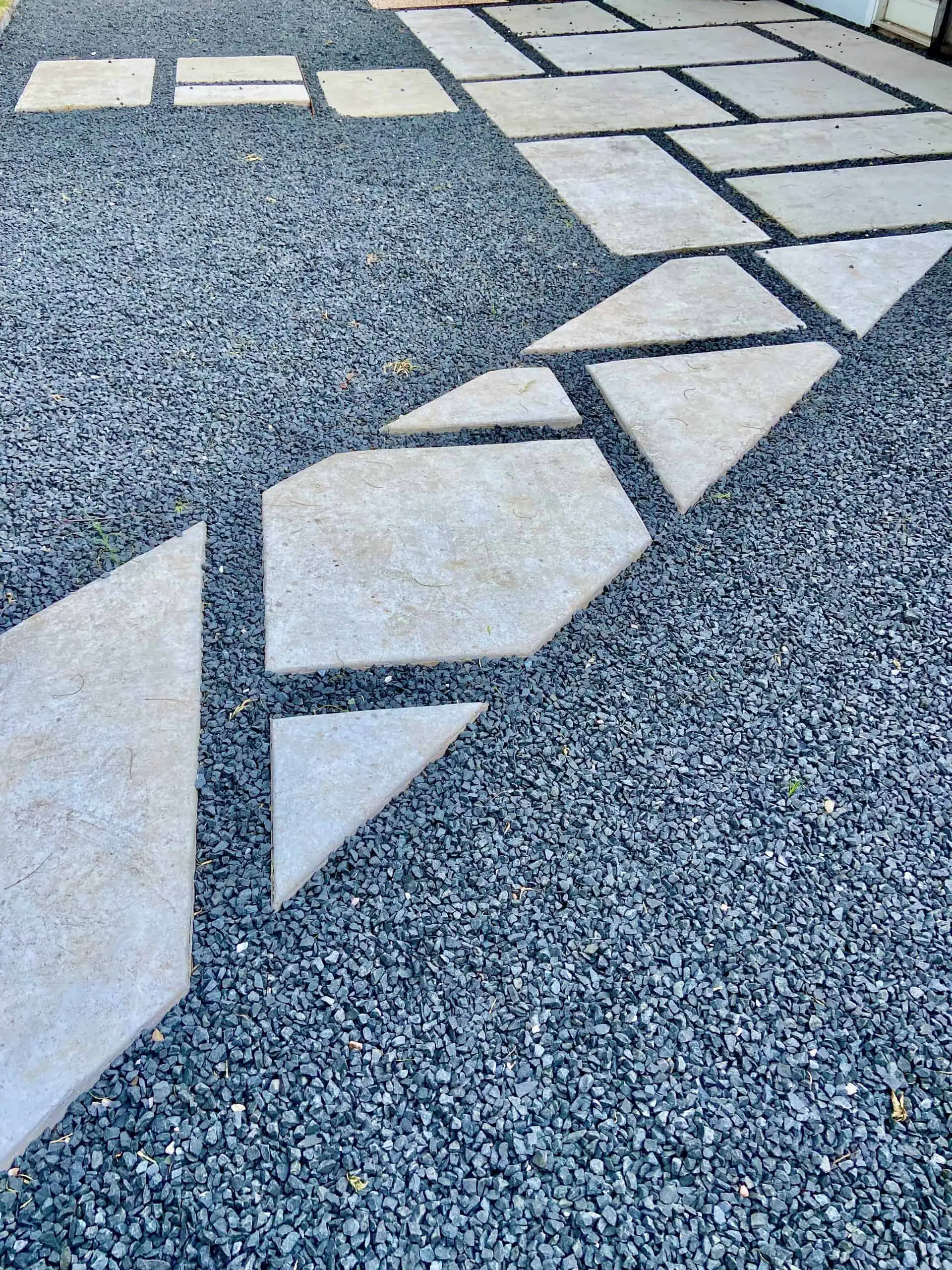
Concrete walkway and hardscape flatwork Austin TX
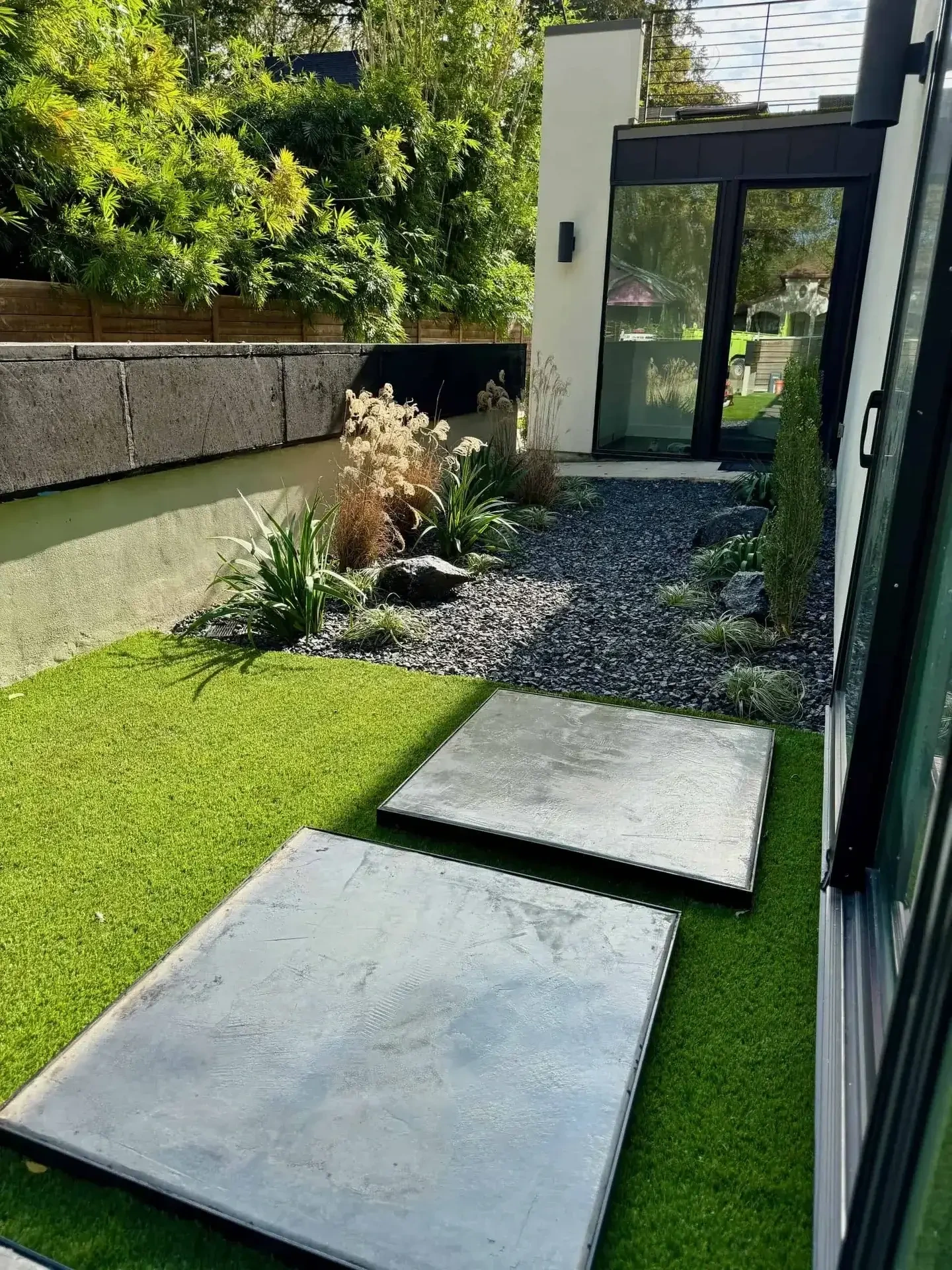
Concrete stepping pads with turf and retaining wall Austin TX
Patio Materials

Options & Finishes

01
Poured Concrete
The most versatile and cost-effective option. Brushed, stamped, exposed aggregate, or smooth trowel finishes. 4,000 PSI with fiber mesh and rebar.
02
Travertine Pavers
Natural stone pavers with a tumbled or honed finish. Stays cooler than concrete in direct sun. Classic Mediterranean aesthetic. Dry-set on compacted base or mortar-set on concrete slab.
03
Flagstone
Irregular natural stone for organic, rustic aesthetics. Oklahoma flagstone, Pennsylvania bluestone, and Texas limestone options. Set in decomposed granite, mortar, or on concrete slab.
04
Concrete Pavers
Manufactured pavers in consistent sizes for clean geometric patterns. Interlocking designs distribute load and allow individual replacement. Wide range of colors and textures.
05
Mixed Materials
Concrete fields with stone bands, paver borders with flagstone insets, or steel-edged transitions between materials. Mixing creates visual interest and defines zones within larger patios.
06
Covered Patios
Patio surfaces paired with pergolas, pavilions, or roof extensions for shade. We coordinate patio construction with overhead structures so footings, columns, and drainage work together.
Choose Your Material

Patio Materials We Build in Austin

Material sets the look. Base work is what makes it last.

MaterialBest For
Poured concreteClean modern lines, large areas
Stamped concreteStone patterns pressed into the slab
Marbled concreteA statement slab, one continuous surface
TravertinePool decks, stays cool
FlagstoneNatural, Hill Country look
Concrete paversRepairable, flexible on clay
Patio SizeTypical Use
200 sq ftStandard dining patio
300 sq ftEntertaining, room for furniture
400 sq ftLarge patio with defined zones
600+ sq ftKitchen, fire pit, and seating areas
Built for Clay

Why Austin Patios Crack, and How We Stop It

Austin clay swells when wet and shrinks when dry. It moves a slab from below. Most patio failures here start under the surface, not on it.

So the work starts underground. We excavate to proper depth, compact the subgrade, install 6 to 8 inches of crushed limestone, and grade for positive drainage away from the house. Concrete gets a 4,000 PSI mix with fiber mesh and rebar. That preparation is the difference between a patio that stays flat for 20 years and one that heaves in the first 3.

Material matters too. Pavers flex with the ground, and a single cracked unit can be replaced. Poured concrete gives you one clean, seamless surface. On a hot Austin afternoon, travertine stays far cooler underfoot than dark concrete.

Our Process

How We Build a Patio

01
Design
We lay out the patio around how you will use it and how it connects to the house, then set material and finish.
02
Excavate and Compact
Proper depth, compacted subgrade, and 6 to 8 inches of crushed limestone base.
03
Grade for Drainage
The surface slopes away from the house so water never sits against the foundation.
04
Pour or Set
Concrete poured and finished, or stone and pavers set, with steel edging where the design calls for it.

Real project: Lakeway Hardscape replaced bare caliche with 1,800 square feet of marbled concrete, built to host a 12-person dinner party, a fire pit gathering, and daily family use.

Common Questions

Patio FAQ

How much does a patio cost in Austin?
Every patio is quoted after a free on-site consultation. Price depends on material, size, base preparation, and site conditions.
Concrete or pavers — which is better?
Both are excellent choices with different strengths. Poured concrete is more cost-effective, offers seamless surfaces, and works well for large areas with clean modern lines. Pavers offer individual stone replacement if one cracks, better performance over unstable soils (they flex rather than crack), and a natural stone aesthetic. For most Austin projects, we recommend based on design style: concrete for modern and contemporary, pavers for Mediterranean or traditional, and flagstone for Hill Country and organic designs.
Which patio material stays coolest in Austin summers?
Travertine stays significantly cooler than concrete or manufactured pavers in direct sun — typically 20 to 30 degrees cooler than dark concrete on a 100°F day. Light-colored concrete is next best. Flagstone varies by color (lighter is cooler). Dark materials like charcoal pavers get the hottest. For pool decks and barefoot areas, we strongly recommend travertine or light brushed concrete for comfort in Austin’s summers.
How do you prevent patio cracking on Austin's clay soil?
Proper base preparation is everything. We excavate below the clay layer, install 6 to 8 inches of compacted crushed limestone base, and pour on stabilized subgrade. For concrete, we use 4,000 PSI mix with fiber mesh and rebar reinforcement, and cut control joints at proper intervals to direct any cracking to planned locations. For pavers, the flexible joint system naturally accommodates minor soil movement without visible cracking.
Do I need a permit for a patio in Austin?
Most ground-level patios do not need a building permit. You may need one if the patio has a roofed structure, attaches to the home's foundation, or includes electrical or plumbing work.
How long does a patio last in Austin?
Poured concrete lasts 25 to 30 years with proper sealing and drainage. Concrete pavers last 25 to 50 years, and individual pavers can be replaced. Natural flagstone can last 50 to 100 years or more. In Austin, base preparation is the deciding factor.

Start From the Ground Up

Concrete · Travertine · Flagstone · Pavers · Free Consultation

Get a Free Quote →
Get a Free Quote →