Hardscape Foundation

The Bones of Every Great Landscape

Red Agave pours concrete and builds masonry in-house in Austin, TX using 4,000 PSI mix with fiber mesh and rebar over a compacted crushed limestone base. We build patios, walkways, driveways, retaining walls, seating walls, steps, and columns.

Concrete and masonry are the foundation of every outdoor space we build. Patios, walkways, driveways, retaining walls, seating walls, steps, columns, and veneers — these are the structural elements that define the layout, handle elevation changes, manage water, and create the surfaces you walk on, sit on, and build everything else around. Get the concrete and stonework right, and every other element of the landscape falls into place. Get it wrong, and nothing else can fix it. For the full picture, see what hardscaping is, shown on real builds.

Red Agave handles all concrete and masonry in-house. We pour, form, finish, and cure our own concrete. We build retaining walls, seating walls, and columns with CMU block cores and natural stone veneer. We set travertine, flagstone, and pavers on properly prepared bases. Every project starts with site grading and compaction — the unglamorous work that determines whether your patio stays flat or your retaining wall stays standing ten years from now.

Stone veneer, natural stone flatwork, and specialty finishes add to that foundation. We use 4,000 PSI concrete with fiber mesh and rebar reinforcement as our standard — not the 3,000 PSI minimum that many contractors pour. Pair your hardscape with integrated lighting, steel planters, and xeriscape plantings for a complete environment. Schedule a free consultation to discuss your project.
Our Work

Recent Projects

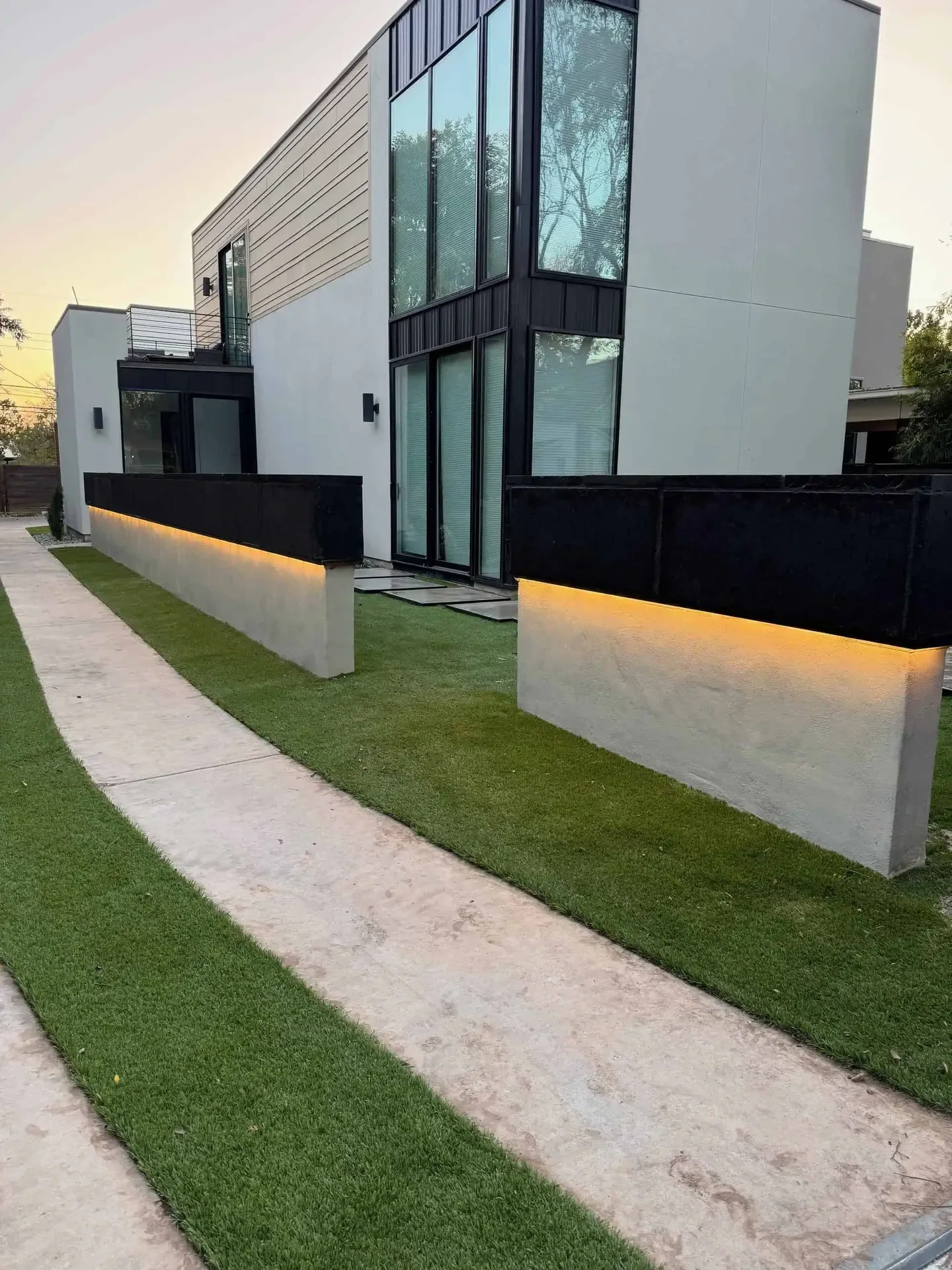
Concrete retaining walls with integrated uplighting Austin TX
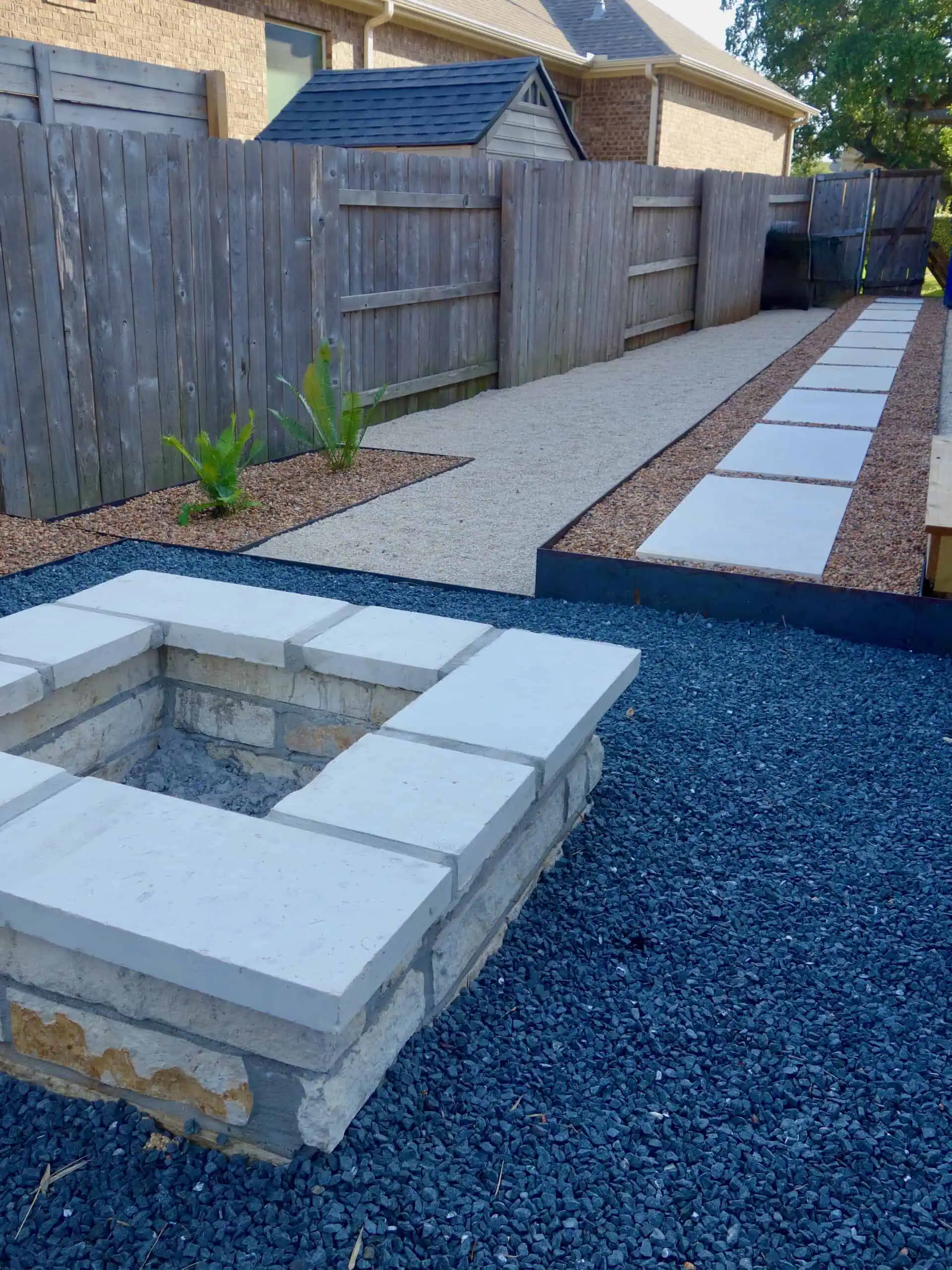
Stone fire pit with concrete walkway and stepping pads Austin TX
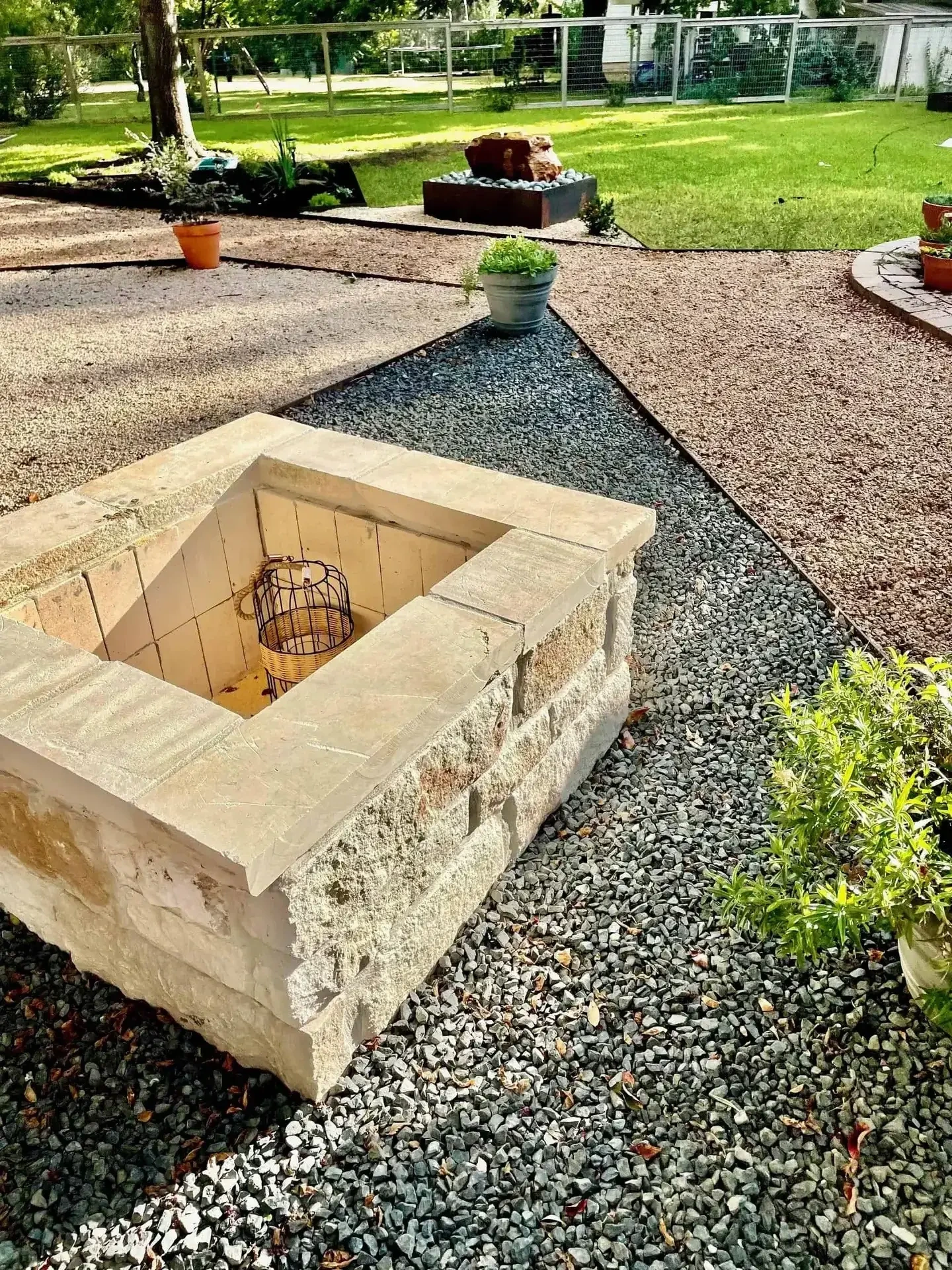
Stone masonry fire pit with gravel hardscape Austin TX
What We Build

Masonry & Concrete Services

01
Patios & Flatwork
Poured concrete, travertine, flagstone, and paver patios. Brushed, stamped, exposed aggregate, and smooth trowel finishes. Proper base preparation and drainage for long-term performance.
02
Retaining Walls
Engineered retaining walls for grade changes, hillside stabilization, and terracing. CMU block core with natural stone or stucco veneer. Proper drainage and footer engineering for Austin's expansive clay soils.
03
Seating Walls & Columns
Built-in seating walls around fire pits, patios, and entertainment areas. Matching columns for pergola supports, entry features, and privacy walls. Stone-veneered or stucco-finished.
04
Walkways & Steps
Concrete, flagstone, and paver walkways connecting outdoor zones. Custom poured steps with stone treads, steel handrails, and integrated step lighting for safe navigation.
05
Driveways
Poured concrete driveways, paver driveways, and concrete-with-stone-band designs. Reinforced for vehicle loads, properly jointed for expansion, and graded for drainage.
06
Stone Veneer
Natural limestone, chopped stone, ledgestone, and Austin stone veneer applied to walls, columns, outdoor kitchens, and fire pits. Mortar-set on CMU block or poured concrete cores.
Concrete Finishes

Concrete Finishes We Pour in Austin

The slab is the same. The finish sets the look. Details on the decorative options are on our marbled concrete page.

FinishLook
Standard broomClean, good traction
StampedStone patterns pressed into the slab
Exposed aggregateTexture and visual depth
MarbledVeining that runs through the slab
Board-formedWood-grain, architectural edges
Our Standard

How We Spec Concrete for Austin Clay

Austin clay expands when wet and shrinks when dry. A patio built to the minimum cracks. Here is what we pour instead.

SpecRed Agave Standard
Mix strength4,000 PSI, not the 3,000 PSI minimum many contractors pour
ReinforcementFiber mesh and rebar
Base6 to 8 inches of compacted crushed limestone
Standard slab4 inches, brushed finish
PrepSite grading and compaction before anything is poured
Compare

Retaining Wall Materials in Austin

Retaining walls have to hold soil, shed water, and look right for decades. Here is how the common options compare. Steel gets its own page.

MaterialCharacter
Concrete blockThe most versatile, in many textures and colors
Texas limestoneLocally sourced, suits Hill Country landscapes
Natural stoneIrregular shapes with an organic look
BoulderDramatic and natural
Poured concreteThe strongest engineered option
Corten steelModern, clean lines with a natural patina
Our Process

How We Pour and Build

01
Grade and Compact
We set the layout, grade for drainage, and compact the subgrade. This is the work that decides whether a slab stays flat.
02
Base and Forms
6 to 8 inches of crushed limestone, then forms and reinforcement.
03
Pour and Finish
4,000 PSI concrete with fiber mesh and rebar, finished to the look you chose.
04
Cure
Walk on it after 24 to 48 hours. Light furniture after 3 to 5 days. Vehicles after 7 to 10 days.

Real project: Lakeway Hardscape is 1,800 square feet of marbled concrete with board-formed edges and 240 linear feet of steel edging, built in 16 days.

Common Questions

Masonry & Concrete FAQ

How much does concrete cost in Austin?
Every job is quoted after a free on-site consultation. Price depends on thickness, reinforcement, finish, and site access.
How do you handle Austin's expansive clay soils?
Austin’s clay soils expand when wet and shrink when dry, which can crack concrete and shift walls. We address this with proper base preparation: excavating below the clay layer where possible, using 6 to 8 inches of compacted crushed limestone base, and pouring on stabilized subgrade. For retaining walls, we engineer footers below the active zone of soil movement and include proper drainage behind walls to prevent hydrostatic pressure buildup.
What concrete finish should I choose?
For patios and pool decks, brushed finish provides good traction and clean aesthetics at the lowest cost. Stamped concrete mimics stone patterns at a fraction of the cost of natural stone. Exposed aggregate adds texture and visual interest. Smooth trowel finish is sleek but can be slippery when wet — best for covered areas. We’ll recommend the right finish based on your use case, budget, and the overall design of the space.
How long before I can use a new concrete patio?
You can walk on new concrete after 24 to 48 hours. Light furniture can be placed after 3 to 5 days. Full use and heavy loads (vehicles on driveways) should wait 7 to 10 days. Concrete reaches about 70% of its full strength at 7 days and full design strength at 28 days. We apply curing compound immediately after finishing to ensure proper hydration and maximum strength development.
Do I need a permit for a retaining wall in Austin?
You need a building permit for any wall over 4 feet, measured from the bottom of the footing to the top of the wall. You also need one if the wall supports a driveway, patio, or building, or sits in a flood hazard area. Most residential walls under 4 feet on flat ground do not need one.
Do I need an engineer for a retaining wall?
Yes for any wall over 4 feet, any wall supporting loads like driveways or buildings, and walls on steep slopes. Engineering is required for the Austin building permit on walls over 4 feet. It is also worth it on shorter walls in expansive clay.

Built to Last

Concrete · Stone · Masonry · Free Consultation

Get a Free Quote →
Get a Free Quote →