In Austin, TX the average first freeze arrives around December 1, and the plants that need protection are the tender ones and the ones in pots. Hardy agaves and other plants rated well below Austin’s winter lows can ride out a normal freeze uncovered. This post gives the dates from the National Weather Service, the cold limits of plants we use, and the steps Texas A&M AgriLife recommends when a freeze warning goes out.
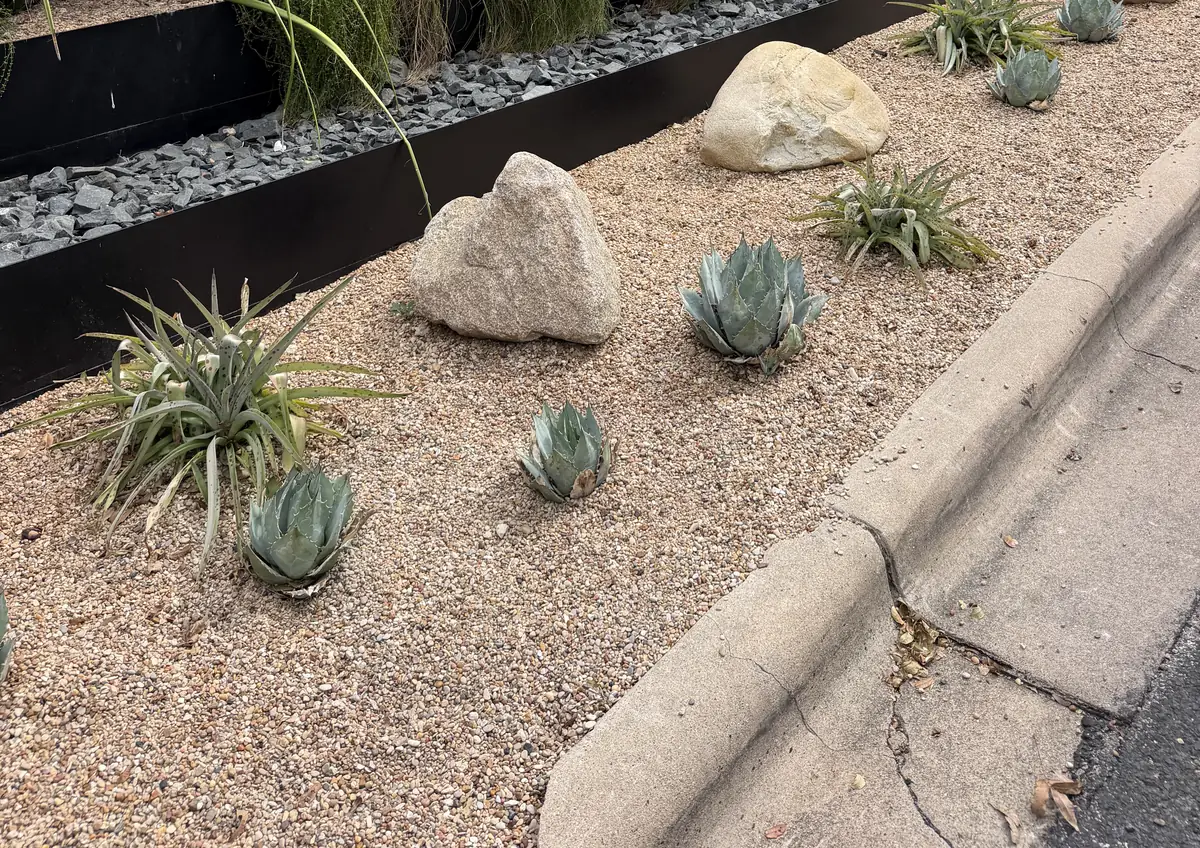
When Does Austin Freeze?
Around the start of December, and not often. The National Weather Service climate summary for Austin gives these averages for Camp Mabry:
- First freeze: November 29 over the full record of more than 120 years, and December 1 for 1991 to 2020
- Last freeze: February 25 over the full record, and February 15 for 1991 to 2020
- Freezing days: about 12 days a year at Camp Mabry
Where you live changes the count. The same summary lists about 33 freezing days a year at Bergstrom, on the southeast side of town. That is nearly three times as many as Camp Mabry.
How Cold Does It Get?
Most winters, the low 20s. The USDA’s 2023 hardiness map puts most of the Austin area in zone 9a, where the coldest night of an average winter falls between 20 and 25°F.
Some winters go lower. Camp Mabry reached 15°F in December 2022 and fell into the single digits in February 2021. A landscape should be chosen for the average winter and checked against the hard ones.
Which Plants Can You Leave Alone?
The ones whose cold limit is well below an Austin winter. Three that we plant:
- Whale’s tongue agave: Texas SmartScape lists it as cold hardy to 0°F
- Artichoke agave: NC State Extension lists it as cold tolerant to -5°F when the soil is dry
- Giant hesperaloe: the Arizona Municipal Water Users Association lists it as hardy to 10°F
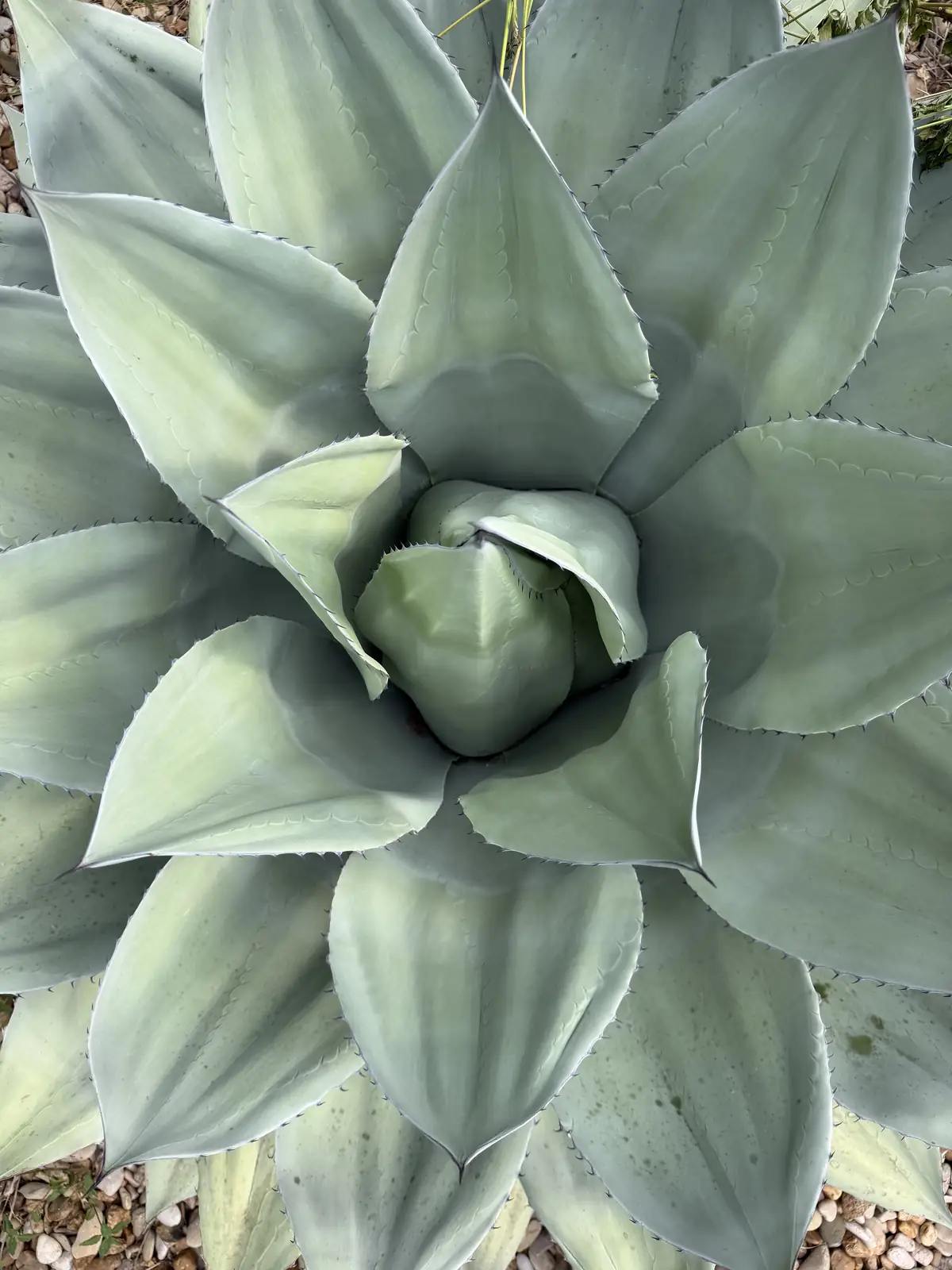
All three limits sit below the 15°F that Camp Mabry reached in December 2022. See our notes on whale’s tongue agave, artichoke agave, and giant hesperaloe, and our guide to cold-hardy agaves.
Palms can be chosen the same way. The John Fairey Garden in Hempstead rates the blue Sonoran palm for USDA zone 8, and reports no damage to its palms in the February 2021 freeze. Our own blue Sonoran palm in South Austin lost every leaf in that freeze and grew back.
Which Plants Need a Cover?
The ones whose limit is close to what Austin can reach. Dioon is a good example. The University of Arizona Campus Arboretum lists Dioon edule as hardy to 15°F, which is the temperature Camp Mabry reached in December 2022. A plant at its limit is worth covering. See our note on dioon and sago palm.
Container plants are the other group, and their roots are the part to protect. Texas A&M AgriLife’s advice is to move them into the house or the garage. Where that is not possible, put them on the south side of the house, water them well, and cover or mulch them.
How Do You Cover a Plant the Right Way?
All the way to the ground. Lisa Whittlesey, a program specialist with Texas A&M AgriLife Extension, gives three steps:
- Water first. "Drought-stressed plants are more susceptible to the cold," she says. Water also holds warmth and loses heat slowly.
- Drape cloth or cardboard over the plant. Extend it to the ground.
- Secure the edges. The cover works by trapping warm air that rises from the soil.
A cover gathered around the stem and tied off leaves that warmth outside.
Mulch helps the roots. Larry Stein, an AgriLife Extension horticulture specialist, describes mulch as an extra layer of insulation over the ground’s own. He also recommends clustering potted plants together so they can be covered as a group.
The watering step is for ordinary landscape plants. Agaves are different: the -5°F rating NC State gives artichoke agave applies when the soil is dry.
What Should You Do After a Freeze?
Wait. Stein’s advice is not to rush pruning: woody plants are usually best pruned from late December through February. Whittlesey notes that winter-hardy plants damaged by a freeze are likely to recover.
How Does Design Protect a Yard From Freezes?
By choosing plants for the winter you get. A planting plan built from plants rated well below 20°F needs very little done to it when a freeze warning goes out.
That is how we plan. Every Red Agave design includes a plant palette chosen for your sun, your soil, and Austin’s watering limits. See our xeriscape work and our landscape design service. Every project starts with a free consultation, and the CAD plan is included.
Questions We Hear
When is the first freeze in Austin, TX?
The National Weather Service lists the average first freeze at Camp Mabry as November 29 over the full record, and December 1 for 1991 to 2020.
Do agaves need to be covered in an Austin freeze?
Hardy ones do not in a normal freeze. Texas SmartScape lists whale’s tongue agave as cold hardy to 0°F, and NC State Extension lists artichoke agave as cold tolerant to -5°F when the soil is dry.
How should I cover plants before a freeze?
Drape cloth or cardboard over the plant, extend it to the ground, and secure it. Texas A&M AgriLife says the cover works by trapping warm air rising from the soil.
Should I water plants before a freeze?
Yes, for ordinary landscape plants. Texas A&M AgriLife says drought-stressed plants are more susceptible to the cold.
When should I prune freeze damage?
Do not rush. Texas A&M AgriLife says woody plants are usually best pruned from late December through February.