Artichoke agave (Agave parryi) is a compact agave that forms a tight rosette 1 to 3 feet tall and wide, with thick gray-green leaves that each end in a dark spine. NC State Extension lists it as native to Arizona, New Mexico, Texas, and northern Mexico, and cold tolerant to -5°F when the soil is dry. We planted it in the cantilevered steel planters of our Tarrytown project, and it grows in the gravel of a front-yard terrace in South Austin.
What Does Artichoke Agave Look Like?
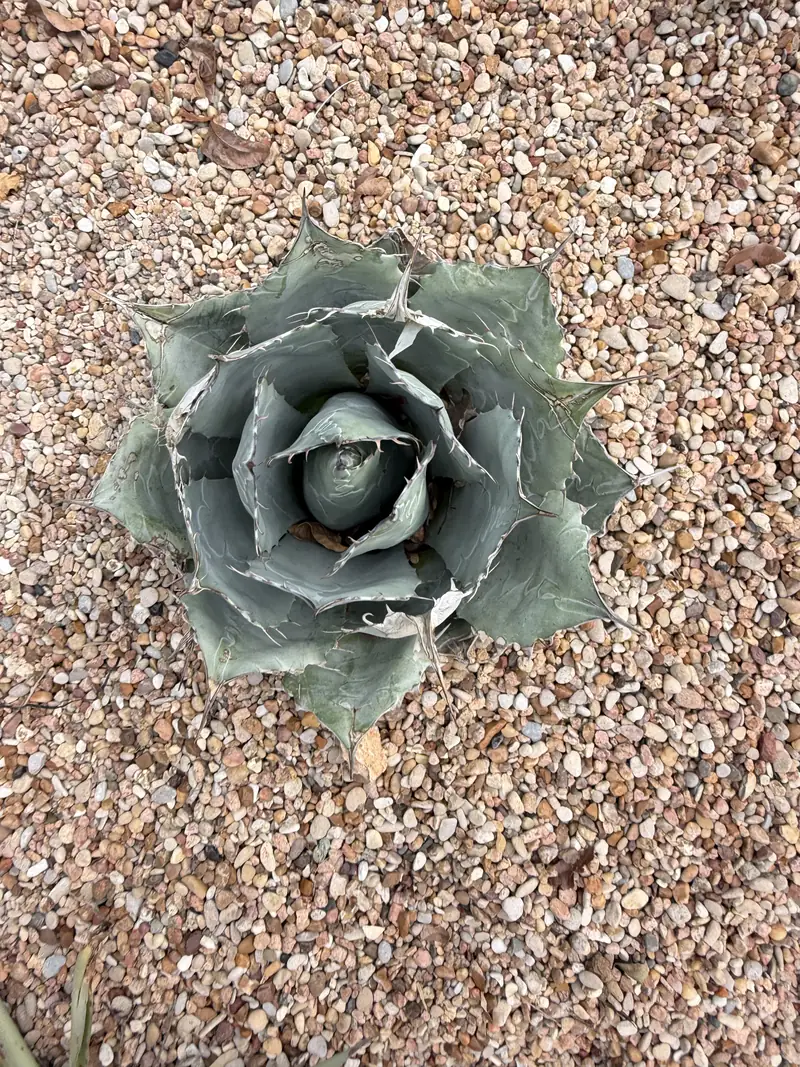
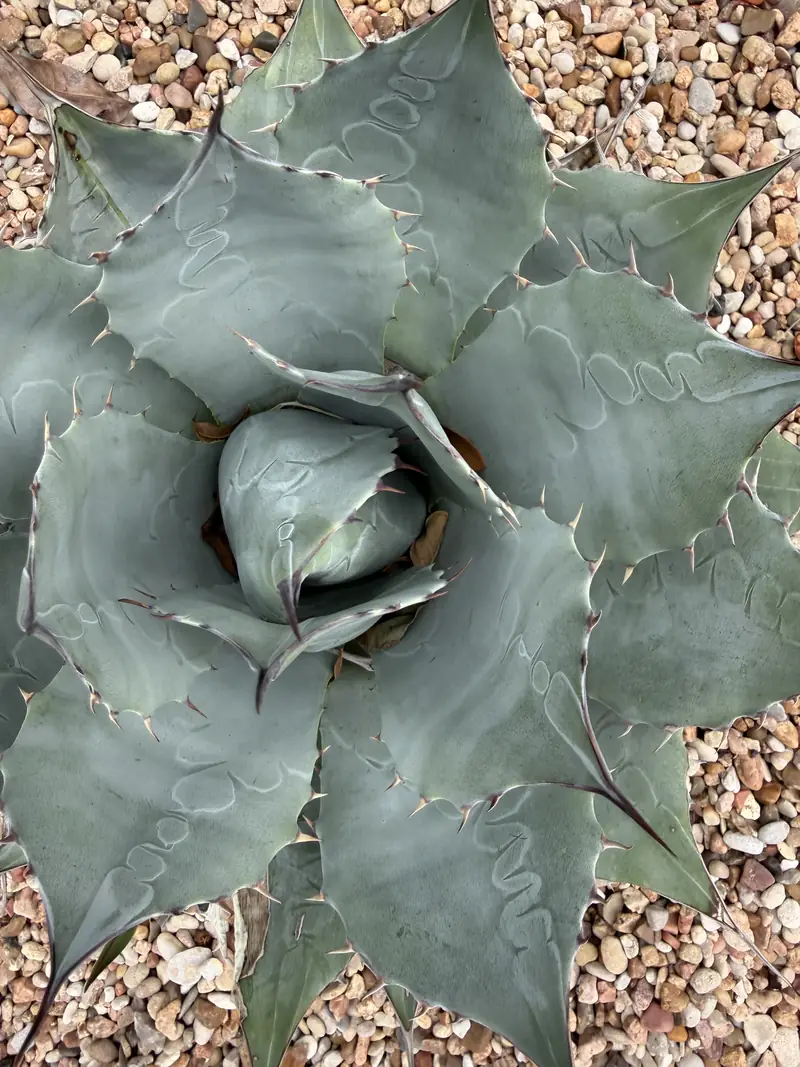
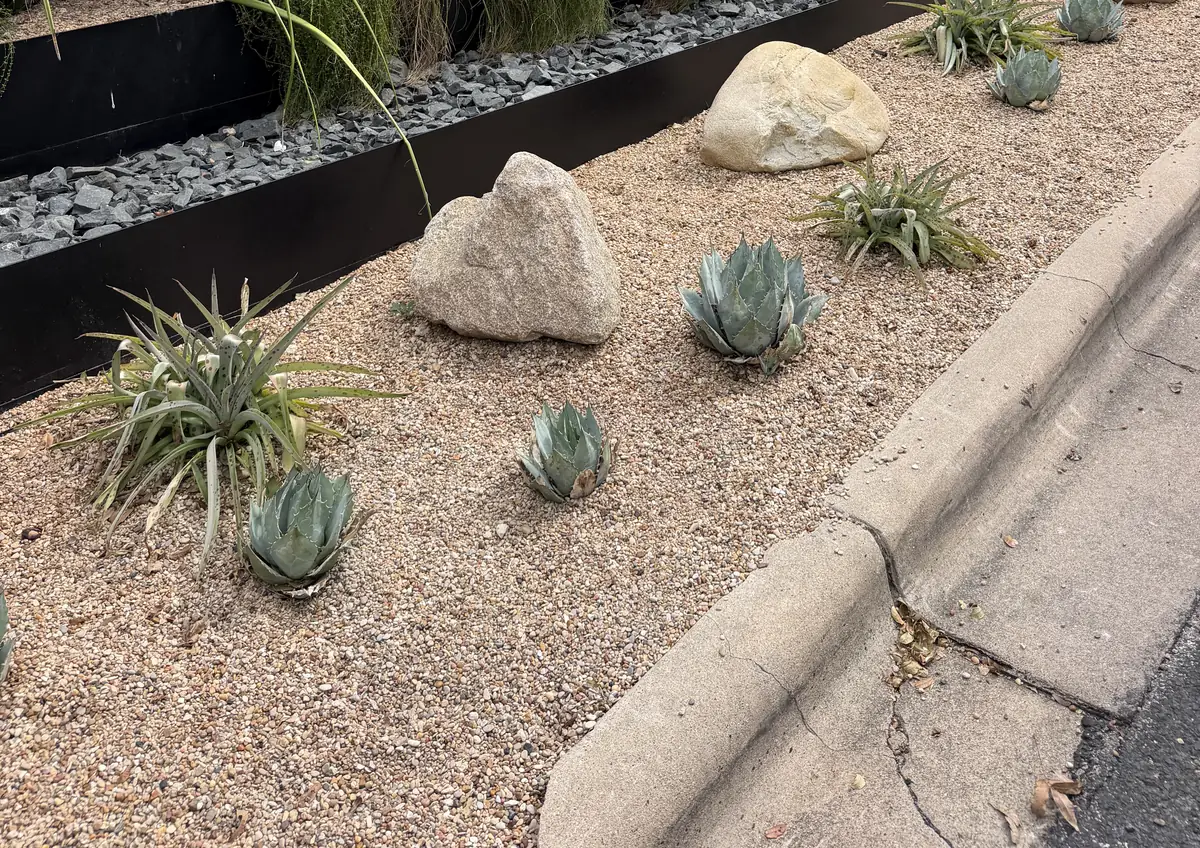
NC State Extension lists three common names for Agave parryi: artichoke agave, mescal agave, and Parry’s agave. The first one describes the shape. The leaves are short, wide, and thick, and they overlap in a tight ball, like the vegetable in its name.
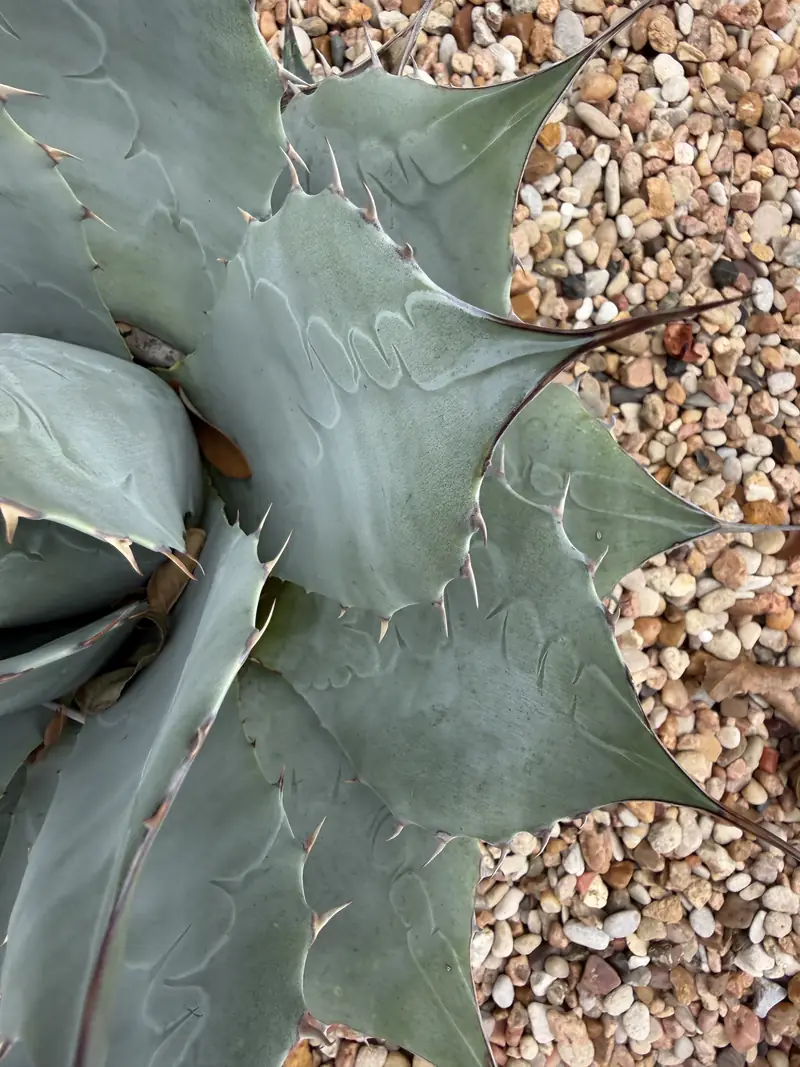
Each leaf is gray-green and ends in a dark terminal spine. Look closely and each one also carries faint imprints from the leaves that were pressed against it in the bud, the same detail you find on a whale’s tongue agave.
Our cold-hardy agaves guide lists it among the agaves that take a hard Central Texas freeze.
How Big Does It Get, and Does It Make Pups?
NC State lists it at 1 to 3 feet tall and wide in full sun. That is small for an agave, and it is the reason this one fits where a larger agave cannot: a planter trough, a narrow bed, or the front of a gravel terrace.
It does make pups. NC State notes that it spreads by offsets and forms colonies over time. In open gravel that is a feature, because one plant becomes a cluster. In a planter with a clean line, lift the offsets as they appear and replant them in another bed.
It also has a life cycle. NC State gives it 8 to 15 years to mature. It then sends up a flower stalk 10 to 20 feet tall, with yellow flowers in summer, and the rosette that flowered dies. The offsets around it take its place.
Does It Handle Austin Cold and Rain?
Cold is the easy part. NC State rates it for USDA zones 6a to 10b and lists it as cold tolerant to -5°F when dry. The USDA’s 2023 hardiness map puts most of the Austin area in zone 9a, and Camp Mabry’s low in the February 2021 freeze was in the single digits above zero, still warmer than that mark.
The two words that matter are "when dry." NC State lists well-drained sandy or rocky soil for it and warns of root rot in soil that stays too moist. In Austin, the planting spot matters more than the forecast:
- In clay: raise the bed, or plant in a steel planter filled with a gritty mix
- In gravel: make sure water leaves the bed. Gravel on top of a low spot stays wet underneath.
- On irrigation: keep it on a low-water zone, apart from lawn and thirstier plants
Where Does Artichoke Agave Fit in a Design?
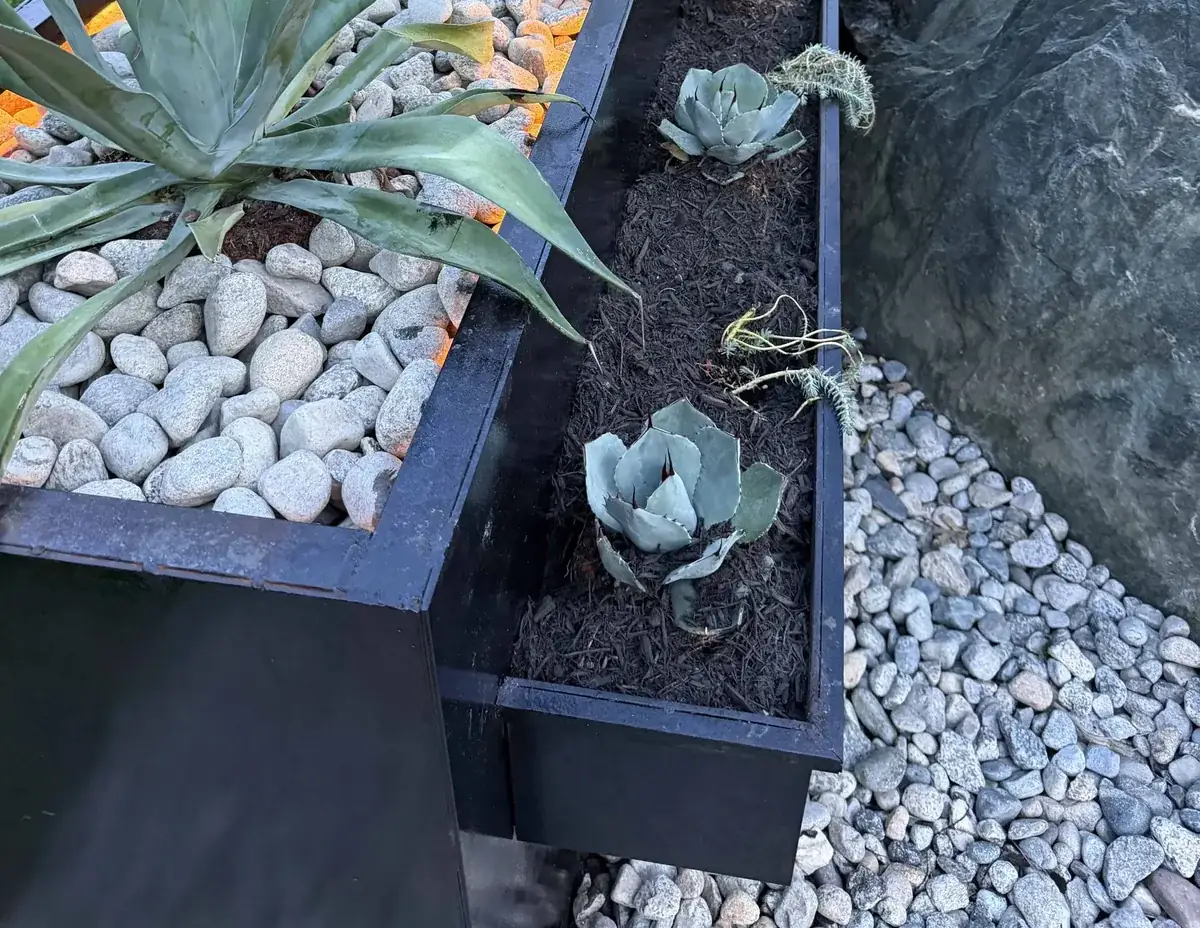
Its size makes it the agave for built edges. On our Tarrytown project, the cantilevered level of the steel planters holds artichoke agave with blue spruce sedum spilling over the edge, and a larger agave anchors the upper planter. The steel is darkened and sealed, so the gray-green rosettes stand out against it. See our custom steel planters and our steel planter ideas.
In gravel it works as the low layer. On the South Austin terrace in these photos, artichoke agaves sit in open gravel with Texas tuberose, below a row of Yucca rostrata. A loose group with gravel showing between the plants reads better than a tight row, and it leaves room for the offsets to come.
Keep the spines in mind. Every leaf ends in one, so set the plants back from the edge of a walk and from the lip of a planter beside a seat.
Artichoke agave belongs in a xeriscape in full sun. We design and build plantings like these across Austin, including Tarrytown.
Questions We Hear
How big does artichoke agave get?
NC State Extension lists Agave parryi at 1 to 3 feet tall and wide in full sun.
Is artichoke agave cold hardy in Austin?
Yes. NC State rates it for USDA zones 6a to 10b and lists it as cold tolerant to -5°F when the soil is dry. Most of the Austin area is in zone 9a, where the coldest night of an average winter is 20 to 25°F.
Does artichoke agave make pups?
Yes. NC State notes that it spreads by offsets and forms colonies. The offsets replace the main rosette after it flowers.
How much water does artichoke agave need?
NC State lists well-drained sandy or rocky soil and warns of root rot in soil that stays too moist. Water it to get it established, then keep it on a low-water zone.
Is artichoke agave the same as Parry’s agave?
Yes. NC State lists artichoke agave, mescal agave, and Parry’s agave as common names for Agave parryi.