Steel Fabrication

Planters That Define the Landscape

Red Agave fabricates custom steel planters in Austin, TX from A36 hot-rolled mild steel, cut and welded to exact dimensions. Every planter includes drainage, and integrated FCOB lighting is available under the cap edge.

A planter is never just a container. In our projects, custom steel planters are structural design elements — they define edges, create elevation changes, frame views, separate zones, and anchor the entire composition of a landscape. Off-the-shelf pots and prefabricated boxes cannot do what a custom-fabricated steel planter does: fit an exact dimension, match a specific design language, integrate lighting, and age into a finish that improves with time.

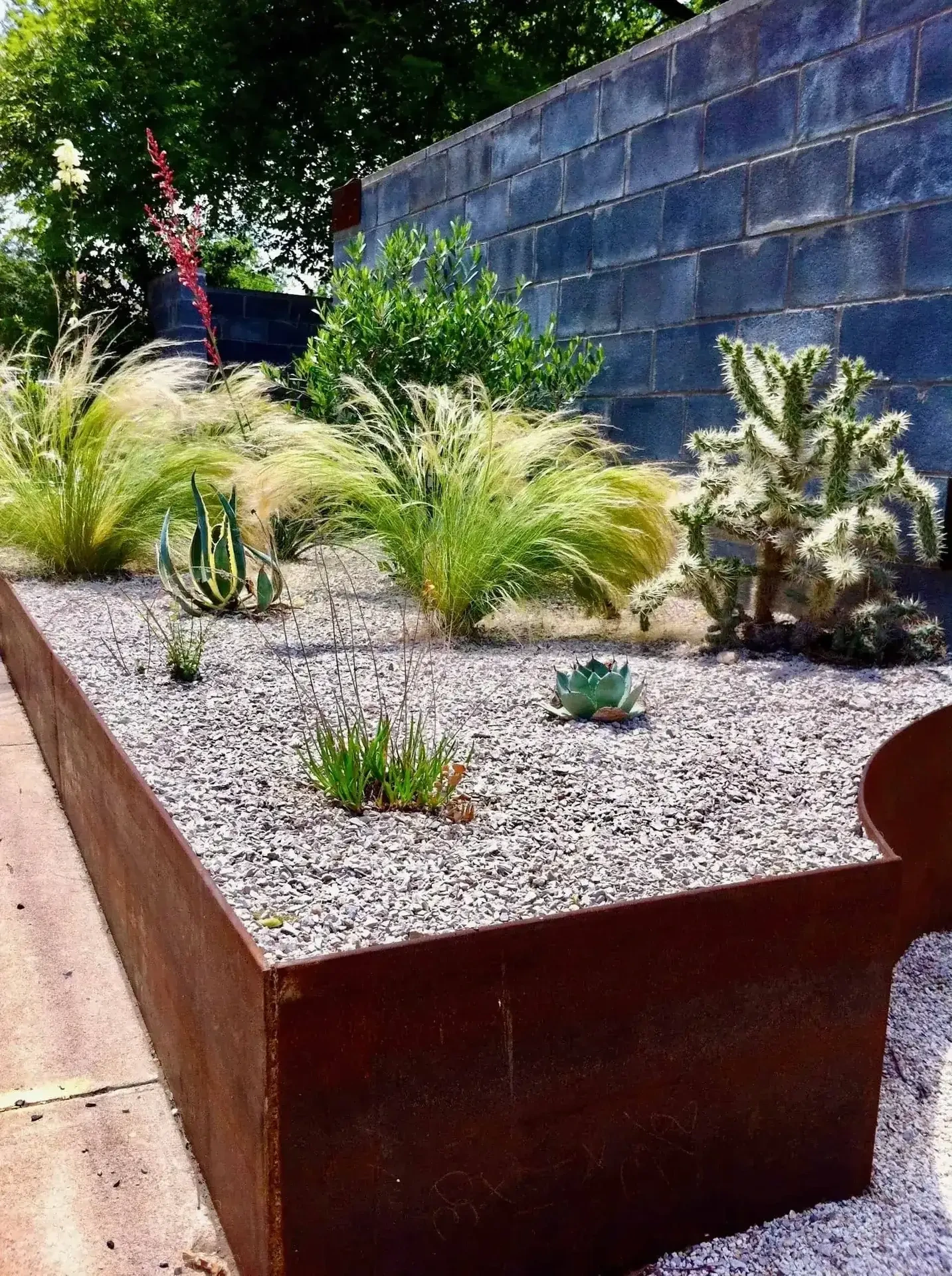
Red Agave fabricates every planter from A36 hot-rolled mild steel. We cut, weld, and finish each piece to the exact dimensions your project requires. Rectangular, L-shaped, curved, tiered, freestanding, or built into seating walls — there are no catalog limitations. Mild steel develops a natural rust patina over time that gives each planter a warm, organic character that complements stone, wood, and desert plantings. For clients who prefer a clean look, we offer clear-coat, powder-coat, and wax-sealed finishes that preserve the raw steel appearance without patina development.

Every planter includes drainage provisions and, where appropriate, integrated FCOB lighting under the cap edge for a warm under-glow at night. We also build matching steel landscape edging so planters, beds, and pathways share a unified material language across the entire property. Schedule a free consultation to design custom planters for your project.

On a Southeast Austin project we cut a square steel planter and its tapered base from steel plate and welded them on site. The base is lit from inside. See the build photos.
Our Work

Recent Projects

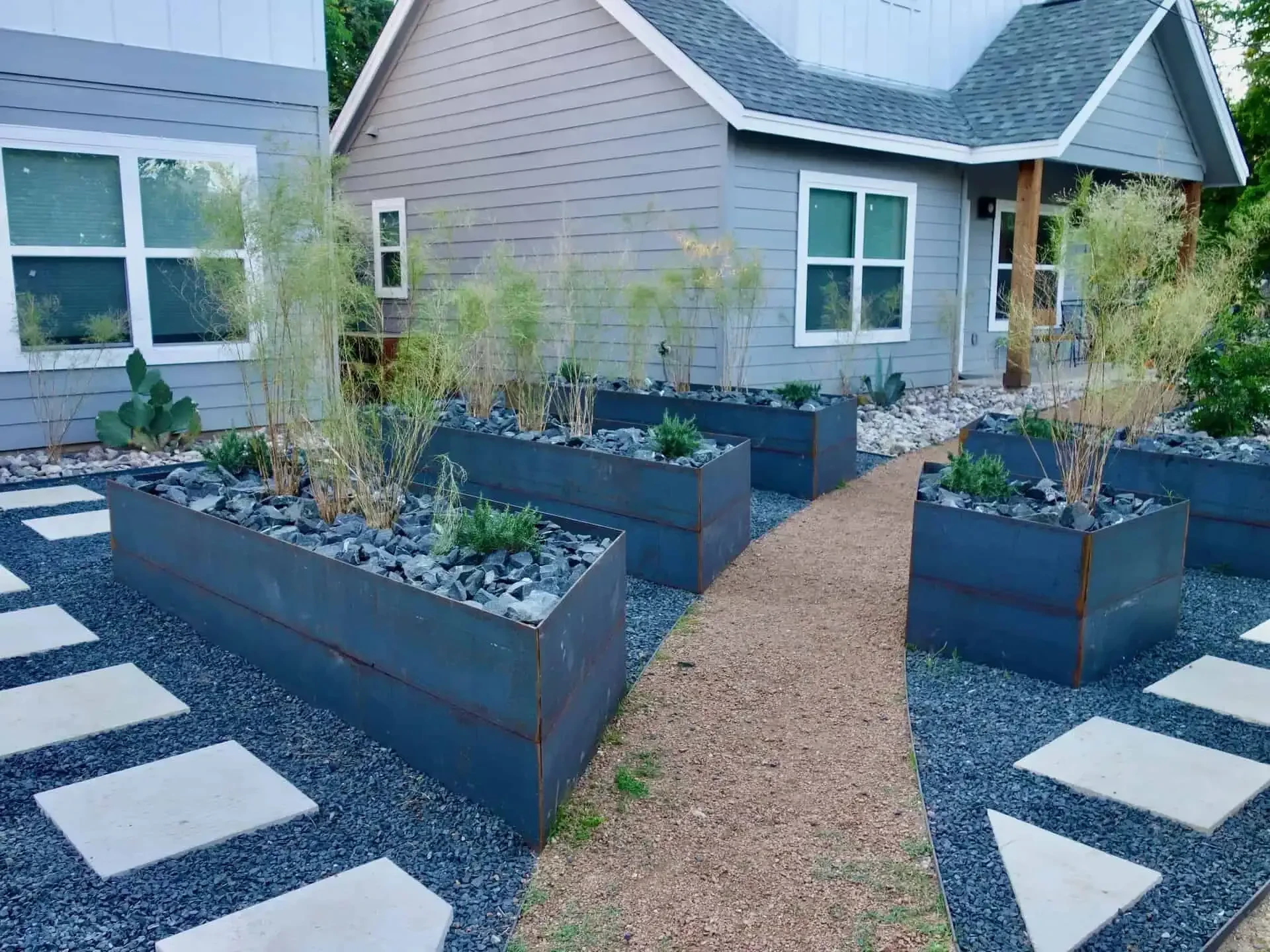
Custom steel raised planter beds with DG pathway Austin TX
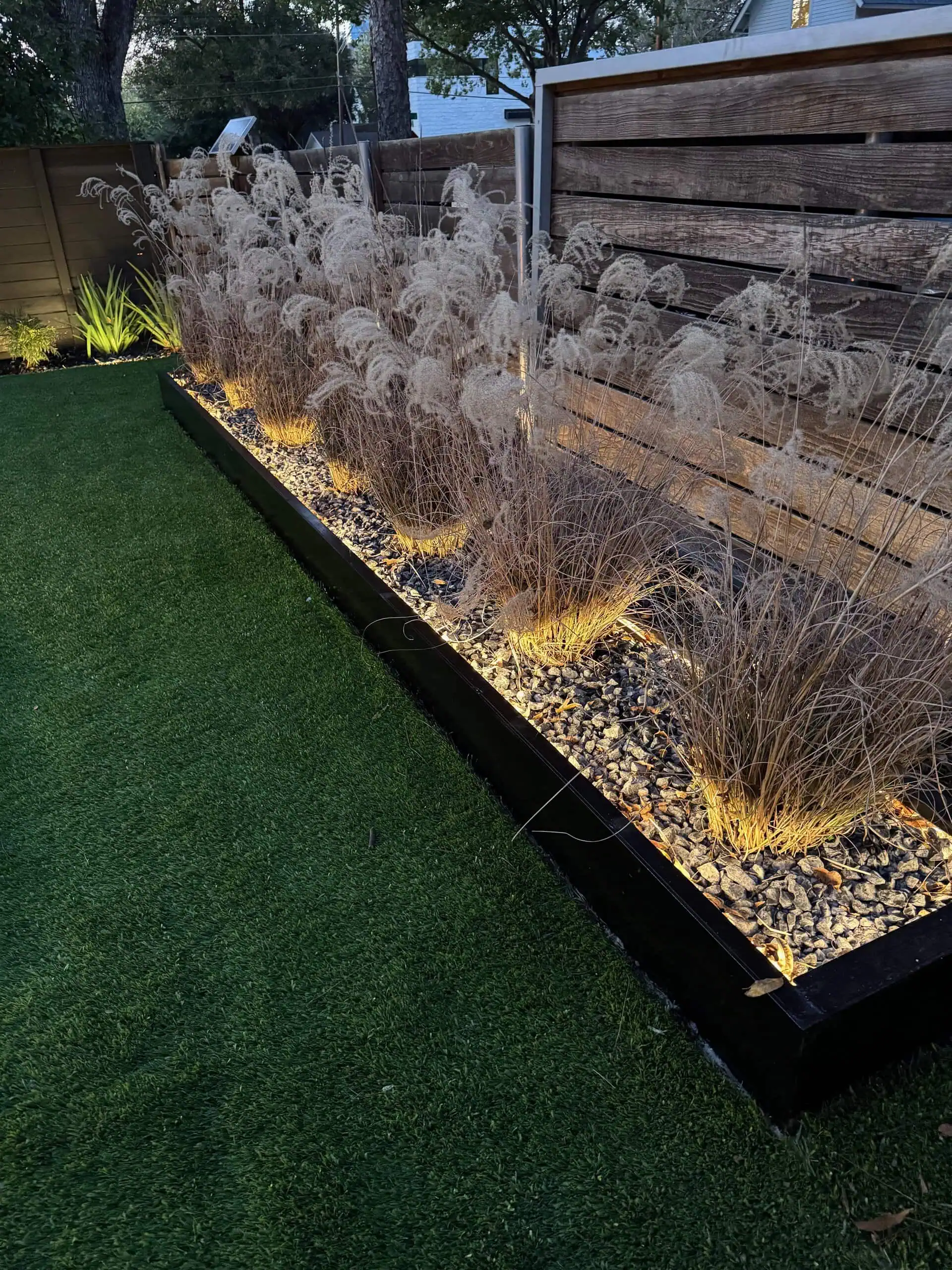
Steel planter bed with uplighting and ornamental grasses Austin TX
Mild steel planter with xeriscape plantings Austin TX
Planter Options

What We Build

01
Raised Planting Beds
Full-size raised beds from 12" to 36" tall. Ideal for xeriscape plantings, specimen agaves, ornamental grasses, and privacy screening. Welded seams, drain holes, and optional liners.
02
Freestanding Planters
Standalone boxes and containers in any dimension. Use as focal points at entries, along driveways, on patios, or flanking outdoor kitchens. Bottomless or with welded floors. See the floating triangle planter we built in Southeast Austin, and how a tapered steel planter is made.
03
L-Shaped & Corner Units
Wrap corners, frame seating areas, or define outdoor rooms with L-shaped and U-shaped planters fabricated as single welded units for clean, seamless joints.
04
Tiered & Stepped
Multi-level planters that create elevation changes on flat lots. Cascading heights add visual depth and allow layered plantings from groundcover to tall specimens.
05
Integrated Lighting
FCOB LED strips mounted under cap edges produce a continuous, dot-free warm glow that washes down the planter face. Invisible by day, architectural at night.
06
Patina & Finish Options
Natural rust patina (develops over 6–12 months), clear-coat seal (preserves raw steel look), powder-coat (any color), or wax-sealed finish. Each ages differently and beautifully.
Sizing

Steel Planter Sizes and Gauges

Thin steel bows under soil. The right gauge depends on size. We fully weld every seam. Find more layouts in our steel planter ideas guide.

Planter TypeTypical SizeMinimum Gauge
Small accent box12 × 12 × 12 in14 ga
Medium specimen24 × 24 × 24 in12 ga
Large focal point48 × 24 × 24 in10 ga
Linear trough96 × 14 × 20 in10 ga
Seat planter with cap96 × 20 × 18 in10 ga
Tall entry column16 × 16 × 42 in12 ga
Raised bed48 × 96 × 22 in12 ga
Compare

Mild Steel vs. Corten Planters

Both age into a warm rust finish. They differ in lifespan and in how much they stain nearby surfaces in the first months.

FeatureMild Steel (A36)Corten (A588)
Early patinaOrange-brown, activeDeep brown, stabilizes
Outdoor lifespan10–20 years20–30+ years
Staining riskHigherLower
Best useAccent planters, edgingStructural, high-visibility work
Planting

What to Plant in a Steel Planter in Austin

Steel runs hot in afternoon sun, so pick plants that can take it and leave a 2-inch soil buffer between roots and the wall.

PlantLookBest PlanterSun
Agave ovatifoliaSculptural focal pointSpecimen box, entry columnFull sun
Red yuccaVertical flower stalksSpecimen box, entry columnFull sun
Mexican feathergrassMovement, textureLinear trough, raised bedFull sun
Lindheimer muhlyTall screen, fall plumesLinear troughFull sun
Autumn sageColor, long bloomSeat planter, raised bedFull to part sun
Dwarf yaupon hollyEvergreen hedgeLinear troughFull sun to shade
Our Process

How We Build a Custom Planter

01
Measure and Design
We measure the space and design the planter around it, then plan drainage and any lighting.
02
Cut and Weld
Every piece is cut and welded to the exact dimensions, with fully welded seams and the right gauge for the size.
03
Finish
Natural patina, or clear-coat, powder-coat, or wax-sealed finishes if you want to hold the raw steel look.
04
Set and Plant
Set on existing hardscape or built into beds, then filled, planted, and lit.

Real project: Dormarion in Tarrytown uses cantilevered steel planters, a CNC-cut address sign with copper backing, COB lighting, and Agave weberi.

Common Questions

Planter FAQ

Why mild steel instead of aluminum or Corten?
We use A36 hot-rolled mild steel because it welds cleanly, forms precisely, and develops a natural rust patina that has real depth and warmth. Aluminum doesn’t patina — it stays silver or requires powder-coating. Corten steel is designed for weathering but costs significantly more and isn’t necessary for planters that are welded and finished properly. Mild steel gives us the best combination of workability, appearance, and value, and we’ve been building with it for over 15 years.
How much do custom steel planters cost?
Every planter is quoted to its size, gauge, finish, and any integrated lighting or seating cap. We typically include planters as part of a larger project and can also build them on their own.
Will the rust stain my concrete or stone?
During the initial patina development phase (first few months), rust can run off in rain and leave orange stains on light-colored surfaces. We address this in two ways: we apply a clear sealant to the lower edges of planters that sit on light stone or concrete, and we set planters on spacer pads that allow airflow underneath and prevent moisture from pooling at the base. Once the patina stabilizes (typically 6–12 months), runoff staining stops almost entirely.
Can you add planters to an existing landscape?
Yes. Custom planters are one of the most impactful single additions to an existing landscape. We can set freestanding planters on existing hardscape, cut into existing beds for built-in raised planters, or add planters to existing seating walls and retaining walls. We’ll match the steel finish and style to any existing steel edging or features on your property.
How thick should a steel planter be?
14-gauge is the minimum for small planters under 24 inches. Medium planters from 24 to 48 inches should be 12-gauge. Anything over 48 inches long or taller than 24 inches should be 10-gauge or heavier. All seams should be fully welded, not riveted or folded.
Do steel planters get too hot for plants in Austin?
They can stress roots near the wall in direct afternoon sun. Leave at least 2 inches of soil between the roots and the steel, choose heat-tolerant plants like agave, yucca, and ornamental grasses, and mulch the surface. Shade and east-facing planters are not a concern.

Built to Your Spec

Mild Steel · Custom Sizes · Integrated Lighting · Free Consultation

Get a Free Quote →
Get a Free Quote →