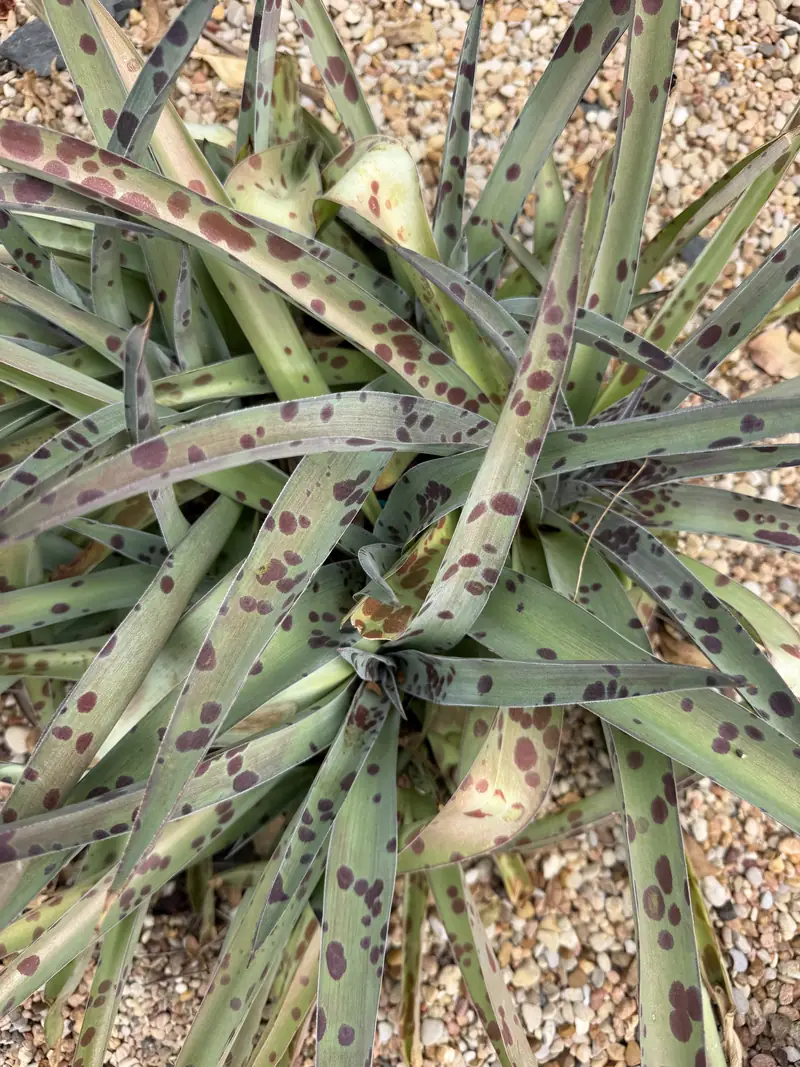
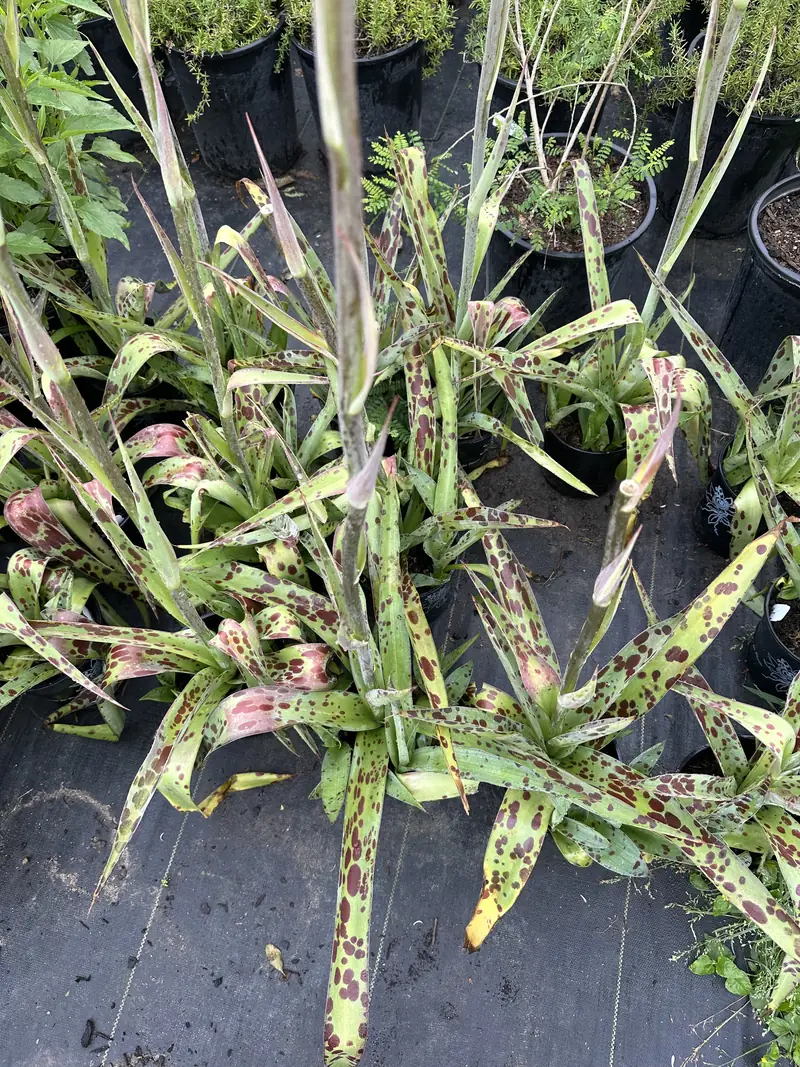
Texas tuberose (Manfreda maculosa), also called spice lily or false aloe, is a low Texas native with long, fleshy leaves freckled with maroon spots. The Native Plant Society of Texas lists it at 6 to 12 inches tall with a spread of 4 to 6 feet, for sun or part shade, with low to medium water needs. The plants in these photos grow in the gravel of a front-yard terrace in South Austin.
What Is Texas Tuberose?
It is a Texas plant through and through. The Native Plant Society of Texas lists Manfreda maculosa as a Texas endemic of the Southern Texas Plains.
The society describes a rosette that lies nearly flat to the ground, with long, fleshy, lance-shaped leaves marked by irregular maroon spots. Because the spots are irregular, each leaf carries its own pattern.
From April through July it sends up tall stalks of small, fragrant pink and white flowers. The society lists it as a larval host for the Manfreda giant skipper butterfly and notes that it benefits hummingbirds and butterflies.
The name causes mix-ups. This is not the tuberose that florists sell. It shares the common name, and it is a different plant.
How Big Does It Get?
Low and wide. The Native Plant Society of Texas lists it at 6 to 12 inches tall with a spread of 4 to 6 feet, and notes that it has an extensive root system.
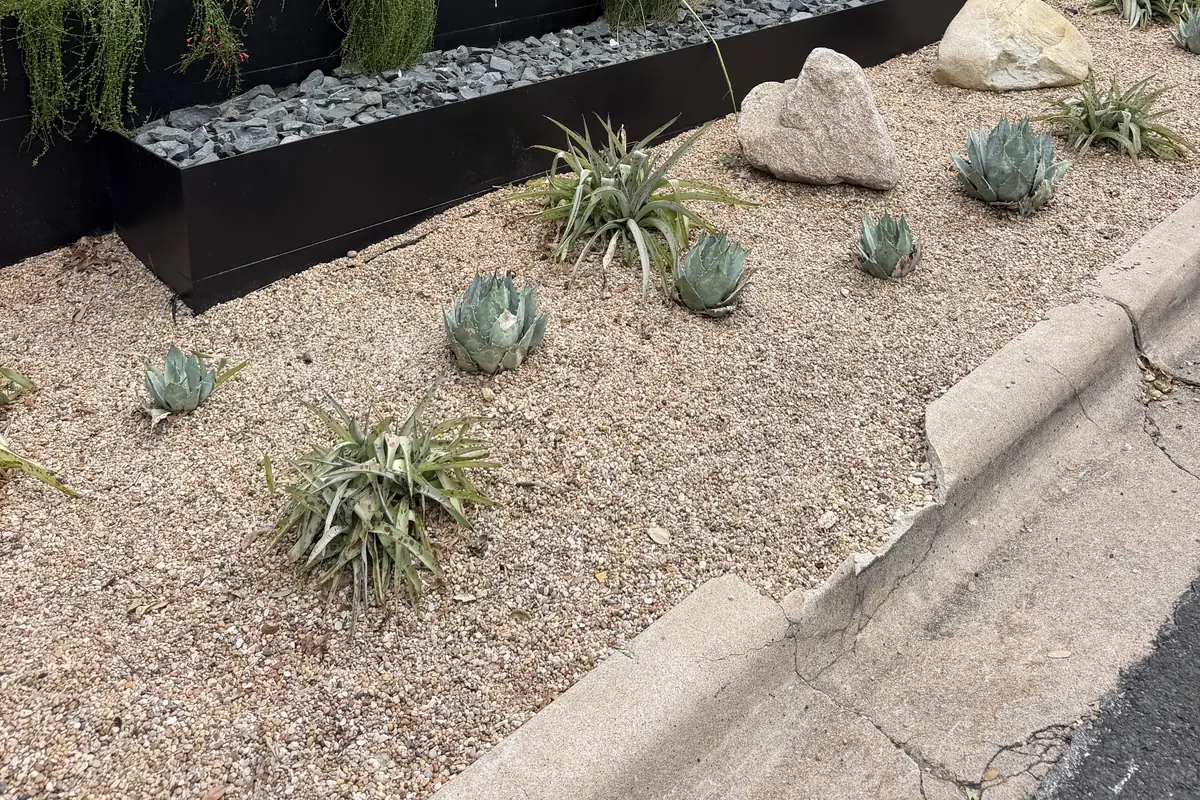
Plan for the spread. A young plant looks small in a field of gravel, and the temptation is to fill the space around it. Leave the room. A plant that spreads 4 to 6 feet fills its own space, and the flower stalks rise well above the leaves in spring.
Where Does It Grow Best in Austin?
The Native Plant Society of Texas lists these conditions:
- Light: sun or part shade, with some shade in the hottest part of the day
- Water: low to medium
- Soil: clay, sand, or well-drained soils
That soil list includes clay, so Texas tuberose has a place in Austin yards where the soil is heavy.
The light note matters too. A bed with morning sun and afternoon shade suits it, and that is the light under the mature trees of neighborhoods like Tarrytown. In a yard with no shade at all, set it on the east side of a boulder, a wall, or a taller plant.
What Changes Through the Year?
Texas tuberose does not look the same in every season, and a good plan allows for that.
- Spring and early summer: flower stalks, April through July
- Drought: the Native Plant Society of Texas notes that it survives drought by going dormant and dropping its leaves
- Winter: older leaves die back
A dormant plant is still a living plant. Leave the crown in place and let it return.
Because it comes and goes, do not ask it to hold a bed on its own. Set it among things that look the same in January as in June: boulders, steel, an artichoke agave, or a Yucca rostrata.
Where Does Texas Tuberose Fit in a Design?
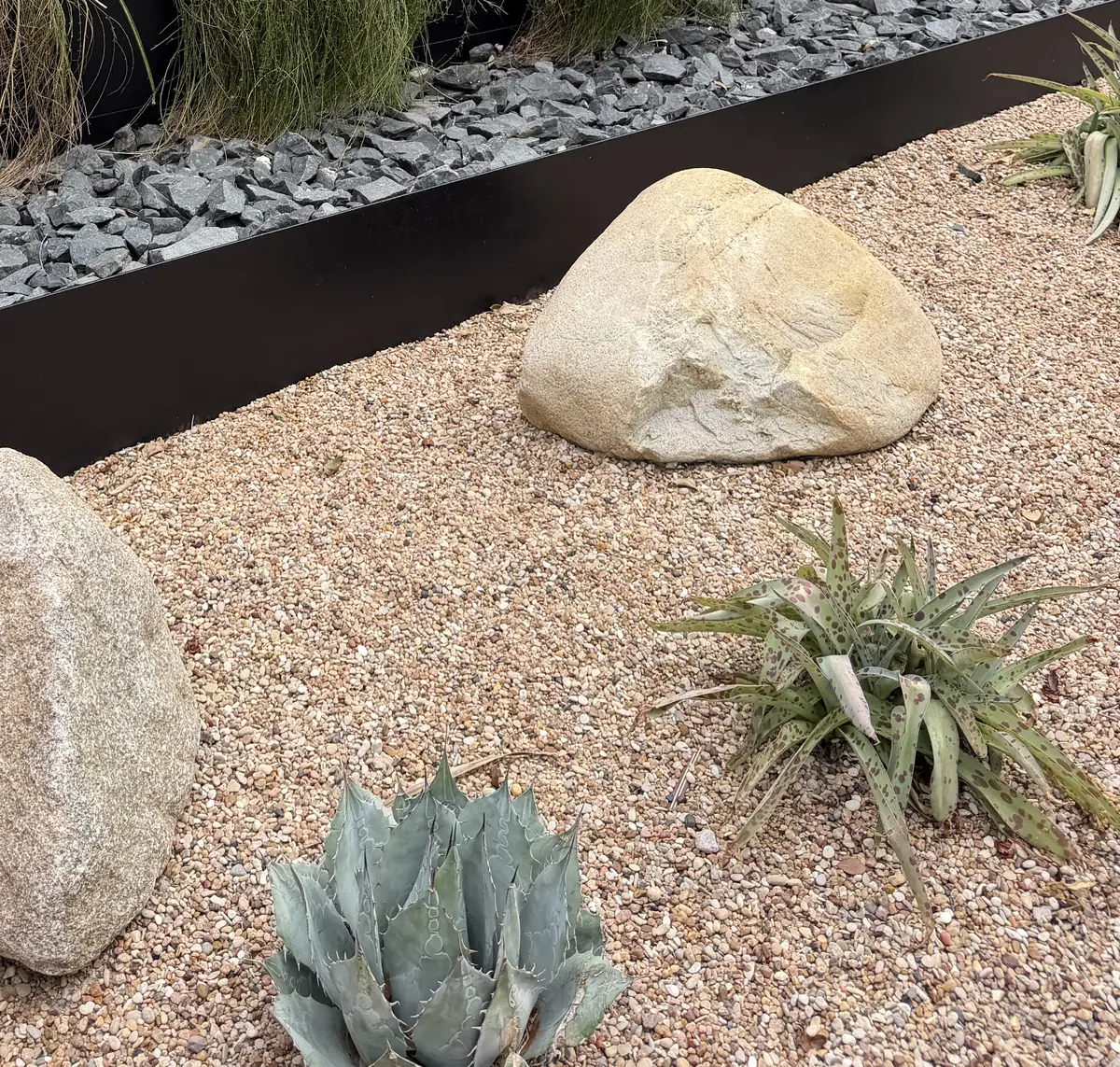
It is the low layer. On the South Austin terrace in these photos it grows at ground level in open gravel, with artichoke agaves beside it and yuccas on the level above.
The spotted leaves reward a close look, so place it where people pass slowly: beside a step, at the front of a bed, or next to a boulder. Keep it out of the line of foot traffic, because the leaves are fleshy.
Give it a plain background. Tan gravel or pale limestone shows the maroon spots. A busy mulch hides them.
It is a true Texas native, so it fits a native planting as well as a modern gravel one. For more natives, see our 25 best native plants for Austin and our guide to native plants in Austin landscaping.
Texas tuberose belongs in a xeriscape. Every Red Agave project starts with a free consultation, and the CAD plan is included. See our landscape design page.
Questions We Hear
Is Texas tuberose native to Texas?
Yes. The Native Plant Society of Texas lists Manfreda maculosa as a Texas endemic of the Southern Texas Plains.
Is Texas tuberose the same as the florist’s tuberose?
No. It shares the common name, and it is a different plant. Texas tuberose is Manfreda maculosa, also called spice lily or false aloe.
Does Texas tuberose die back?
In part. The Native Plant Society of Texas notes that older leaves die back in winter and that the plant survives drought by going dormant and dropping its leaves.
Does Texas tuberose want sun or shade?
The Native Plant Society of Texas lists it for sun or part shade, with some shade in the hottest part of the day.
Does Texas tuberose attract butterflies?
Yes. The Native Plant Society of Texas lists it as a larval host for the Manfreda giant skipper and notes that it benefits hummingbirds and butterflies.