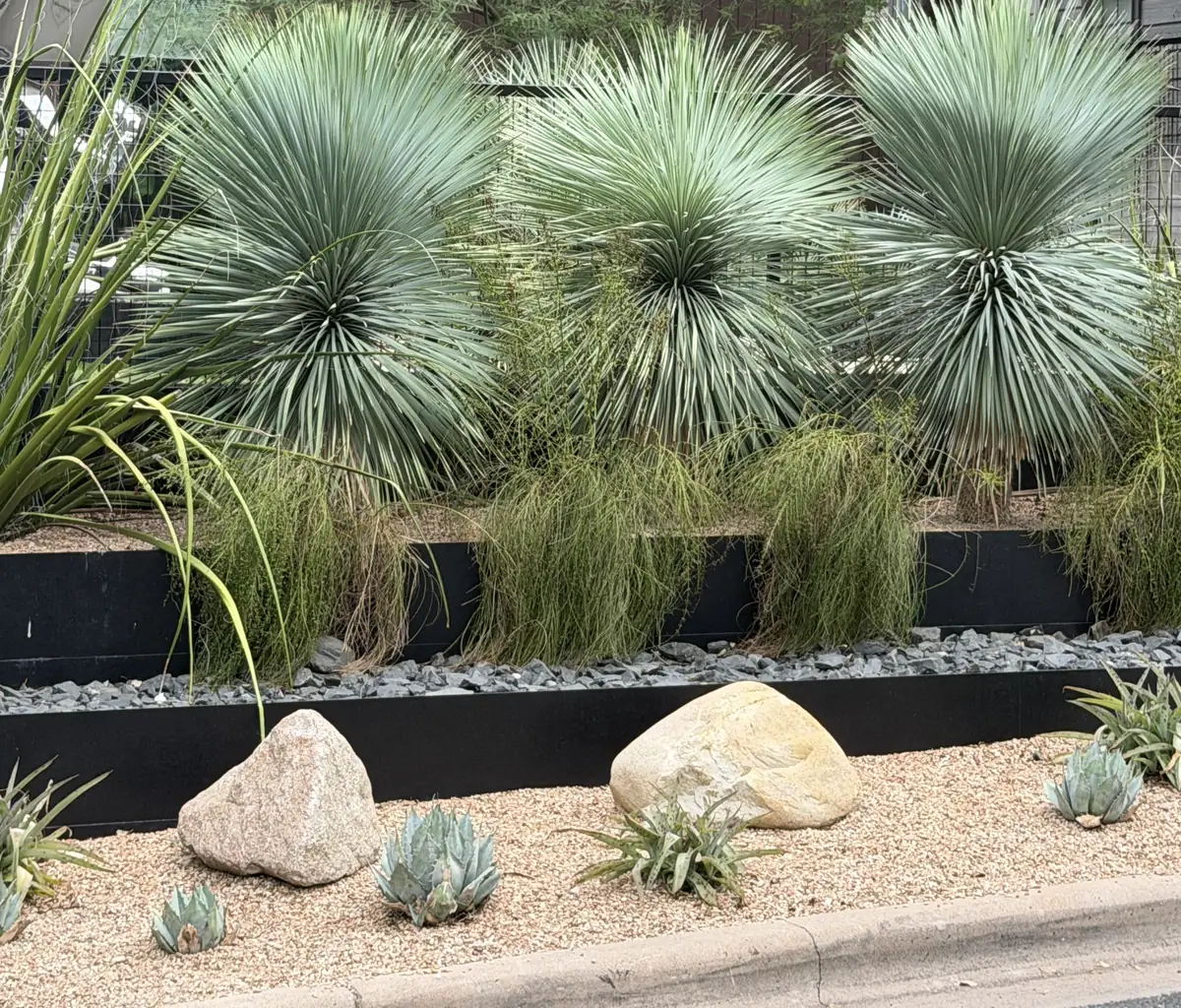
Yucca rostrata, the beaked yucca, is a slow-growing, trunk-forming yucca from the Big Bend country of West Texas and northern Mexico, topped by a round crown of more than 100 narrow blue-green leaves. It wants full sun and fast drainage, and it needs little water once it is established. Yucca rostrata is in the planting on two of our projects: a Circle C backyard with a steel pergola and cantilevered steel planters and a terraced slope held by steel walls at the Overlook at Lewis Mountain in Southwest Austin.
What Is Yucca Rostrata?
Oregon State University’s Landscape Plants database lists it as beaked yucca or Big Bend yucca. Its range in the United States is limited to western Texas, in Brewster County, and it also grows in the Mexican states of Chihuahua and Coahuila. The name rostrata means beaked.
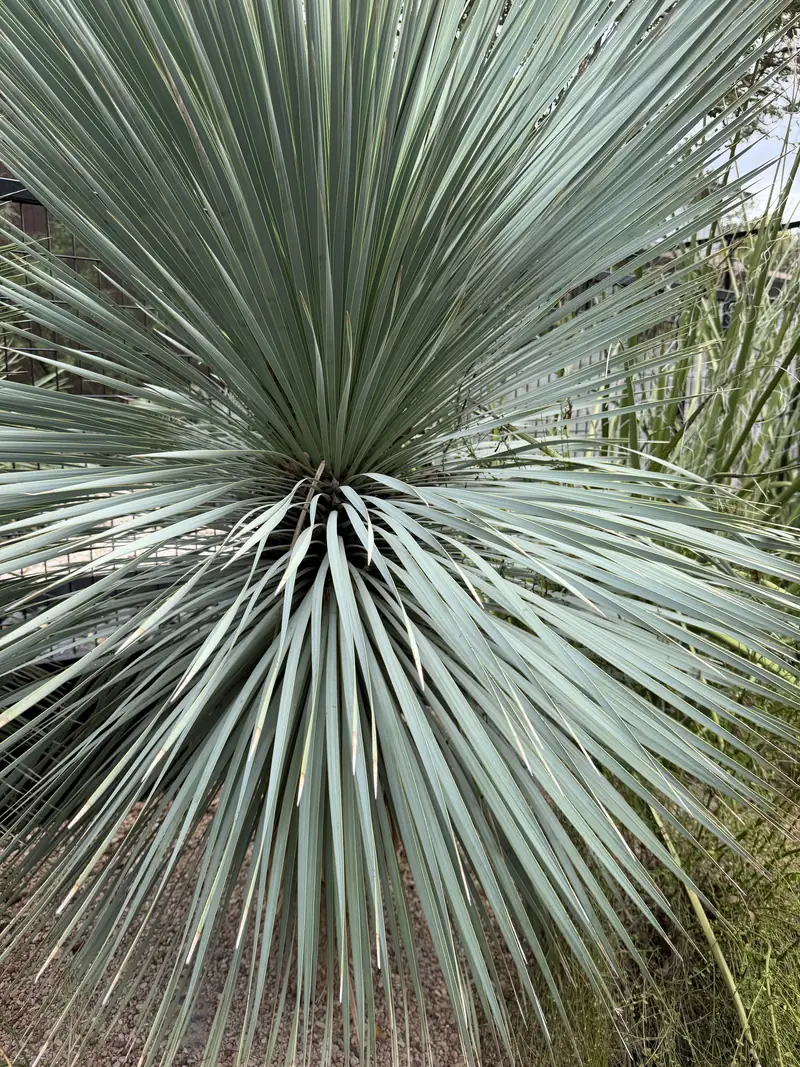
The crown is the reason to grow it. Oregon State counts more than 100 leaves in a rosette, each 10 to 24 inches long and under an inch wide, bluish-green with a thin yellow margin. NC State Extension describes the leaves as soft compared with other yuccas, and still sharp at the tip.
In late spring it sends up showy white flowers. NC State notes that yucca moths pollinate them.
How Big and How Fast Does It Grow?
Slowly. Oregon State calls it slow growing, with a stem that reaches about 13 feet. NC State lists a mature plant at 5 to 15 feet tall and 4 to 10 feet wide.
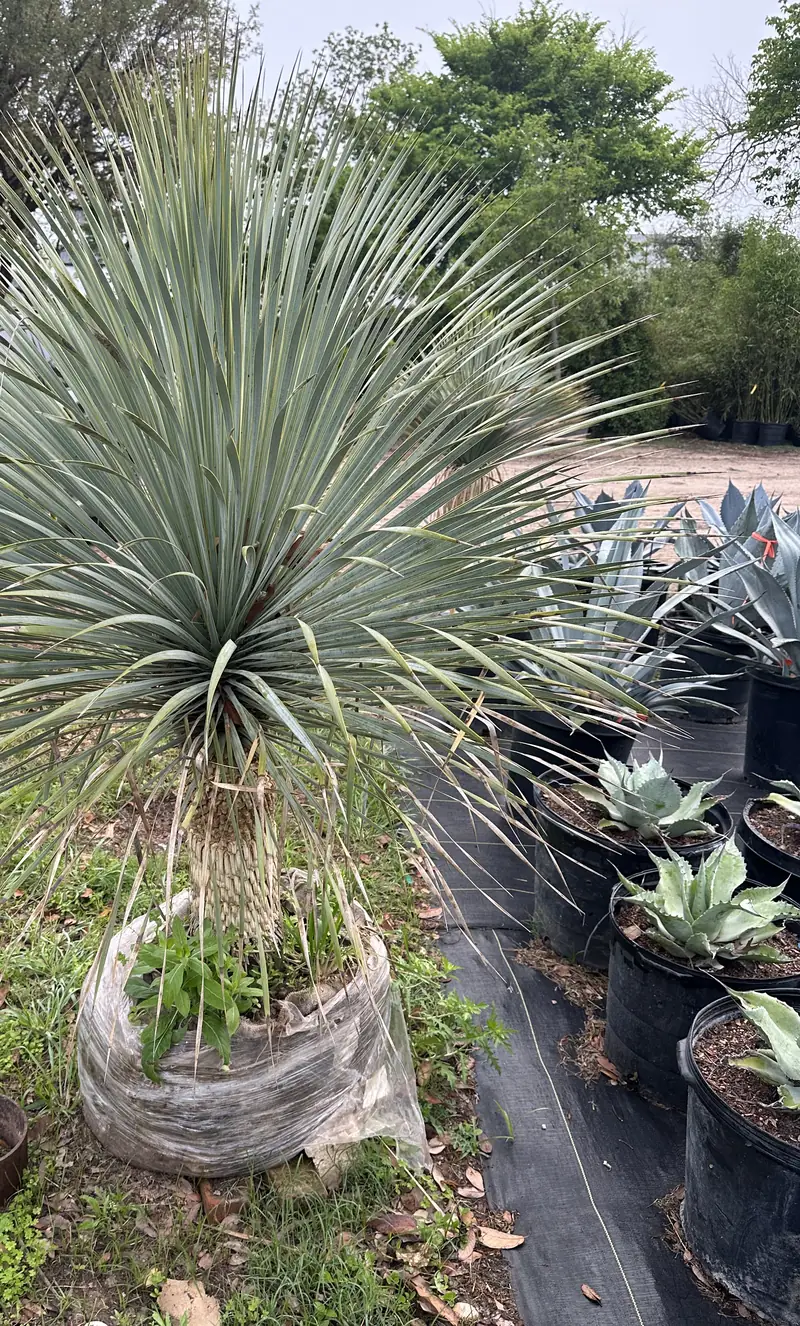
Slow growth changes how you buy it. The trunk you plant is close to the trunk you will look at for years, so choose the specimen for its height and its crown, not for the size of the container. A plant with a few feet of trunk lifts the crown above the planting around it on day one.
NC State also notes that old leaves stay on the trunk. They fold down and form a skirt of dry leaves under the crown, which you can keep or trim for a clean trunk.
What Does Yucca Rostrata Need in Austin?
- Sun: full sun. NC State lists at least half a day of it.
- Drainage: good drainage comes first. NC State warns that overwatering leads to root rot.
- Water: Oregon State lists occasional to infrequent summer irrigation.
- Cold: NC State calls it one of the hardiest trunk-forming yuccas.
- Deer: NC State rates it highly deer resistant.
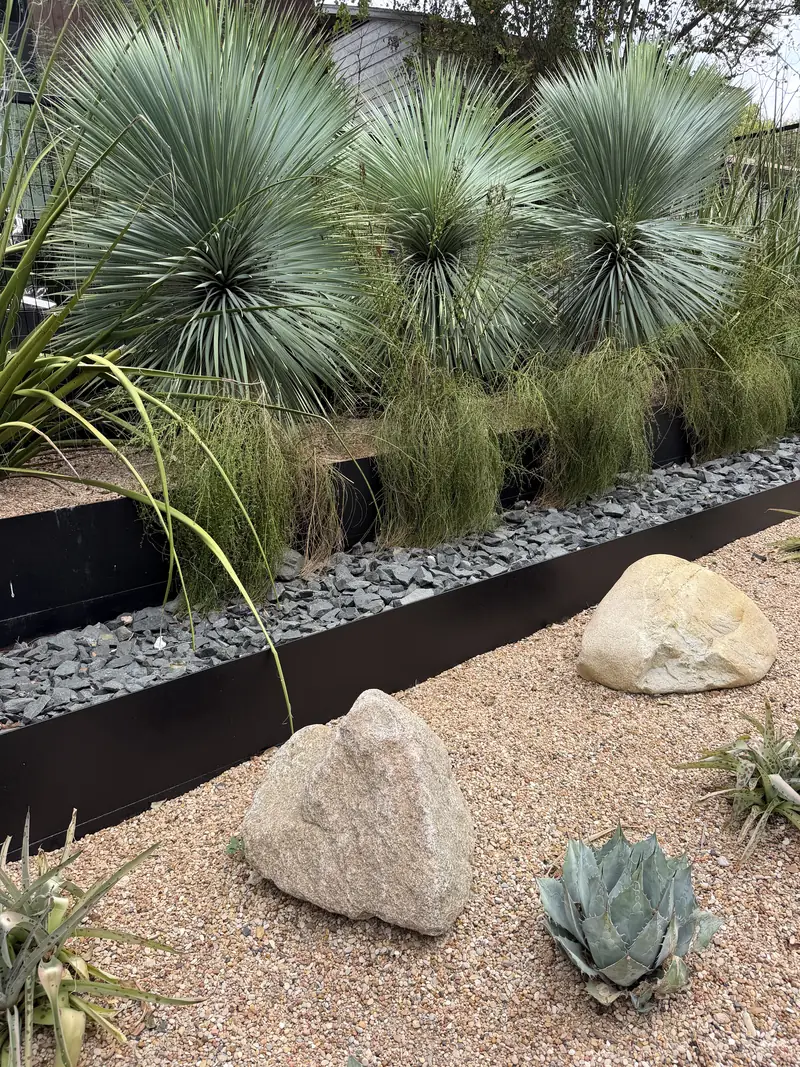
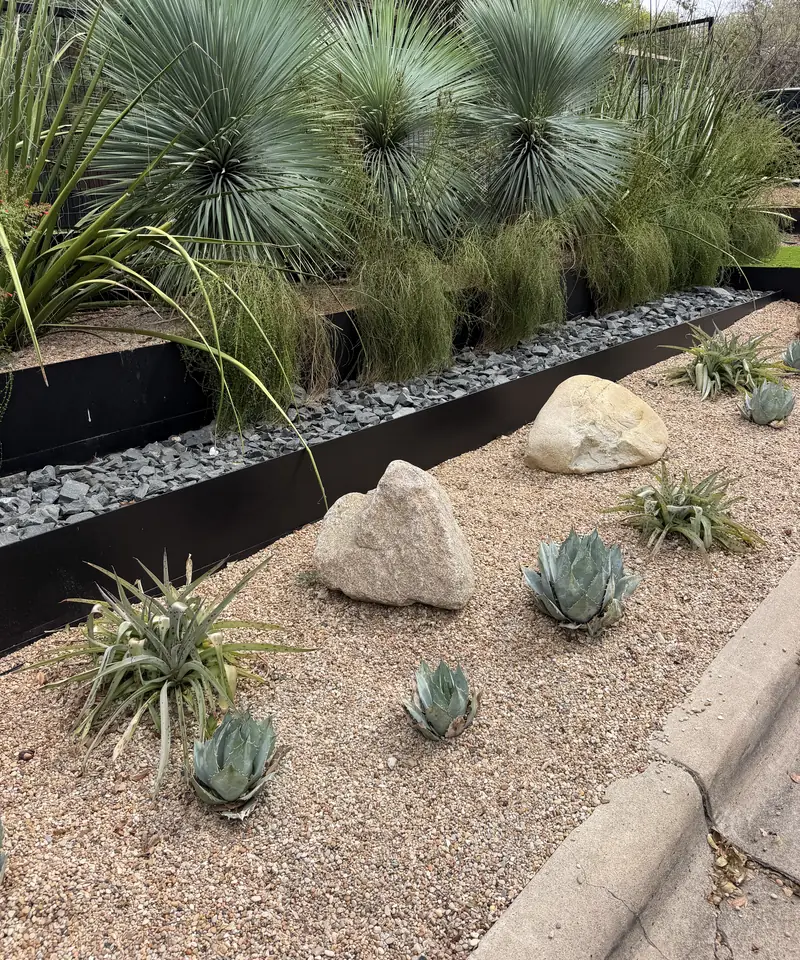
A raised bed solves the drainage question before it starts. On the terrace in these photos the yuccas stand on the upper level, behind a steel edge, where water drains down and away from the crowns. Our steel retaining walls create the same kind of level planting terraces on hillside lots.
Keep it off the lawn’s irrigation zone. A yucca from the Chihuahuan Desert set inside a spray pattern meant for grass gets far more water than it needs.
Where Does Yucca Rostrata Fit in a Design?
It gives a planting height without weight. The trunk is narrow and the crown is a ball of fine leaves, so it rises above a bed without blocking the view through it.
That works best when everything around it stays low. On this terrace the layers are easy to read: the yucca crowns on top, firecracker fern spilling over the steel edge under them, and artichoke agaves and Texas tuberose in open gravel below. Each plant has its own level, and the gravel between them is part of the design.
Decide what job the yucca has before choosing how many to plant. Three in a row set a rhythm along a terrace. One on its own marks a turn in a path or the end of a view from the patio. At night, a single light aimed up into the crown shows every leaf. See our landscape lighting work.
Yucca rostrata suits a xeriscape in full sun, and it is part of the planting on our project in Circle C. For another slow, blue plant that forms a trunk, see our guide to the blue Sonoran palm.
Questions We Hear
Is Yucca rostrata native to Texas?
Yes. Oregon State University’s Landscape Plants database lists its United States range as western Texas, in Brewster County. It also grows in Chihuahua and Coahuila in Mexico.
How fast does Yucca rostrata grow?
Slowly. Oregon State lists it as slow growing with a stem that reaches about 13 feet, so the size of the plant you buy matters.
How often should you water Yucca rostrata?
Oregon State lists occasional to infrequent summer irrigation once it is established. NC State Extension warns that overwatering leads to root rot.
Should you trim the dead leaves on Yucca rostrata?
That is a style choice. NC State notes that old leaves stay on the trunk, where they form a skirt under the crown. Trim only the dead leaves, and leave the living crown alone.
Do deer eat Yucca rostrata?
NC State Extension rates it highly deer resistant.