Red Agave Landscape installs paver patios in Austin, TX two ways: manufactured pavers laid in a pattern, and large pavers poured in place as separate pads. Both sit on the same base, 6 to 8 inches of compacted crushed limestone, graded so water moves away from the house. This post shows each kind on patios we built, and what goes in the joints between the pavers. Every one was built by our own crew.
What Goes Under a Paver Patio?
A base. The part of a patio you never see decides whether it stays flat.
- Excavation: we dig to the depth the pavers and their base need
- Subgrade: the soil at the bottom is compacted
- Base: 6 to 8 inches of crushed limestone, compacted
- Grade: the base slopes so water moves away from the house
- Surface: pavers are set on the base, or concrete is poured over it
Austin has two kinds of ground. East of I-35 it is expansive clay, which swells when it is wet and shrinks when it is dry. West of MoPac it is thin soil over limestone. A surface laid on clay with no base moves with the clay, and that is how patios crack and heave. See our patios page and our hardscaping page.
How Is a Laid Paver Patio Built?
One unit at a time, in a pattern. Manufactured pavers come in consistent sizes, so the pattern is the design.
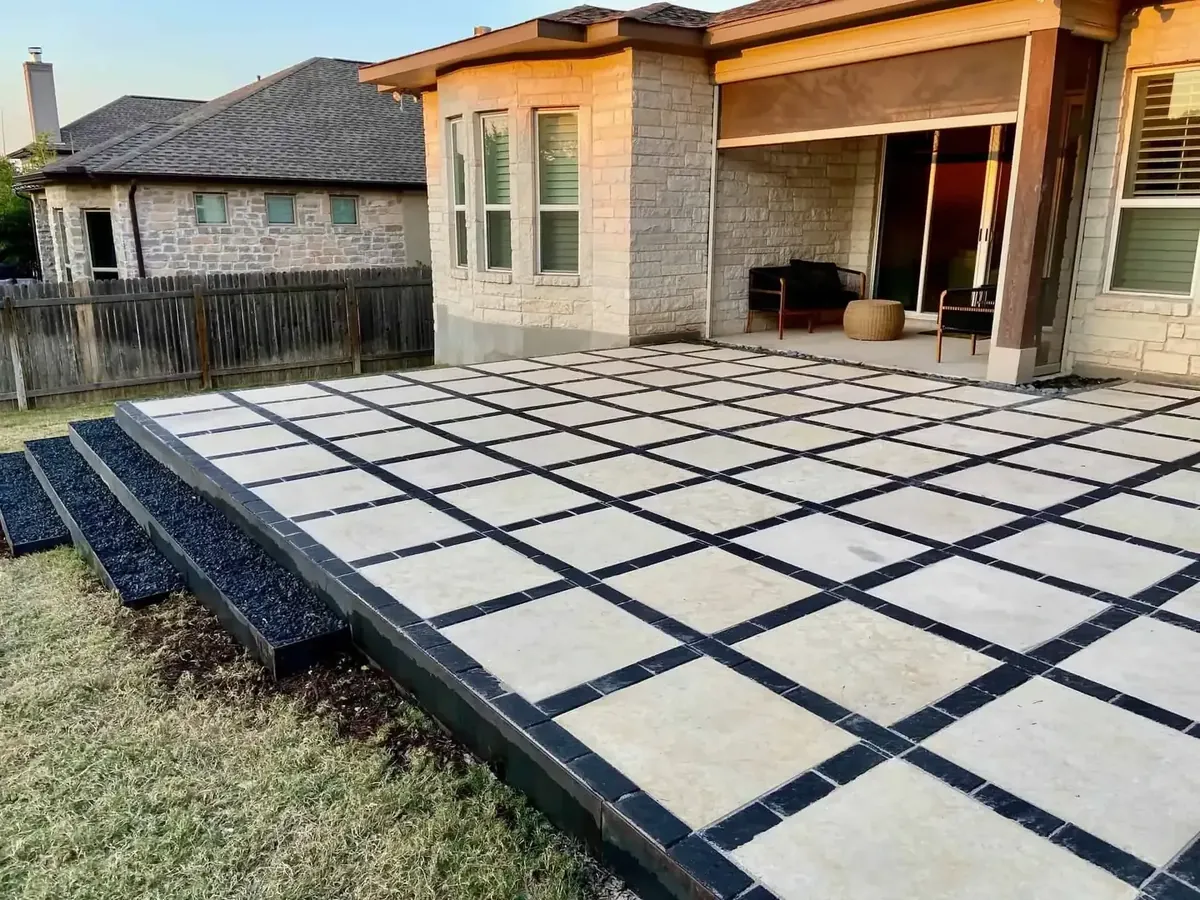
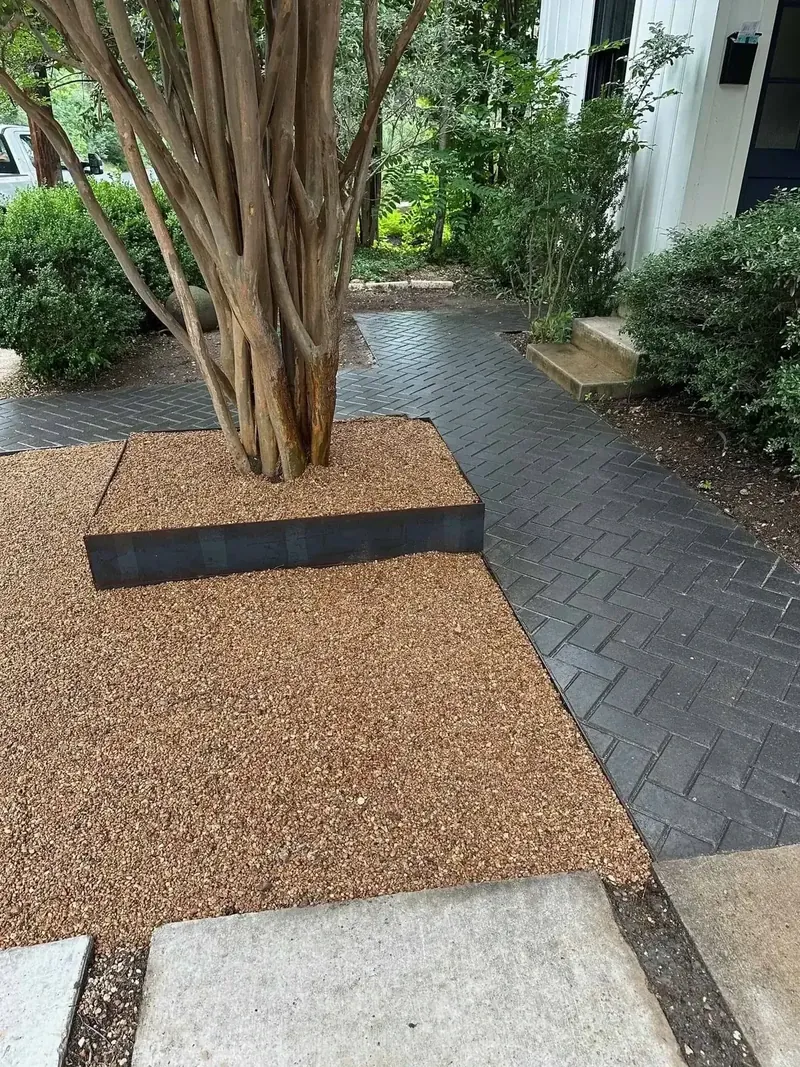
On the patio above, the pattern is a grid. Pale square pavers fill the field, and a band of dark pavers frames every square. The patio is raised above the lawn, and each part of its edge is visible in the photos:
- Edge: steel plate holds the raised side of the patio
- Steps: steel-edged steps filled with black gravel lead down to the lawn
- At the house: a strip of dark river pebbles separates the pavers from the concrete of the covered porch
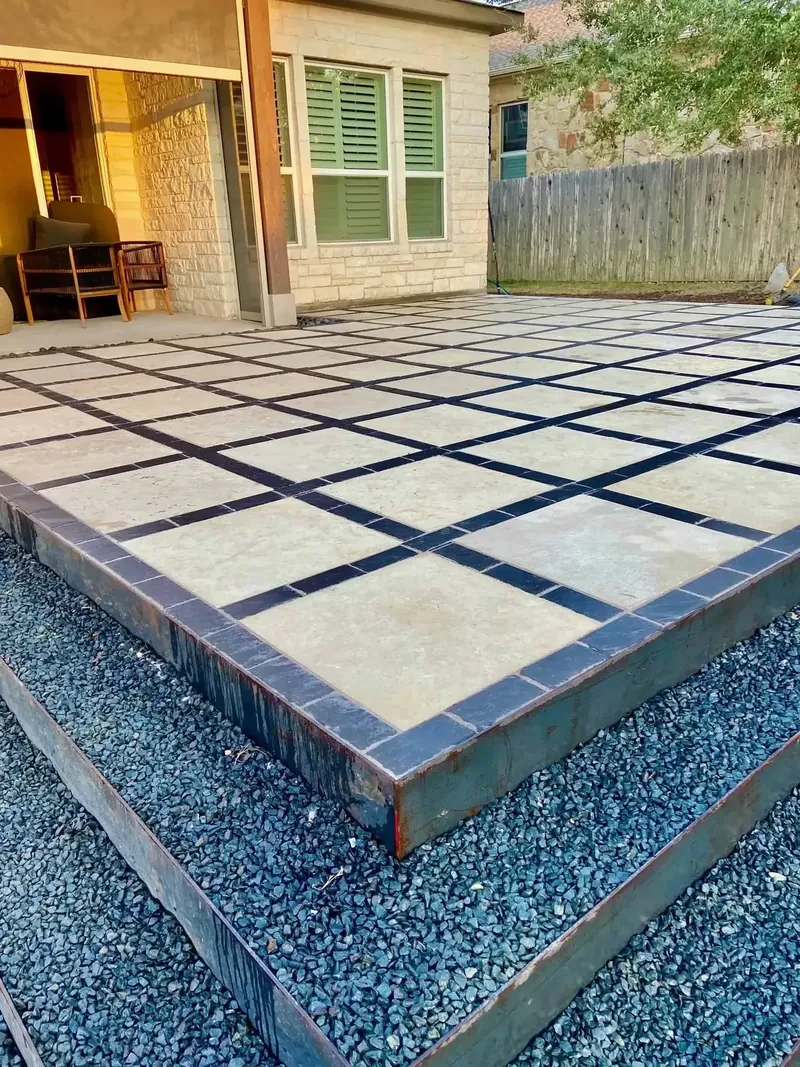
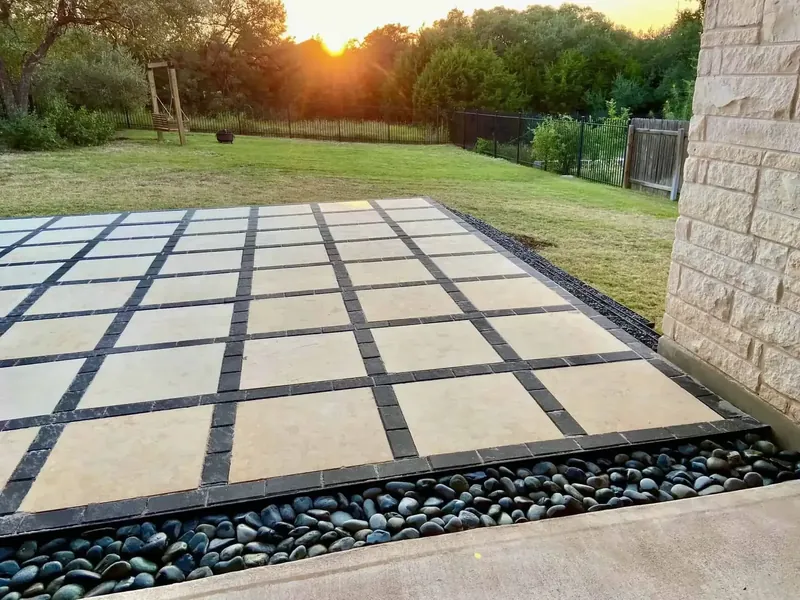
The edge matters as much as the pattern. Pavers creep outward unless something holds them, and a steel border does that job. See our steel edging.
Pavers also suit ground that moves. They flex with the soil, and a single cracked paver can be lifted and replaced. Our guide to concrete and paver patios compares the two.
When Are Pavers Poured in Place?
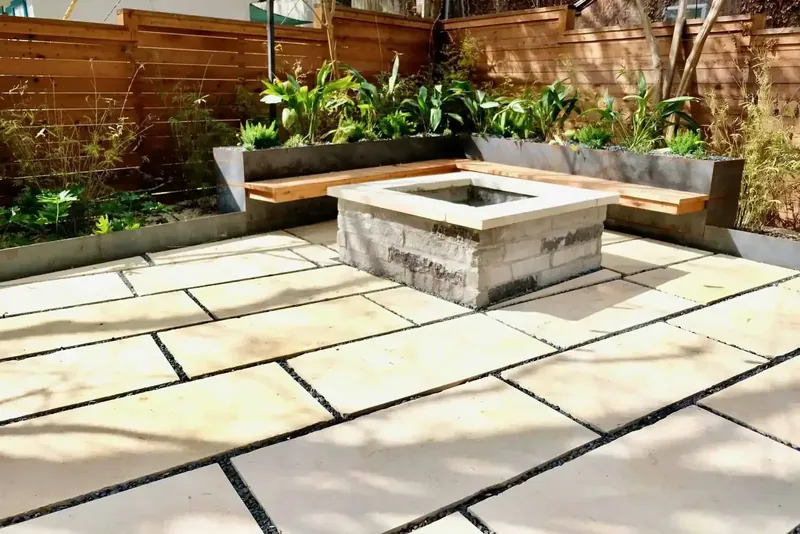
When the design calls for pavers larger than any manufactured unit, or for shapes cut to fit the yard. We form and pour each paver as its own pad, in a 4,000 PSI concrete mix with fiber mesh and rebar.
Four of our builds show the range:
- Cedar Creek: large pavers on two sides of a pool, with artificial turf in every joint. One run on the plan is 30 feet 1 inch long and 8 feet 1 inch wide.
- Circle C: pavers cut on the diagonal, with river rock in the joints. The plan gives the paver fields as 13 feet 6 inches, 10 feet 2 inches, and 13 feet 4 inches.
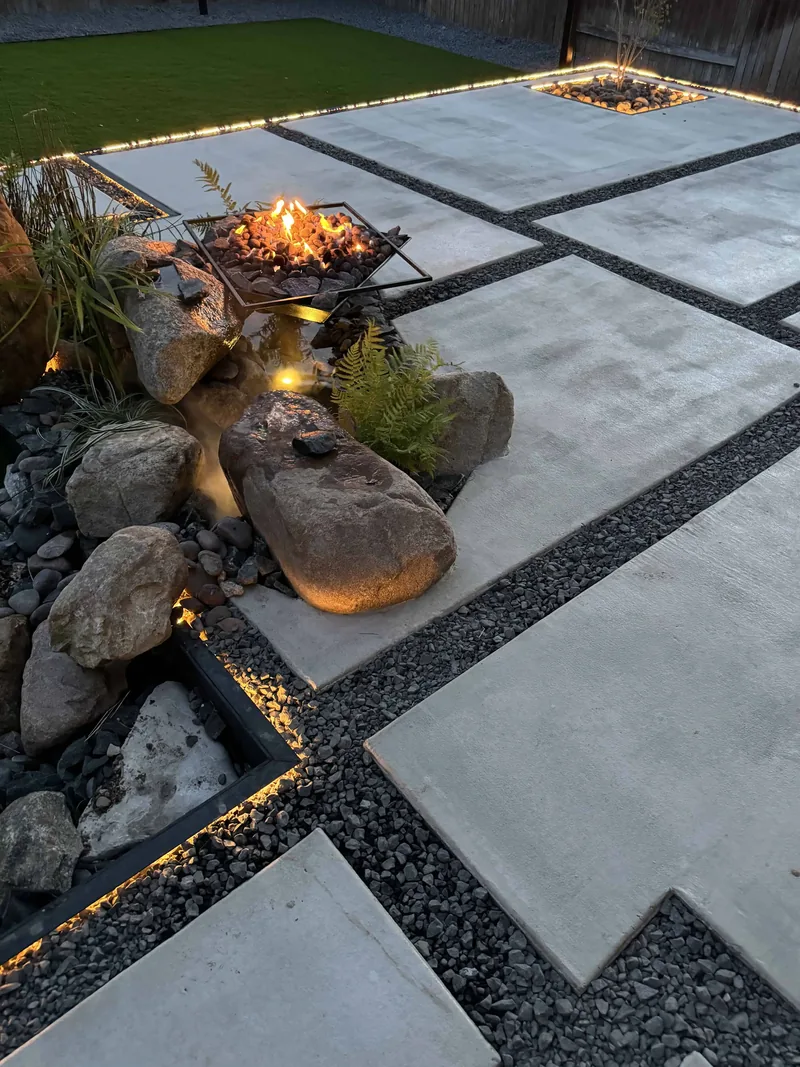
- Pearson Ranch, Northwest Austin: an existing patio expanded with poured pavers in a SureCrete Shure Broom finish, which is a brushed texture. Steel frames every edge, and the gravel joints are lit.
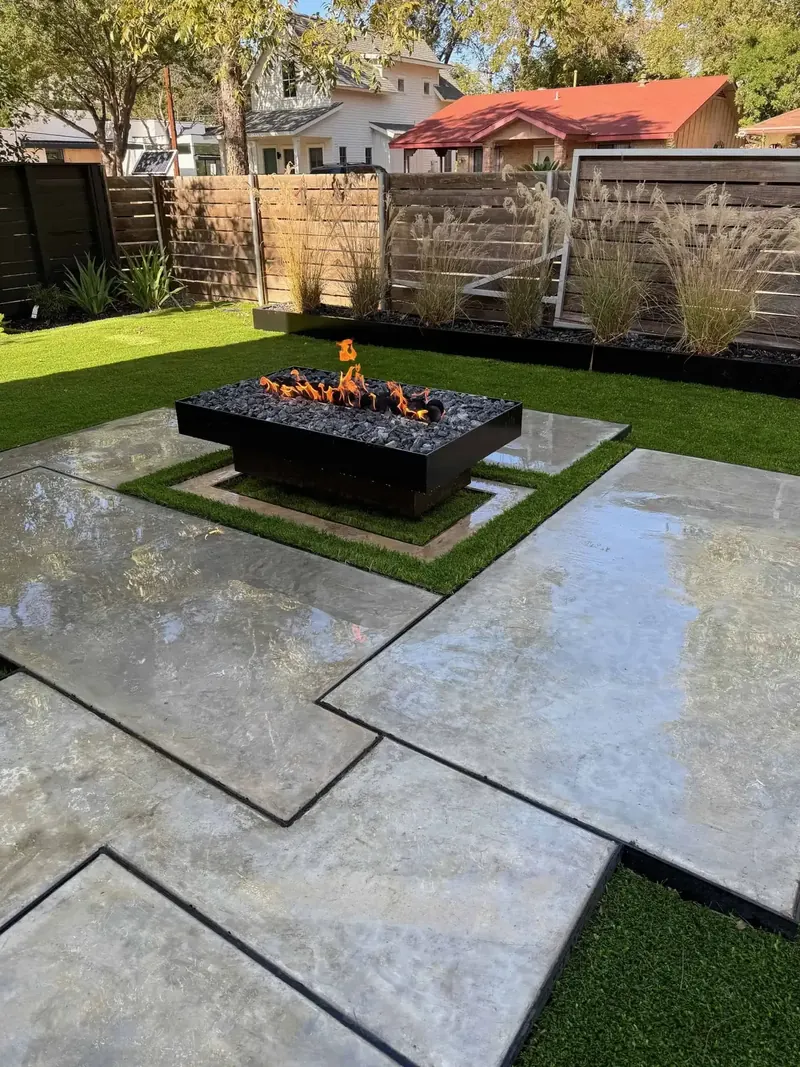
- Austin: large slabs poured to look like marble, each edged in 1/4-inch welded steel, sealed, and set in turf.
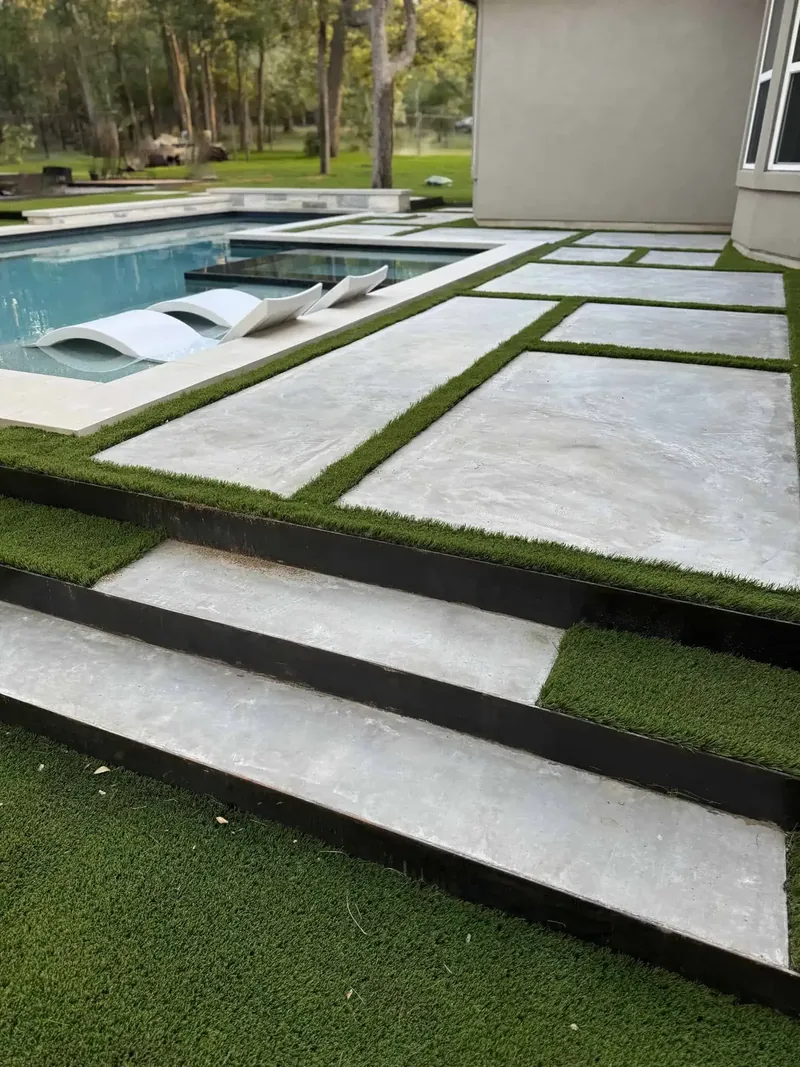
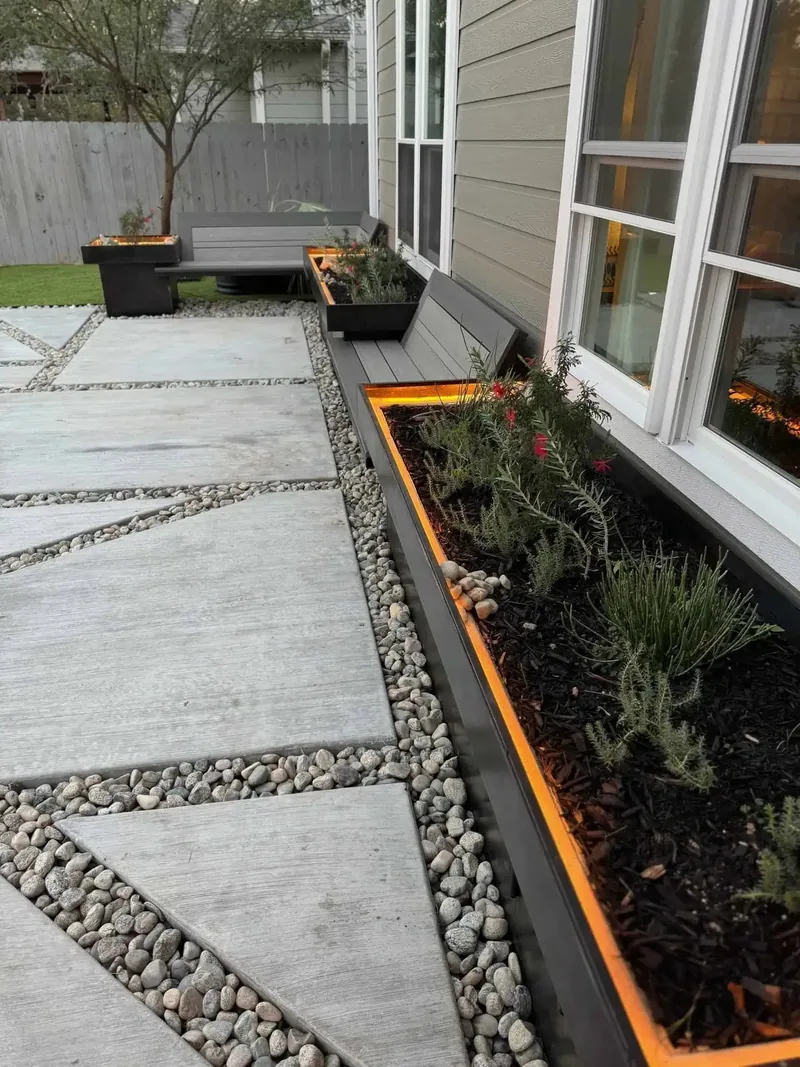
Pads poured this way read as lighter than one large slab, and rain soaks in between them. See the Cedar Creek, Circle C, Pearson Ranch, and Austin project pages, and our masonry and concrete work.
What Goes in the Joints Between Pavers?
The joint is half of the pattern. We have built each of these:
| Joint | Where we built it | What it does |
|---|---|---|
| Dark paver bands | The grid patio above | A solid floor, with the pattern drawn in two colors |
| Dark gravel | Pearson Ranch, Northwest Austin | Rain soaks in between the pavers, and light runs along the steel |
| River rock | Circle C | A gray line that sets each paver apart |
| Artificial turf | Cedar Creek | A green grid that needs no mowing and no water for growth |
Our post on pavers with artificial turf follows the Cedar Creek yard from the plan to the finished deck. For light in the joints, see our landscape lighting.
Does a Paver Patio Need a Permit in Austin?
Most ground-level patios do not need a building permit. A permit is needed when the patio has a roofed structure, attaches to the home’s foundation, or includes electrical or plumbing work.
Cover is a separate question. Over the Edwards Aquifer, Austin’s Save Our Springs ordinance caps impervious cover at 15 to 25 percent of the site, and a new patio counts toward the cap. Our Circle C page explains the limits.
How Long Does a Paver Patio Last?
Concrete pavers last 25 to 50 years, and single pavers can be replaced along the way. Poured concrete lasts 25 to 30 years with proper sealing and drainage. In Austin, base preparation is the deciding factor for both.
For what drives the price, see our patio cost guide. Every Red Agave project starts with a free consultation, and the CAD plan is included.
Questions We Hear
What base goes under a paver patio in Austin?
We excavate, compact the subgrade, and lay 6 to 8 inches of compacted crushed limestone, graded so water moves away from the house. Austin clay swells and shrinks, and this base keeps the pavers flat.
Are pavers or poured concrete better on Austin clay?
Pavers flex with the ground, and a single cracked paver can be replaced. Poured concrete gives one seamless surface. We build both on the same compacted base.
Can large pavers be poured in place?
Yes. We form and pour each paver as its own pad. In Cedar Creek one run of poured pavers is 30 feet 1 inch long and 8 feet 1 inch wide on the plan.
What can go between pavers?
Dark paver bands, gravel, river rock, or artificial turf. In Pearson Ranch in Northwest Austin the gravel joints are edged in steel and lit.
How long does a paver patio last?
Concrete pavers last 25 to 50 years, and individual pavers can be replaced. Base preparation is the deciding factor in Austin.