Red Agave Landscape sets large concrete pavers in artificial turf by pouring each paver as its own pad and running a strip of turf through every joint. In Cedar Creek, southeast of Austin, we built a pool yard this way: poured pavers on two sides of an L-shaped pool, steps edged in welded steel, and two floating steel fire pits. The plan and the finished yard are both below.
What Did the Plan Call For?
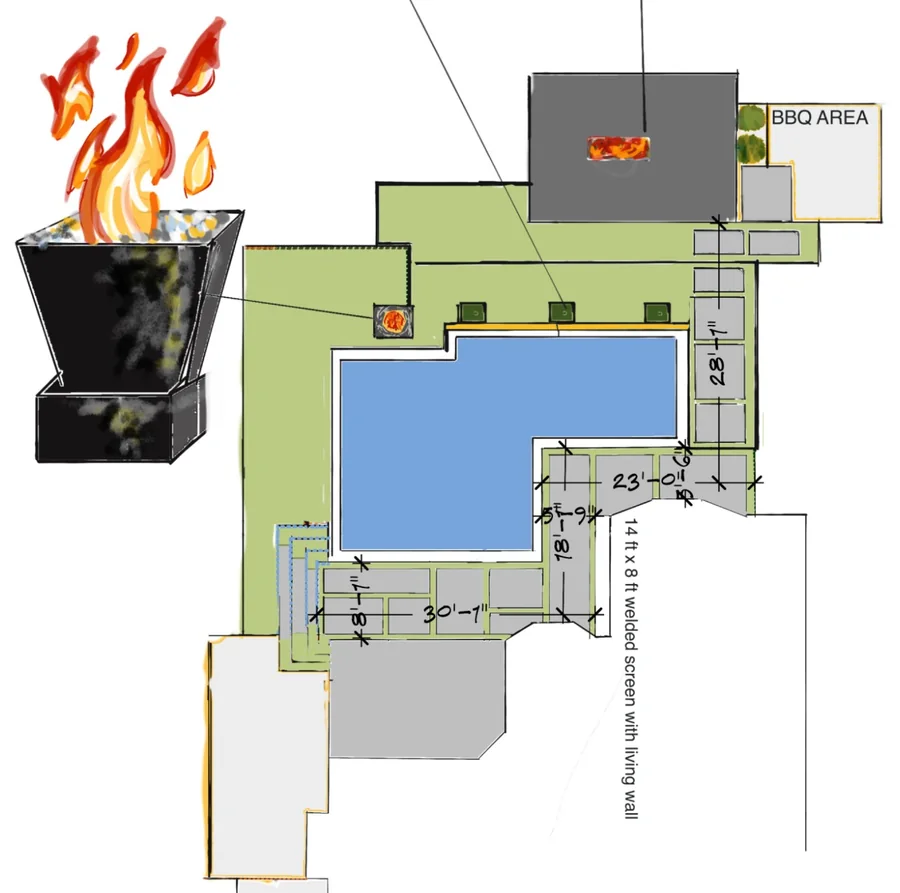
The plan sets the pavers along two sides of the pool and gives a dimension for every run. One run is 30 feet 1 inch long and 8 feet 1 inch wide. Another is 28 feet 1 inch long.
Each run is drawn as separate pads, with green joints between them. The plan also places a square fire pit at the corner of the pool, drawn in elevation beside it, and a linear fire pit in a dark court behind.
More of our drawings are on the design plans page, and the full job is on the Cedar Creek project page.
Why Set Pavers in Turf Instead of Pouring One Slab?
Because one slab is one surface, and pads with green joints are a pattern. This yard took shape around a pool under construction. The house already had a concrete patio, and the simple answer was to extend it to the water.
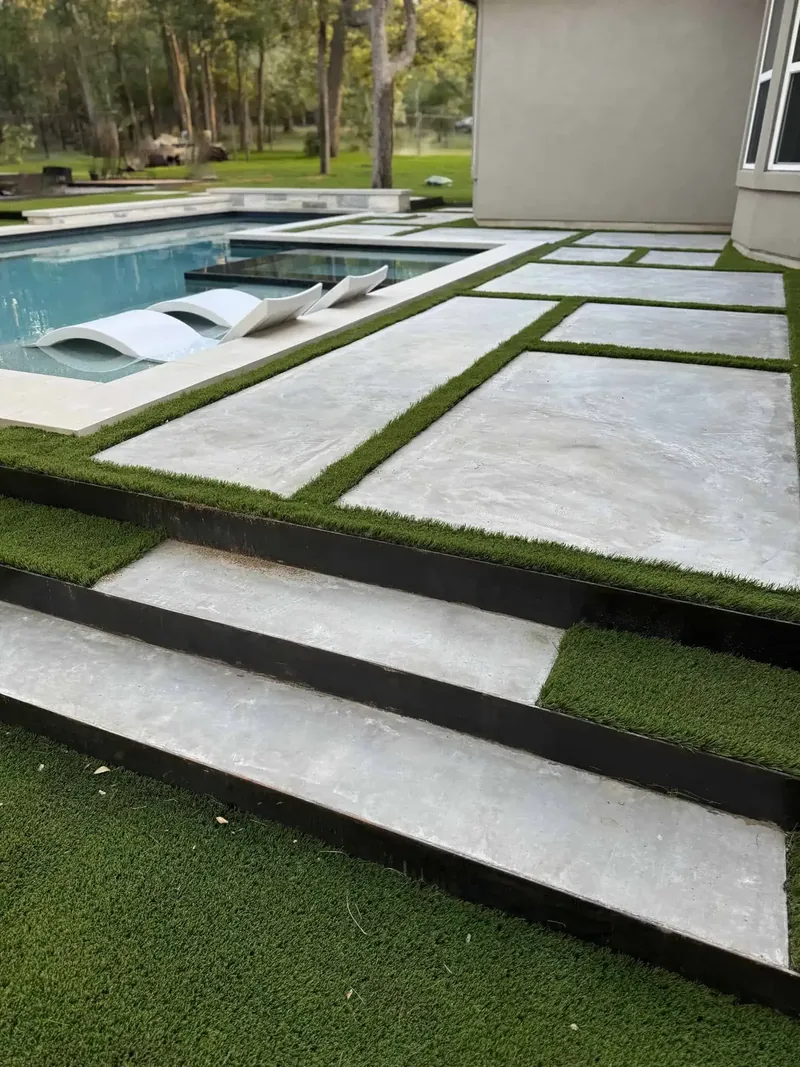
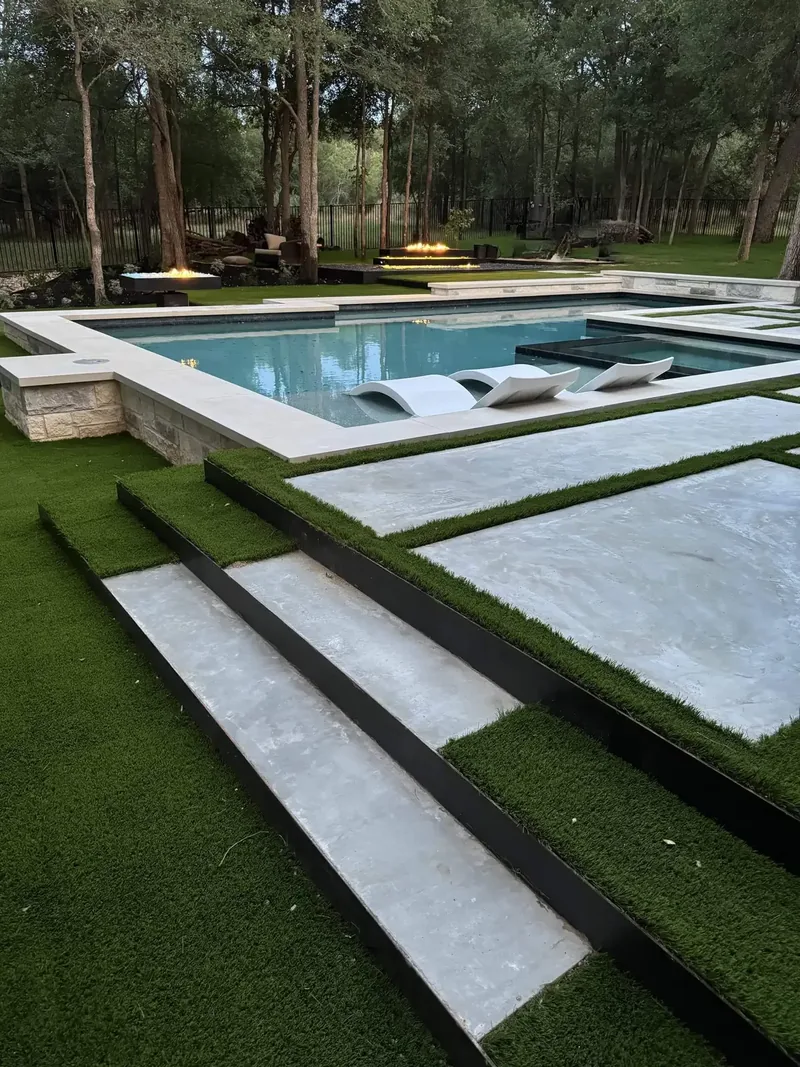
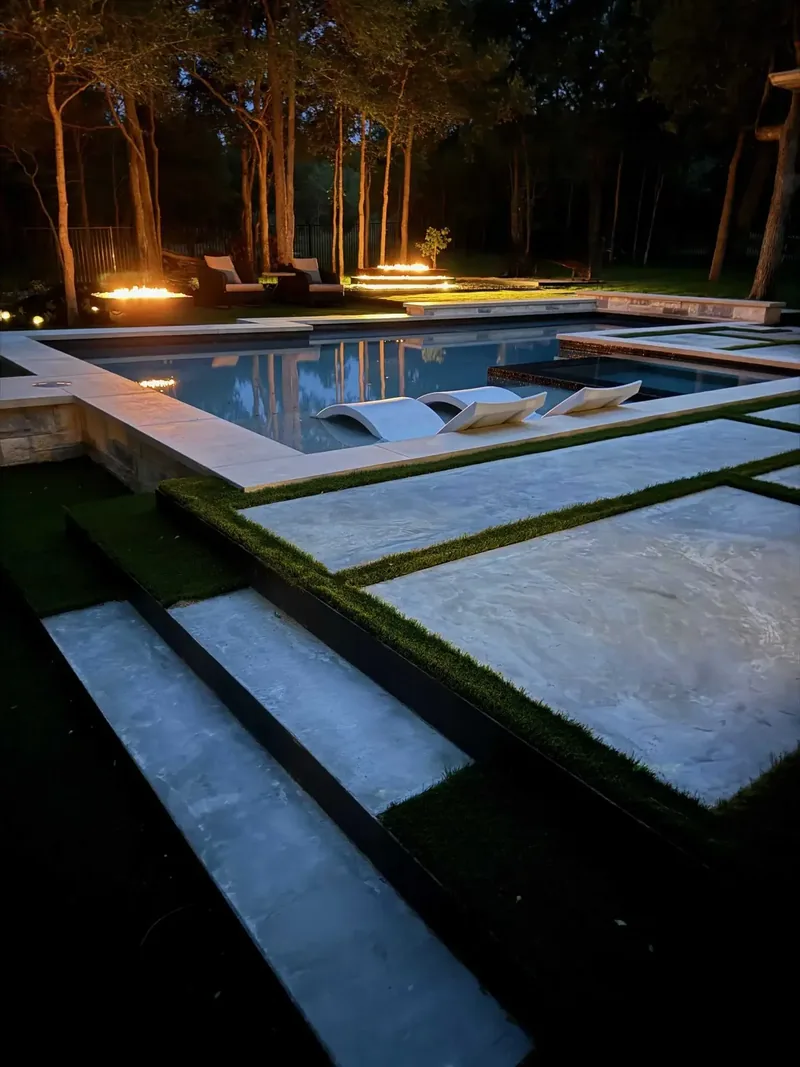
We broke the pattern instead. Large-format pavers were poured with artificial turf joints between them, so the pool deck reads as a grid of pale concrete and green lines. Turf also runs beside the pavers and down the steps, so the paving and the green around it read as one surface.
The joints stay green all year, and they need no mowing and no water for growth. That matters in a joint a mower cannot reach.
How Do the Pavers Step Down a Slope?
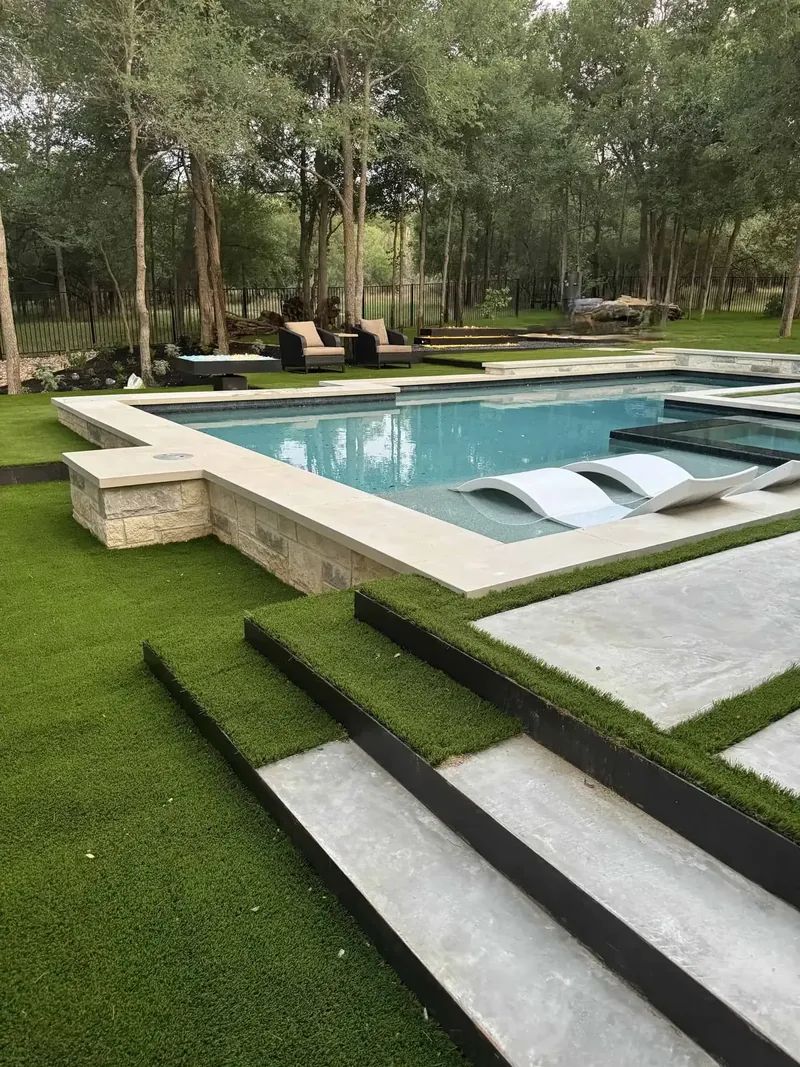
With steel. The yard is terraced with welded edges of 1/4-inch steel plate that step the grade in level planes. Each plane is defined by a steel edge, with no wall and no curb.
The steps use the same parts as the deck:
- Risers: dark steel plate
- Treads: poured concrete on some steps, turf on others
- Below: turf continues from the bottom step
See our steel retaining walls and edging and our patios.
What Goes Under the Turf?
A base that drains. We install artificial turf on drainage fabric and compacted decomposed granite, then add infill. Steel edging holds the turf in place, where other installers use plastic strips.
That is the same method we use for a whole lawn. In a paver joint the turf is cut to fit between the pads.
See our turf installation service and our comparison of artificial turf and real grass.
Should the Joints Be Turf or Rock?
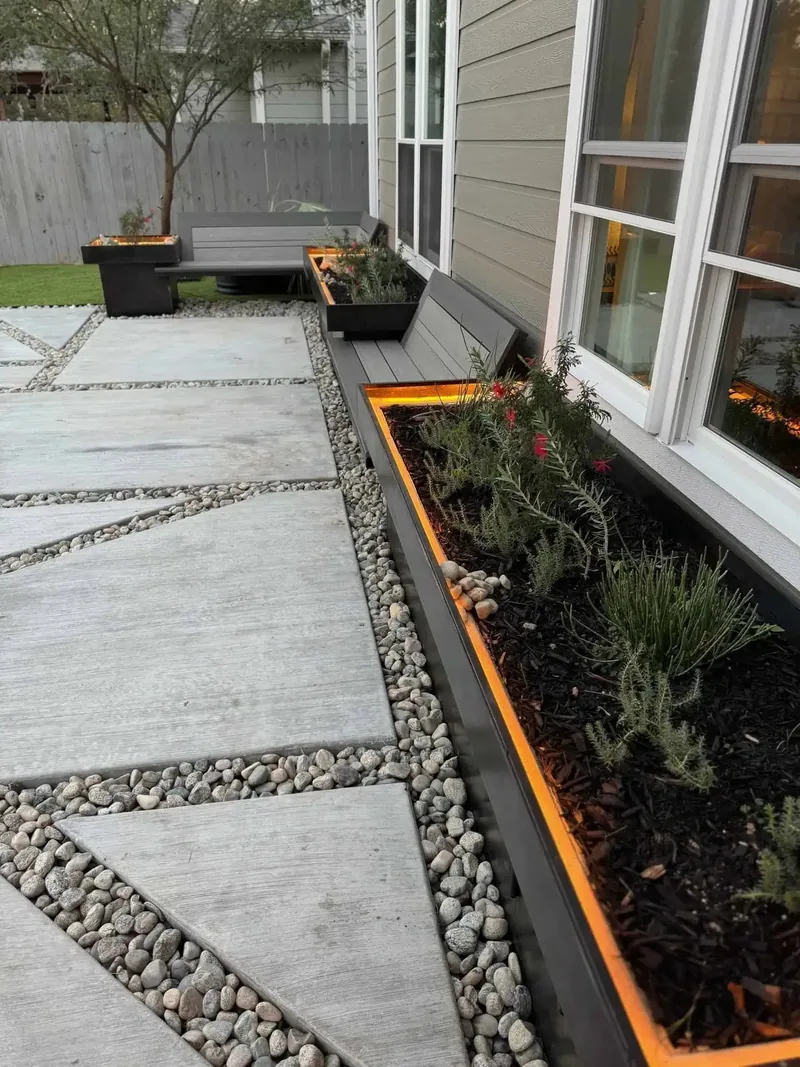
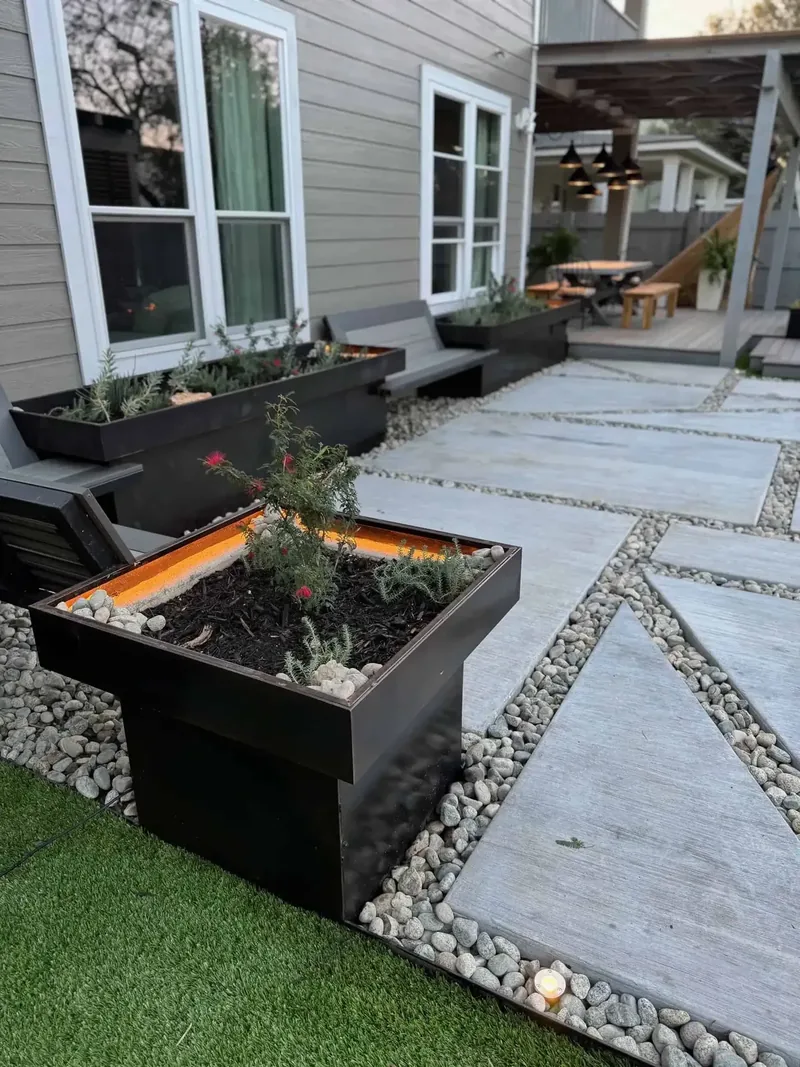
Both work, and they look different. In Cedar Creek the joints are turf, so the deck reads green and soft. In Circle C we cut the pavers on the diagonal and filled the joints with river rock, with turf beside the pavers.
- Turf joints: a green grid, soft underfoot, the same surface as the lawn
- River rock joints: a gray line that sets each paver apart, with turf next to the paving
See the Circle C project.
Does Artificial Turf Get Hot in the Sun?
Yes. Artificial turf reaches 140 to 160 degrees in direct sun without a cool infill, so infill is chosen as carefully as the fiber.
- Silica sand: suits most residential yards
- Zeolite: suits pet areas, because it absorbs odors
- Organic cork or coconut: stays cooler, and is safer for kids and pets
Our guide to synthetic turf cost covers what each choice does to a budget.
What Else Is in the Yard?
Two fires, a lawn, and a planting plan built for Central Texas.
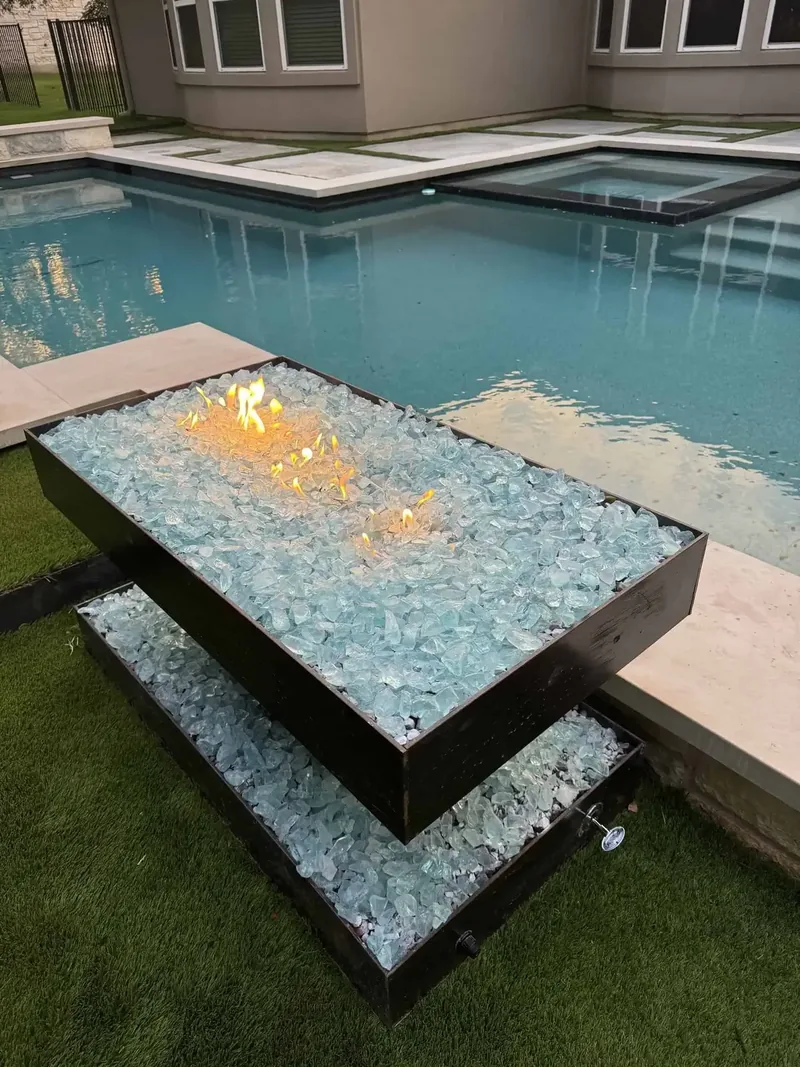
- Pool fire pit: square, welded steel, filled with aqua fire glass, floating on a recessed base at the edge of the pool
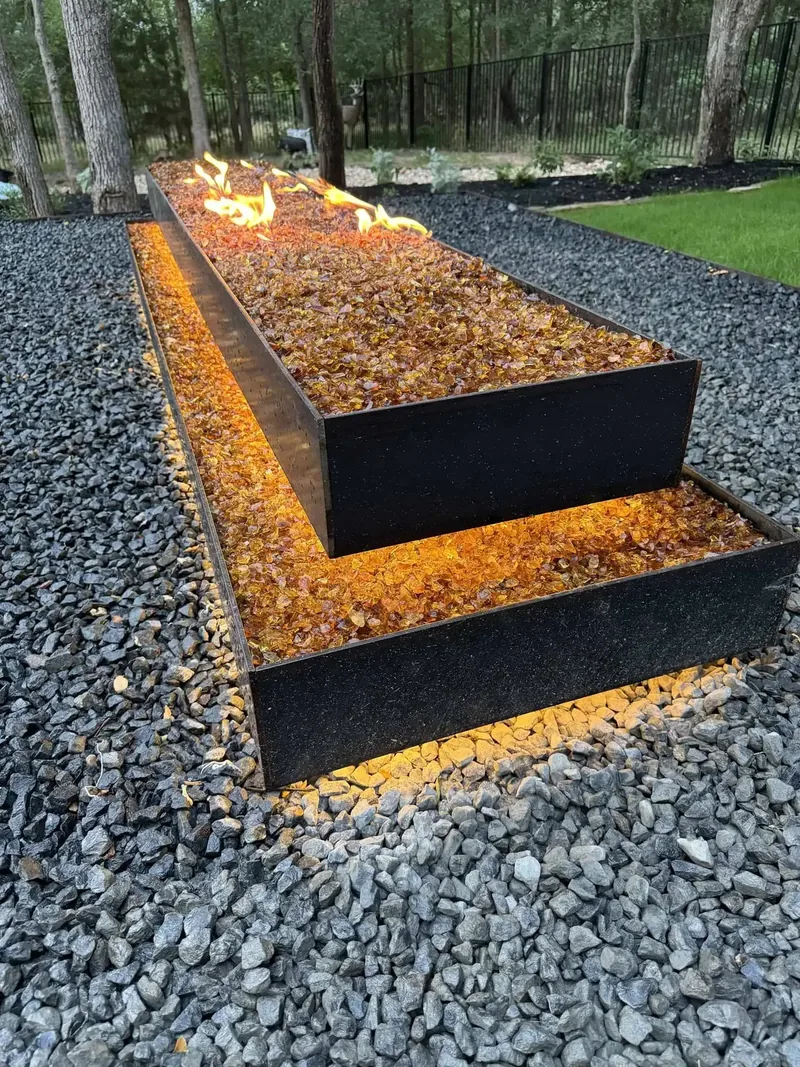
- Lawn fire pit: long and low, welded 1/4-inch steel, filled with amber fire glass and lit from underneath, set in dark gravel
- Lawn: bermuda sod behind the pool
- Beds: Texas hardwood mulch, with a river rock spillway that carries water through the yard
- Plants: ten species, including whale’s tongue agave, Mexican sage, Texas sedge, woolly stemodia, rock rose, and Anacacho orchid tree
Red Agave is the only company in Austin that builds floating welded steel fire pits. Both were fabricated by our own crew. See our post on custom fire pits and our fire pit service.
Every Red Agave project starts with a free consultation, and the CAD plan is included.
Questions We Hear
Can you put artificial turf between concrete pavers?
Yes. We pour each paver as its own pad and run a strip of artificial turf through every joint. In Cedar Creek the turf runs through the joints, beside the pavers, and down the steps.
Does turf between pavers need to be watered or mowed?
No. Artificial turf needs no mowing and no water for growth, which suits a narrow joint a mower cannot reach.
What holds the turf in place?
Steel edging, where other installers use plastic strips. Under the turf we install drainage fabric and compacted decomposed granite, then add infill.
How long does artificial turf last in Austin?
15 to 25 years with UV-stabilized fiber.
Do you build outside the city of Austin?
Yes. We serve the Austin area. This pool yard is in Cedar Creek, southeast of Austin.