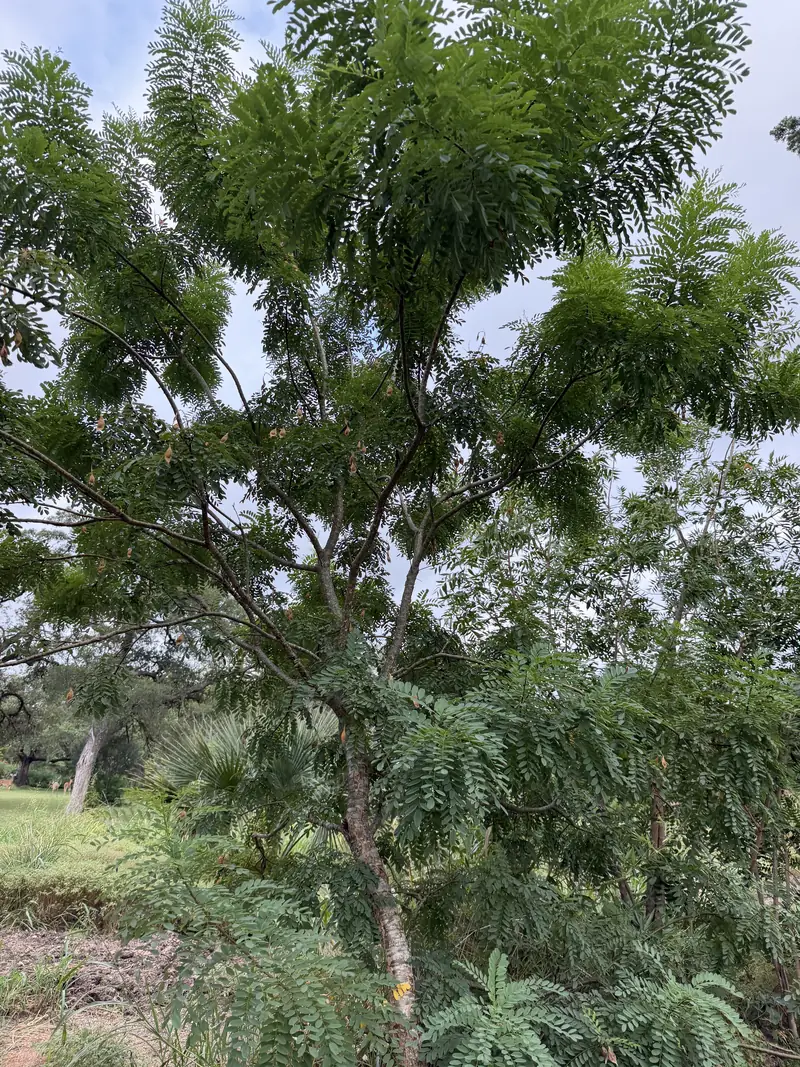
Arroyo sweetwood (Myrospermum sousanum) is a small, fast-growing tree from northeastern Mexico with feathery blue-green leaves and white flowers that smell like vanilla. The City of Austin’s Grow Green plant guide lists it at 20 feet or taller and 15 feet wide, for sun or part shade, with very low water needs. We photographed this one in far South Austin in August, and these are our notes on placing it.
What Is Arroyo Sweetwood?
Arroyo sweetwood is a tree in the legume family, the same family as Texas mountain laurel and mesquite. The San Antonio Botanical Garden describes it as native to Mexico, with vanilla-scented blooms each spring, and its own tree was collected by plantsman Lynn Lowrey. Kew’s Plants of the World Online lists the native range as northeastern Mexico.
It is also a recent arrival in the botany books. Botanists Delgado and Johnston described the species in the journal Systematic Botany in 1984, from trees in northern Nuevo León.
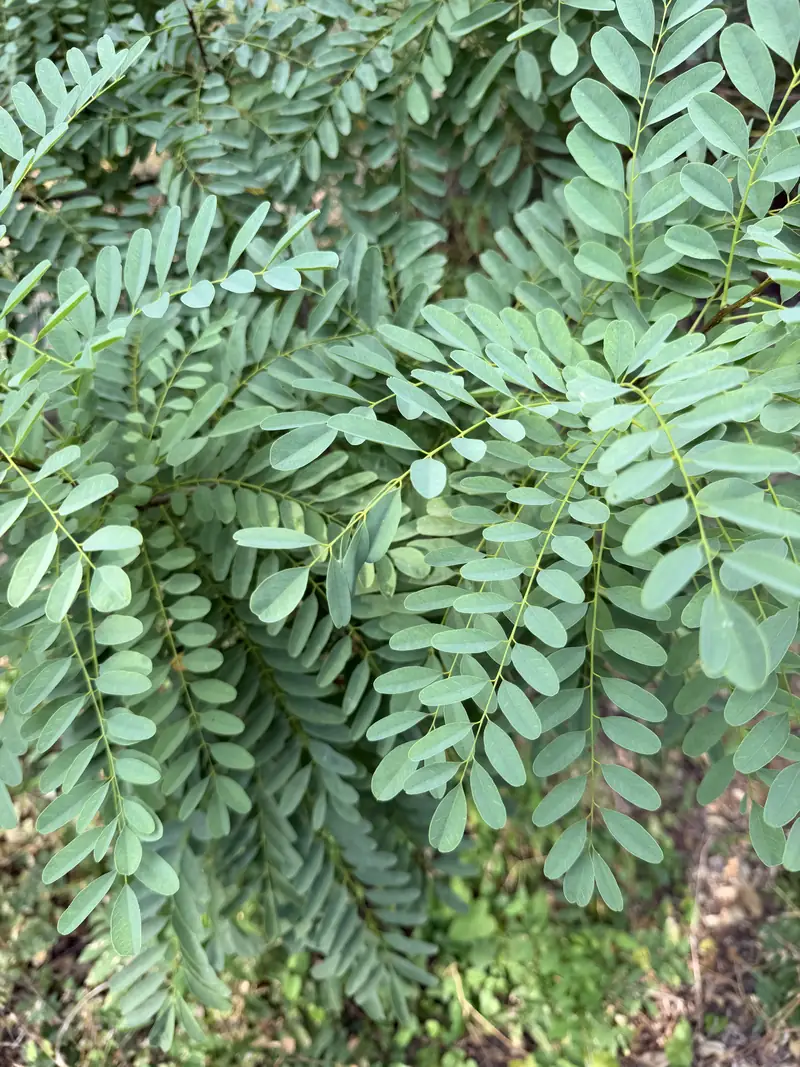
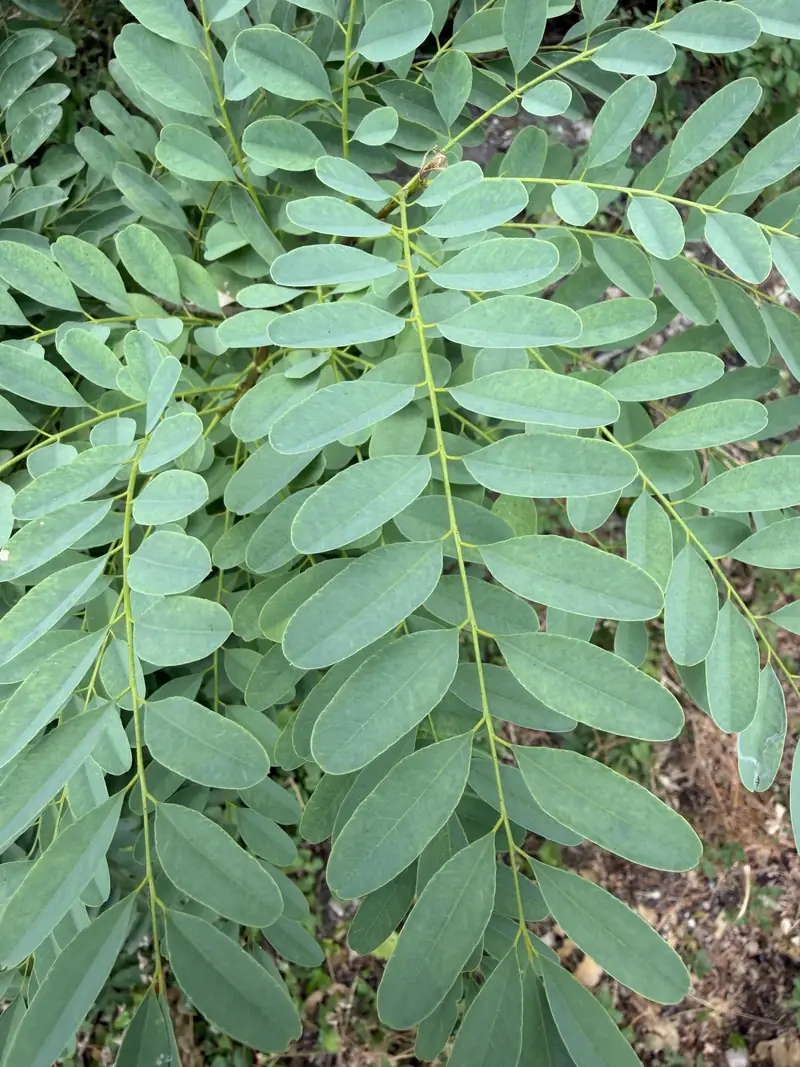
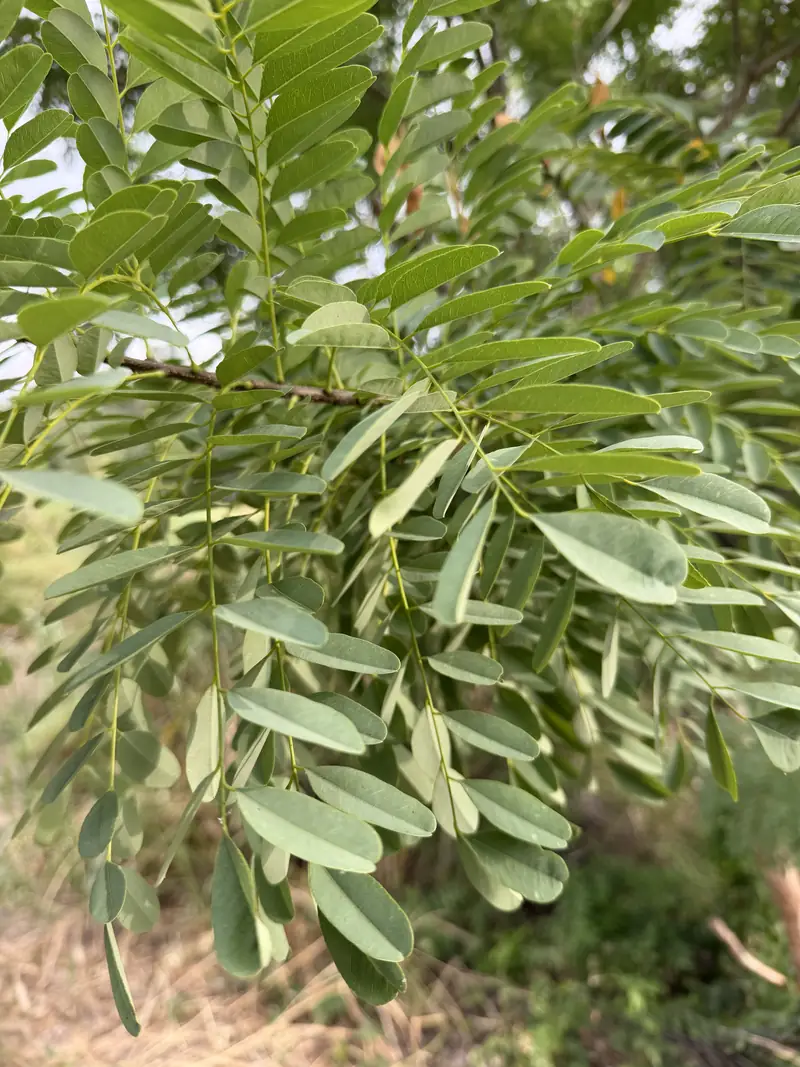
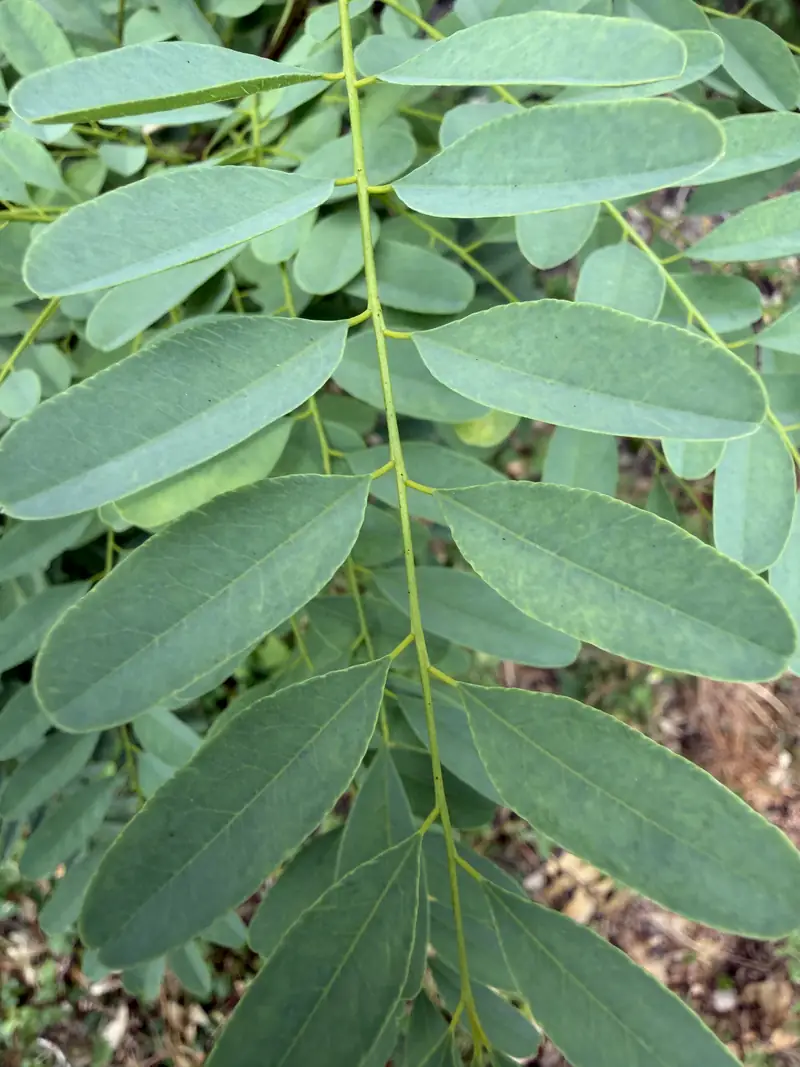
The leaves are what you notice first. Each leaf is a thin green stem lined with small oval leaflets, blue-green with a pale midrib. Hundreds of them together give the tree a soft outline that lets light through, which is the opposite of the dense, dark canopy of a live oak.
How Big Does Arroyo Sweetwood Get?
Grow Green lists arroyo sweetwood as a small tree or large shrub: 20 feet or taller, with a 15 foot spread. The guide calls it fast-growing and often multi-trunked.
Plan for the full canopy on planting day. A 15 foot spread reaches 7.5 feet from the trunk in every direction, so set the trunk at least 8 feet from a wall, a roof edge, or a pergola beam. A tree planted closer spends its life being cut back.
Grow Green also notes that it can be pruned to shape or to raise the canopy. Decide early which tree you want: a low, multi-trunked accent at the edge of a bed, or a raised canopy with room to sit beneath it.
Where Does It Grow Best in Austin?
Grow Green lists it for sun or part shade and notes that it prefers alkaline soil, the kind that sits over Central Texas limestone. Lots in Buda and Kyle, for example, have limestone under some yards and shrink-swell clay under others, so the first step there is knowing what is under each bed.
Very low water describes an established tree. A newly planted one needs regular water while its roots grow out of the root ball and into the soil around it. After that, arroyo sweetwood belongs with the low-water plants in a xeriscape, on a drip zone separate from any lawn.
It is deciduous, so it stands bare through winter. That matters for placement: it shades a patio in summer and lets the low winter sun through.
Where Does Arroyo Sweetwood Fit in a Design?
Put it where the scent and the leaves get noticed: beside a patio, at the edge of a courtyard, or just outside a window. Grow Green describes the flowers as white, fragrant, and showy, with spring to summer interest, and lists butterflies, birds, and bees as visitors.
Its fine foliage reads best against a simple background: a limestone wall, a field of gravel, or a steel planter. Keep the planting under it low and quiet so the branching stays visible. Because the tree is bare in winter, pair it with plants that hold their shape all year. Our list of plants that survive an Austin summer covers the evergreen structure, and a whale’s tongue agave gives the bed a focal point when the tree has dropped its leaves.
Red Agave designs plantings across South Austin, including Circle C. Every project starts with a free consultation, and the CAD plan is included, so the mature canopy of each tree is drawn on the plan before anything goes in the ground. See how we work on our landscape design page.
Questions We Hear
Is arroyo sweetwood native to Texas?
No. Kew’s Plants of the World Online lists its native range as northeastern Mexico, and the species was described from northern Nuevo León in 1984. The City of Austin includes it in its Grow Green guide to native and adapted plants for Central Texas.
Does arroyo sweetwood lose its leaves in winter?
Yes. Grow Green lists it as deciduous. It is bare in winter and leafs out again in spring, so it is a tree for summer shade and scent, not for year-round screening.
How fast does arroyo sweetwood grow?
Grow Green describes it as fast-growing and often multi-trunked, reaching 20 feet or taller with a 15 foot spread.
When does arroyo sweetwood bloom?
The San Antonio Botanical Garden describes vanilla-scented blooms each spring. Grow Green lists white, fragrant flowers and spring to summer interest.
How much water does arroyo sweetwood need?
Grow Green lists its water needs as very low once it is established. A new tree needs regular water while its roots grow into the surrounding soil.