Red Agave Landscape installs artificial grass in Austin, TX on a base that drains: drainage fabric, compacted decomposed granite, infill, and steel edging. Two yards show the work. In Austin we terraced a bare lot into two levels and ran turf across both, around a fire pit drilled into a boulder. In Cedar Creek, southeast of Austin, turf runs beside a pool and down a set of steel-edged steps. Both were built by our own crew.
How Is Artificial Grass Installed?
In four steps. The turf is the last thing to go down.
- Remove and grade: old grass comes out, and the surface is graded so water leaves the yard
- Build the base: drainage fabric goes down, then compacted decomposed granite
- Install: the turf is cut, seamed, and held by steel edging, where other installers use plastic strips
- Infill: infill is added, and the turf is ready to use
The base is the part you never see, and it decides how the turf drains and how long it lasts. See our turf installation service.
What Did We Build in Austin?
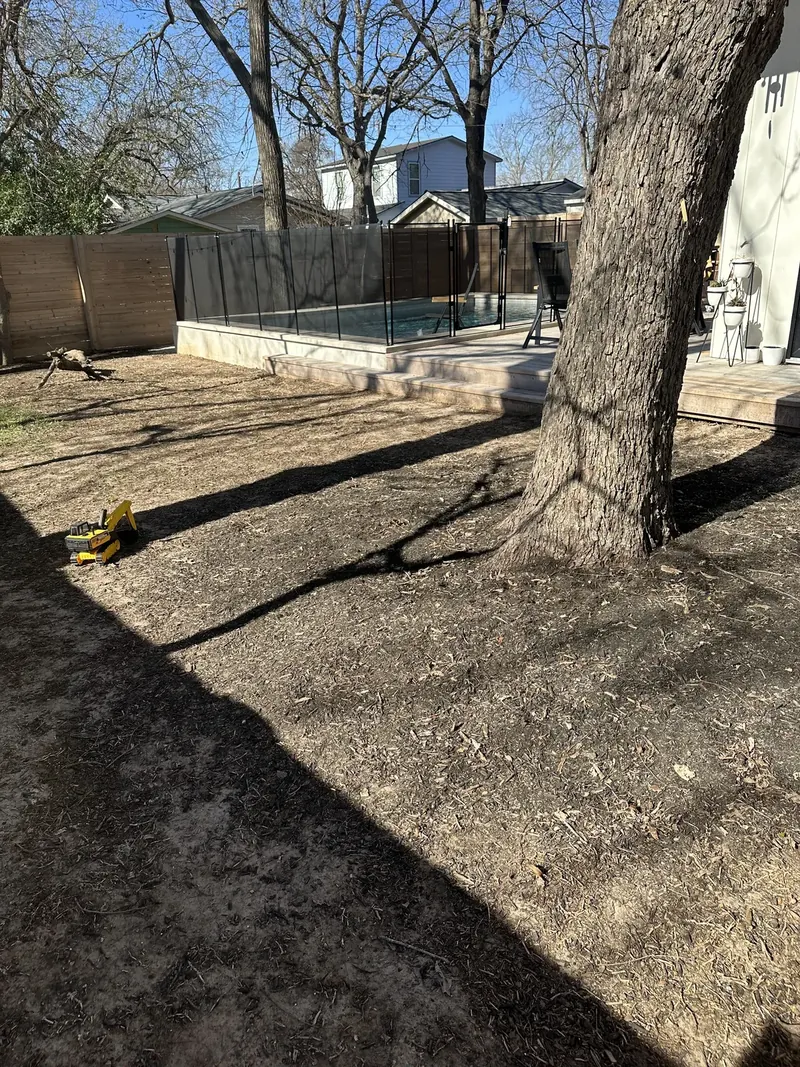
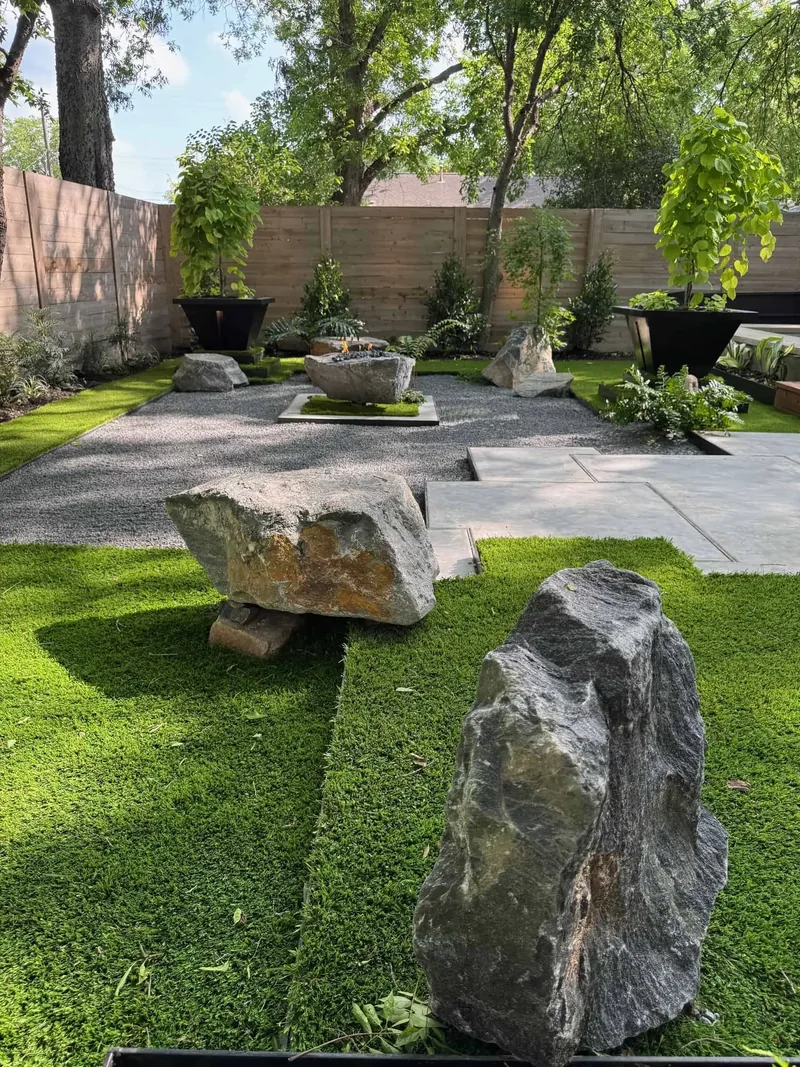
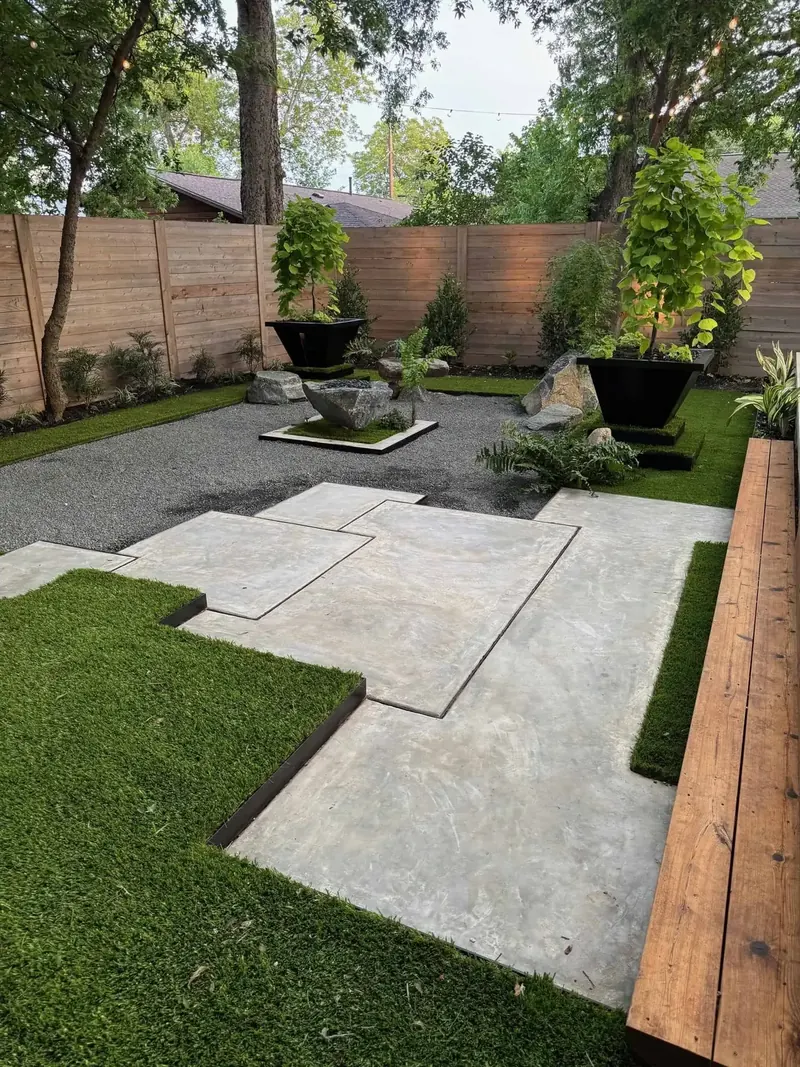
A lawn where there was none. The lot was bare ground under mature trees, with no grade and no planting. We terraced it into two connected levels and laid turf across both, so the two levels read as one lawn.
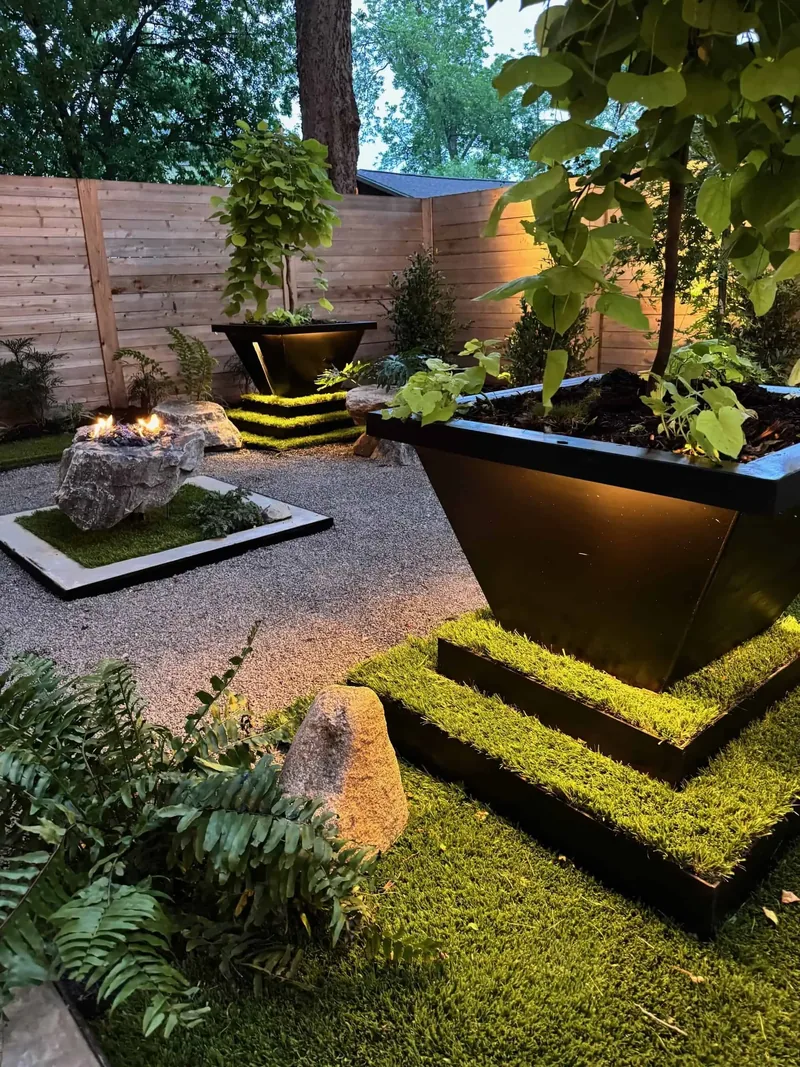
- Turf: Ultra Real, made by American Synthetic Turf, on a crushed decomposed granite base
- Levels: two connected terraces
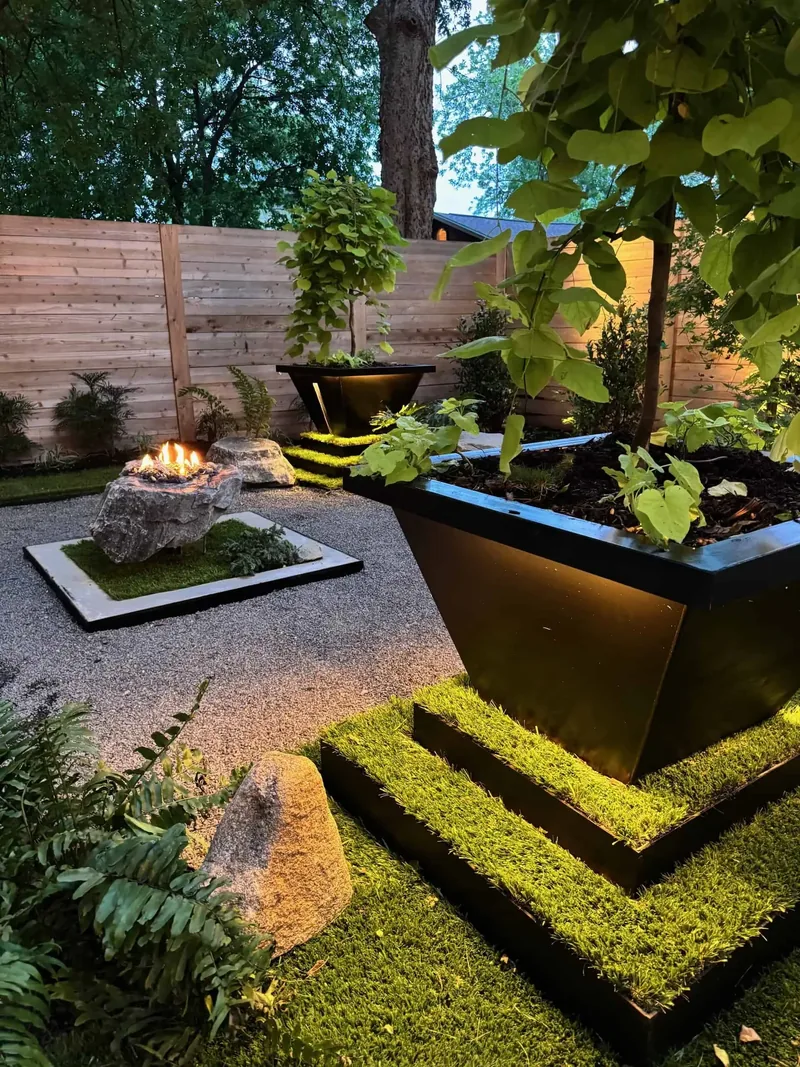
- Fire pit: a black boulder drilled on site, with the gas burner run through the stone
- Bench: a second black boulder, set as a floating bench
- Planters: black steel planters that taper toward the base, each on stepped tiers of turf edged in steel
- Paving: poured concrete pads and a gravel court
- Lighting: COB strip lighting and low-voltage fixtures, buried through the landscape
- Built: 2024
Turf is cut to fit here, like any other material. It wraps the tiers under each planter, and a square of it sits under the boulder fire pit, framed by a band of concrete.
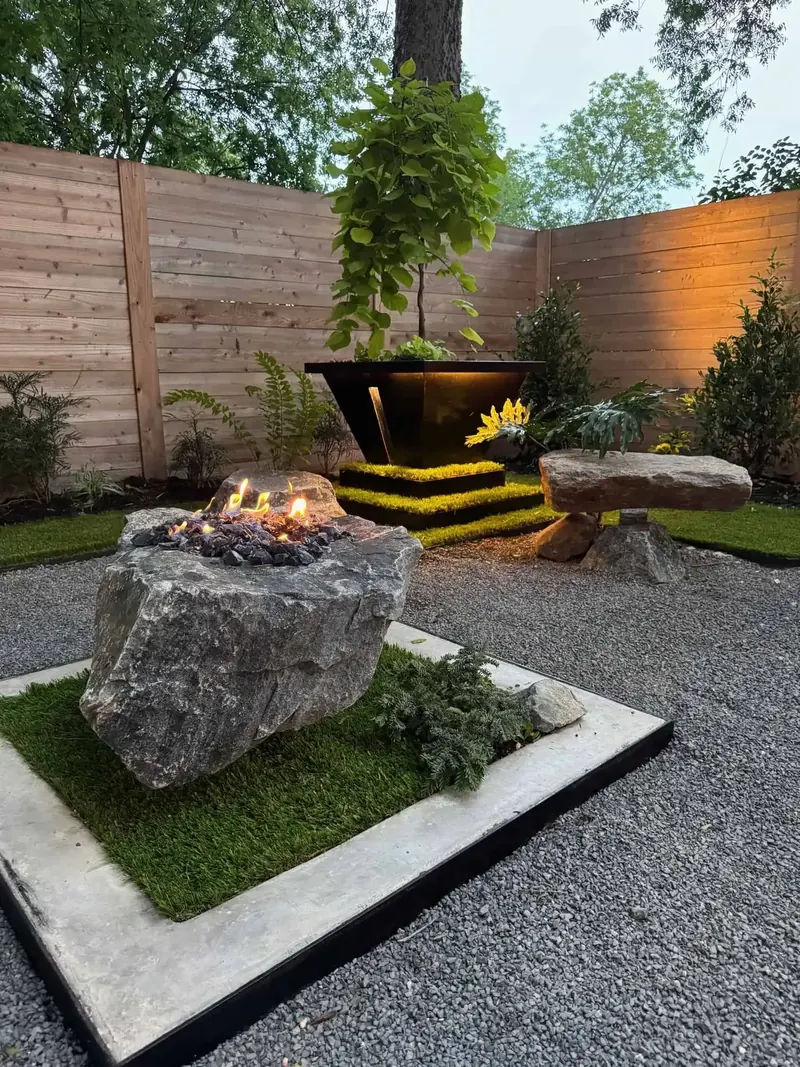
Red Agave is the only company in Austin that carves fire pits into boulders. See the full project and our fire pit service.
Where Does Artificial Grass Beat Sod?
Where grass will not grow or cannot be mowed: heavy shade, dog runs, side yards that drain poorly, and narrow strips between paving.
Sun decides it first. Bermuda sod needs full sun, six hours or more. Zoysia needs four. St. Augustine takes partial shade, and it needs more water than Bermuda. The Austin yard sits under mature trees, and before the build its ground was bare.
| Compare | Natural sod | Artificial grass |
|---|---|---|
| Water | Regular watering | None for growth |
| Mowing | Weekly in season | None |
| Summer surface | Stays cool | 140 to 160°F in direct sun without cool infill |
| Lifespan | Lasts with care | 15 to 25 years with UV-stabilized fiber |
| Best for | Sunny lawns and play areas | Shade, dog runs, narrow side yards |
Most yards do not need one answer. In Cedar Creek the pool deck and the steps are turf, and the open lawn behind the pool is bermuda sod. We install both. Our guide to artificial turf and real grass goes deeper, and our Round Rock page covers the same choice for yards on clay and on limestone.
Can Artificial Grass Go on a Slope or on Steps?
Yes, when every level has an edge to hold it. Turf needs a firm line at each change of height, and we build that edge in steel.
In Cedar Creek the yard is terraced with welded edges of 1/4-inch steel plate that step the grade in level planes. The steps down from the pool deck use the same parts:
- Risers: dark steel plate
- Treads: poured concrete on some steps, turf on others
- Below: turf continues from the bottom step across the lawn
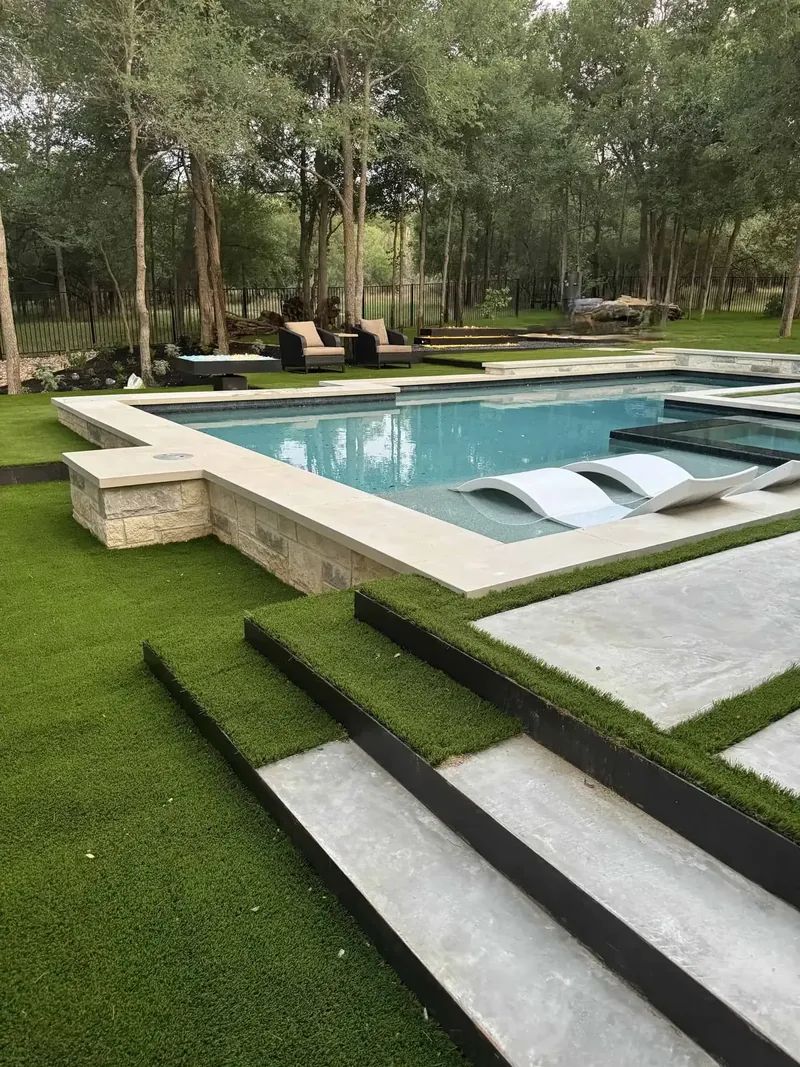
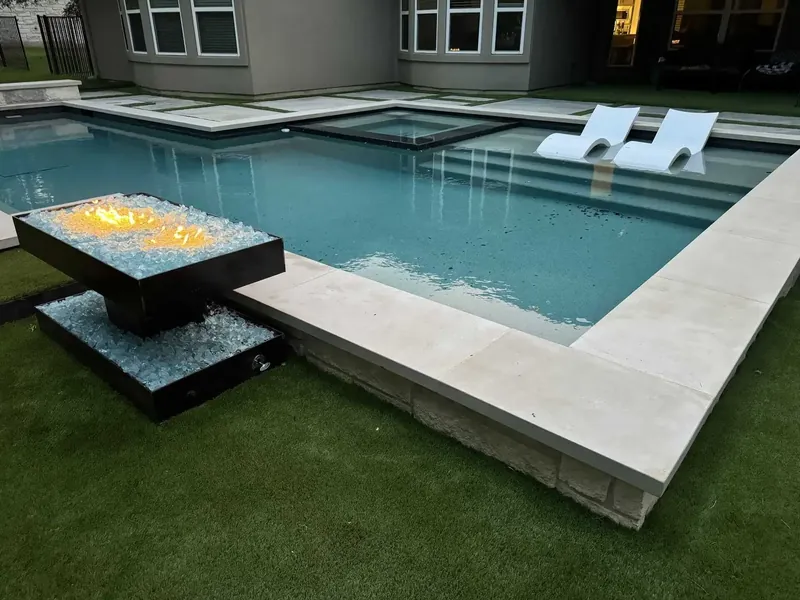
On the pool deck, the turf runs through the joints between large poured pavers. Our post on pavers with artificial turf shows the plan and the build. See the Cedar Creek project and our steel edging.
Does Artificial Grass Get Hot in Austin?
Yes. Artificial grass reaches 140 to 160 degrees in direct sun without a cool infill, so the infill is chosen as carefully as the fiber. Shade from trees or a structure helps too.
- Silica sand: suits most residential yards
- Zeolite: suits pet areas, because it absorbs odors
- Organic cork or coconut: stays cooler, and is the better choice around kids and pets
- Crumb rubber: adds cushion, and it holds heat
How Long Does Artificial Grass Last?
15 to 25 years in Texas, when the fiber is UV-stabilized. Cheaper turf can break down within 5 to 8 years. Base preparation and drainage decide the rest, which is why the four steps above start with the ground and end with the grass.
For what drives the price, see our synthetic turf cost guide. Every Red Agave project starts with a free consultation, and the CAD plan is included.
Questions We Hear
How is artificial grass installed in Austin?
We remove the old grass and grade the surface, lay drainage fabric and compacted decomposed granite, then cut and seam the turf, hold it with steel edging, and add infill.
Does artificial grass drain?
Yes. We grade the yard so water leaves it, and the turf sits on drainage fabric over compacted decomposed granite.
Does artificial grass get hot in the Austin sun?
Yes. It reaches 140 to 160 degrees in direct sun without a cool infill. Organic cork or coconut infill stays cooler, and shade helps.
How long does artificial grass last in Austin?
15 to 25 years with UV-stabilized fiber. Base preparation and drainage decide how long an installation lasts.
Can artificial grass be installed on a slope?
Yes. In Austin we terraced a bare lot into two levels and ran turf across both. In Cedar Creek, turf runs down steps with risers of 1/4-inch steel plate.